The interview.

"Saving Mantua and Cremona from the plague'.

by Micaela Cappellini

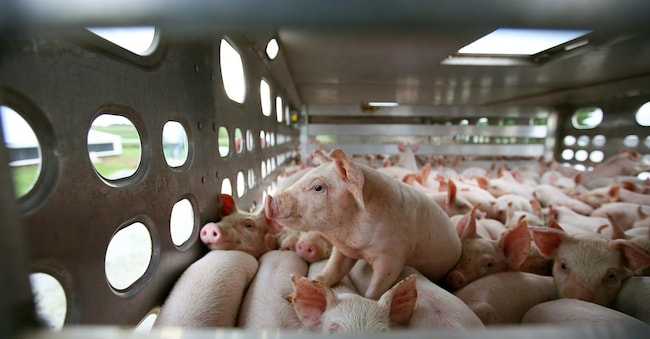
21/01/2016 Walshville. Montgomery County è un moderno impianto per l'allevamento dei suini da quando hanno circa 3 settimane fino a cinque mesi di vita, quando sono intorno 250 a 300 chili di peso e vengono trasportati al mercato. Un camion consegna i maialini di appena tre settimane di vita

3' min read

3' min read

Of emergencies, Guido Bertolaso, knows a thing or two. The Aquila earthquake, forest fires, Covid-19. Today, as Lombardy's Welfare Councillor, his headache is called Psa, the swine plague disease that sows panic in Italy's farms. His region is the most affected, with 20 verified outbreaks in stables. And Bertolaso has only one objective: to contain the disease before it spreads between Mantua and Cremona, where many of the national herds are concentrated.

What is the current picture of swine fever penetration in Lombardy?

Loading...

The situation has worsened compared to last year. In 2023 we had recorded nine outbreaks in as many pig farms, all in the Pavia area. At the end of July there were 20, and in addition to the province of Pavia, Milan and Lodi have also been added. We estimate that the wild boar population in Lombardy has been reduced by a third due to the disease.

How many pigs have been slaughtered on farms so far?

All pigs on the affected farms have been culled, we are talking about 70,000 animals. To these must be added the preventive culls, which affect either neighbouring farms with the affected ones, or distant stables that belong to the same owner and are managed by the same workers. This virus is one of the most resistant and also one of the most easily transmitted through, for example, shoes. To date, there have been 13,000 preventive culls.

What is the area in Lombardy that concerns you most today?

The provinces that could really create serious economic and social consequences are Mantua and Cremona, where almost 5 million head of pigs are bred, more than 50% of Lombardy's pig population. These two provinces alone would represent 20% of all pigs in Italy. This would be an extremely difficult situation, which we must prevent at all costs and in every way.

How much money for the swine fever emergency has been distributed in Lombardy so far?

Roughly speaking, at the moment the compensation amounts to EUR 25 million: some of it is taken from the national health fund and some of it will have to be guaranteed by the central government. All the funds used in Lombardy to deal with this problem are provided by the extraordinary commissioner for swine fever, who in turn receives them from the government.

So what autonomy does the Lombardy Region have to deal with this emergency?

Let us clarify one point: when a government decides to appoint an extraordinary commissioner, it means that in some way it directly assumes responsibility for the management of a problem. The commissioner becomes the highest point of reference, and the regions somehow lose part of their autonomy because they have to refer to the guidelines and ordinances adopted by the commissioner.

What do you think of the new swine fever commissioner, Giovanni Filippini, who was appointed in August?

Filippini is the right person in the right place. He has a lot of experience and has already eradicated swine fever in Sardinia, so he is very competent and is off to a good start. We have already had several meetings with him in Milan, we have established an operational plan, and we have agreed that we need to act quickly.

Lombardy is the region with the most outbreaks. How come?

We are the most exposed region because half of Italy's pigs are bred here. If we then look at its geographical location, thinking also of the Covid experience, we see that it is subject to a number of access routes that unfortunately facilitate the spread of the virus. We know that a large part of Eastern Europe is affected by swine fever: just think of how many road transport vehicles arrive from those countries in Lombardy, to understand how easy the risk of contamination is.

It is not only swine fever on Italian farms today, but also bluetongue and bird flu. As an expert on epidemics, even before being a councillor, do you feel more concerned than in the past?

All these are not new diseases, but they can find fertile ground in an ecological and environmental framework that has changed, and which has favoured their development. Being able to move from Milan to Beijing, Melbourne, Cape Town or Los Angeles in a little over ten hours, the possibility of contamination is now very easy. So the new holistic approach that we are trying to ensure today, the so-called One Health, where in fact all problems - of humans, animals and the environment - must be seen as a single factor and tackled with a team effort, is right. A modality that we here, in Lombardy, are already implementing.

Copyright reserved ©
Loading...

Brand connect

Loading...

Newsletter

Notizie e approfondimenti sugli avvenimenti politici, economici e finanziari.

Iscriviti