
Media: Save the Children says there are still 2,000 unprotected children in Ceuta
The association’s report: many children and teenagers are still living on the streets

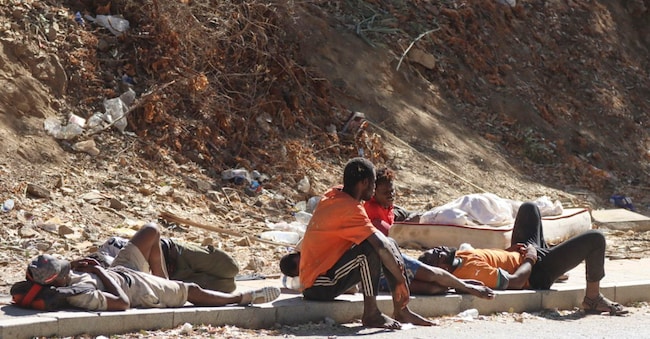
According to the NGO Save the Children, two weeks after the mass arrival of over 70,000 people who crossed the border with Morocco illegally, there are around 2,000 children in Ceuta without protection or adequate support. This was stated by Save the Children after the Spanish daily El País reported that, according to the organisation, the total number of children and adolescents outside the protection system stood at 4,000.
Save the Children points out that, although the exact number is still unknown, organisations already working on the ground have reported that the figure is likely to be around 2,000. Many of these children and teenagers, the children’s charity reports, are still living on the streets, without a safe place to sleep or adequate access to basic services. Around 1,500 of them are currently under the care of the NGO, which points out that the number of those awaiting identification is an estimate due to the difficulty of locating all those scattered acrossvarious areas of the city. A Save the Children team is currently in Ceuta to assess the conditions in which the children and adolescents are living, identify the most urgent protection needs and any situations of vulnerability.
The organisation is calling for safe places and support for children
Save the Children urges the authorities to immediately strengthen the teams and resources dedicated to locating, identifying and protecting girls and boys who remain outside the system, and to ensure that every child has access to a safe place to sleep, food, water, healthcare, specialist support and psychosocial care. The organisation is calling for the urgent transfer of unaccompanied children to other Spanish autonomous communities, in line with established procedures, as well as an assessment of all available public spaces, including those owned or managed by the State, the autonomous communities or the city of Ceuta, which could be used to provide safe accommodation, so that no child is forced to sleep on the streets.
Furthermore, the organisation for child protection reaffirms its willingness to support the relevant authorities by offering its expertise in the fields of child protection and migration, in order to help ensure an effective and appropriate response to children’s needs.

