
Saving a foreclosed house is possible, 15 cases already solved
The advantage is for the creditor party and the debtor party who will be able to repossess the property

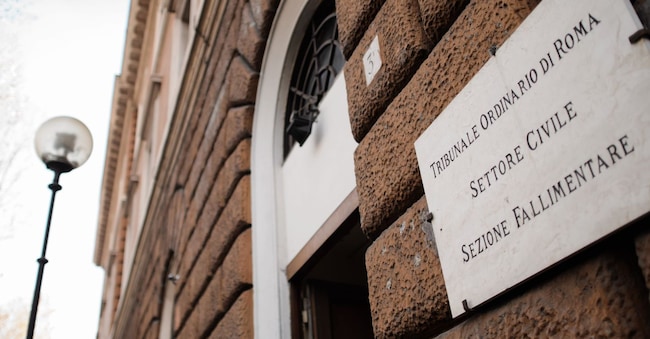
Successful experiment. Observable and, above all, replicable. Under certain conditions, classic real estate enforcement procedures can be overtaken by market operations, by social yield shock absorbers, which ultimately prove much more satisfactory (for the creditor) than classic bankruptcy auctions and which, not least, can allow the debtor, the owner of the disputed or enforced property, to continue to live in it, paying a rent to the special purpose vehicle entrusted with the collection of the enforced debt. All the way to the desired final stage: the repurchase of the real estate by the person who has been ousted from ownership.
A long and complex process
The first 15 cases were completed to our mutual satisfaction, with the recovery of 52% of the value owed by the excised former owners and the remission of the remaining debt (48% of the total). Getting there was not easy. It took a long and complex process idiated in 2019, through an amendment to Law 130/99 urged by Acli, by 130 srl, by Guber Banca, an institute specialised in the management of NPLs and Utp (non-performing loans and Unlikely to pay), by Giovanni Pastore's Favor Debitoris association, and by technical experts: lawyers who are experts in securitisation and financial taxation such as the company Eagles and Wise.
The Catholic University is also involved
Also involved was the Catholic University of Milan, and in particular its former pro-rector (now constitutional judge) Antonella Sciarrone Alibrandi, who worked to develop the research and the model, the success of which was due to a long mediation effort by various associations, institutions and industrial partners who applied themselves in the research and experimentation.
The node of the insolvency market
The aim was to untangle the knot of the insolvency market and its guarantees, safeguarding the primary social function of housing, especially in such a dramatic phase as Covid-19. "What is unfolding today is in fact a tragedy in three acts. Act One: one loses one's job and is no longer able to repay mortgage repayments. Act Two: one loses one's home, with the very serious psychological consequences associated with that. Act three: in most cases one also loses one's family and what follows,' explained Francesco Guarneri, CEO of Guber Banca, in 2022.

