
Saving the past with institutions, pluralism, science and community
For Federico Zaina, only a choral action of these protagonists will be able to stop the damage from the Anthropocene

The past passes through the present to recompose itself in the near future. Leading us through this journey - both wonderful and troubled - through time with a view to what will be is Federico Zaina, archaeologist and heritage expert, associate professor at the University of Bologna and project manager at the Egyptian Museum in Turin. His Atlas of the Lost Past began walking a decade ago: 'In 2016 a new awareness burst within me. I was in southern Iraq when I saw for the first time, with my own eyes, thousands of pits as deep as ten metres dug during the 2003 war by grave robbers within the sites of ancient Sumerian cities. It was then that I saw how a red thread links everything: the Iraq pits, the Asian and African dams, and the impact of construction in Italy. A series of human activities in our present are destroying hundreds if not thousands of places and legacies of our past all over the world. From this awareness, from this dismay, comes the essay that sends a clear message to all: 'to build our future we are (too often) destroying our past'. The archaeologist's cry of pain brings to light a link, hitherto unexplored, between the emergence of the Anthropocene and the destruction of our past, and it is a call to action: 'We must fight to prevent the erasure of places, voices, traditions and practices that help us understand where we come from and how we will face the future'.
Since the 1950s, population, income and the exploitation of energy resources have increased dramatically, causing profound consequences on our planet, our lives and also on the places of our culture, which are our memory, our identity. After the Great War, the International Committee on Intellectual Cooperation and the International Bureau of Education were born to promote and protect the places of the past and the work of artists; Unesco is the greatest collective effort of human beings to safeguard and promote the heritage and respect of our diversity, but the acceleration of development damages and often destroys not only nature, but also places that for us humans have represented and represent the testimony of who we have been. And Zaina photographs eight places in the world - alas - exemplary of this precipitation that calls us to awareness and action. In the heart of Australia, Ayers Rock, in the Aboriginal language arrernte Uluru, meaning 'strange rock', is a sacred place born during the 'Time of Dreaming', before the formation of the world and also represented in the rock paintings on the mountain. Which is the heart of the Aboriginal heartland and mass tourism has scarred it, so much so that access has been banned since 2019. In the sprawling Pilbara region of Western Australia, the ancient gorges and caves were inhabited some 47 thousand years ago by human groups who left relics until Rio Tinto Ltd, a multinational commodities mining company, took possession in 2020, destroying the Juukan Gorge. In Afghanistan, the ancient religious centre of Mes Aynak, dotted with Buddhist and Zoroastrian monasteries, lies in the middle of a giant copper deposit. And what about the dried-up Aral Sea in Uzbekistan, Angkor Wat in Cambodia, the qanats, ancient vertical well technology with which Persian engineers carried water.
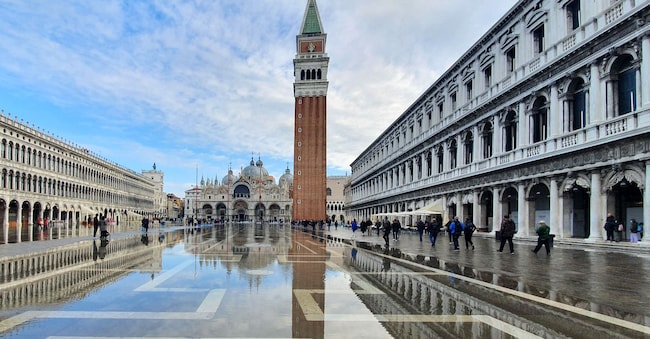
Zaina's analyses are timely, lucid and sorrowful. But the book's value lies above all in its conclusions, in 'showing some possible ways to counter this process and maintain the memory of our past in the present and also in the nebulous future that awaits us'. And Venice, fragile and beautiful, closes the essay almost as a palpable hope for other places, for another past. The city's possible disappearance is part of global climate change, which we do not touch with our hands but which destroys, silently, day after day. But there is room for action: the four roads to the future of our past are for Zaina community, pluralism, science and institutions. And only a choral action of these protagonists will be able to stop the damage from the Anthropocene, a term made famous in 2000 by Nobel Prize winner for chemistry Paul Crutzen and biologist Eugene Stoermer. We are what we have been and we will be what we are: it is up to everyone to remember and act because, as Fernand Braudel wrote in Mediterraneo, 'To have been is a condition for being'.
Federico Zaina, Atlas of the Lost Past. How the Anthropocene is destroying humanity's cultural heritage, Bur Rizzoli, pp. 320, € 15


