
Saving on utility bills, the Enea project and the use of artificial intelligence
Thanks to artificial intelligence, it will be possible to 'talk' to the domestic energy system to cut costs. The project developed by the University of Porto and Enea
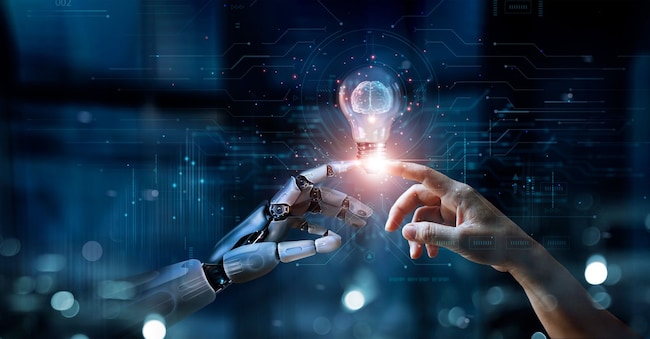
Artificial intelligence to save on energy bills, reduce consumption and CO2 emissions. All this thanks to a 'conversational' type interface (very similar to chatbots based on artificial intelligence already widely used in other fields) designed to dialogue directly with the domestic energy system. A first step that could then be extended from homes to the renewable energy community.
The European Project
This is the aim of the Eu-Dream European project, coordinated by the University of Porto, on which Enea researchers also worked, coordinating the definition of 22 use cases. Among the various segments followed by the Italian researchers are the automatic optimisation of domestic energy flows and natural language dialogue with energy management systems. Almost a challenge in which attention is paid to both energy saving, with consequent reduction of costs and emissions, and optimisation of services.
The Operation
As for how it works, it is quickly explained: 'Users will be able to request, either vocally or in writing, to receive insights on their consumption and plant production, without having to fill in forms or search for half-hidden information,' explains Amodeo Buonanno, researcher at the Smart Grids and Energy Networks Laboratory of ENEA's Energy Technologies and Renewable Energy Sources Department. 'A simple interaction such as the one proposed can increase consumer awareness, with a positive impact on bills and the environment.
That's not all, because 'thanks to the chatbot, the user will also be able to set preferences for the operation of their smart home, such as room temperature or when to start appliances'.
Energy Communities
A solution that, the expert goes on to emphasise, 'could also prove extremely useful for members of energy communities, in order to quickly find out the self-consumption trend of Cer itself'.

