
Scale, experience in movement
Antinomies, transitions and unusual metamorphoses in the three choreographic works by McGregor, Maillot, Naharin

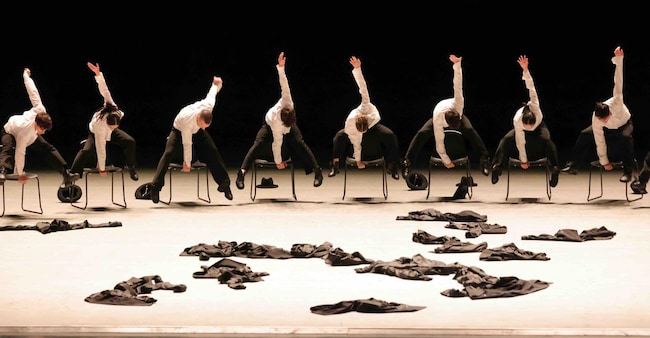
He is one of the most active contemporary choreographers in that experimental game that loves to investigate the correlation between dance and technology, movement and the virtual world, choreography and the neurological system, creativity and artificial intelligence. An eclectic name in British choreography, Wayne McGregor has for more than two decades been exploring a grammar of movement that he disrupts, expands and sometimes refines. This is the case of "Chroma", his well-known creation from 2006, which has now landed at La Scala and has been entrusted to ten dancers engaged with the opportunity to unveil the potential of a work framed in a shadowy scenography.
If the communication of the 'physical thought' remains foggy, the performers involved seem to have grasped the call of tradition, the proverbial disarticulations, the stillness and the abrupt dynamism: a mention of merit must be reserved for Claudio Coviello, who reigns supreme in terms of accents, impetus and jerky suppleness.
.jpg)
.JPG)
Lunar transition according to Jean-Christophe Maillot
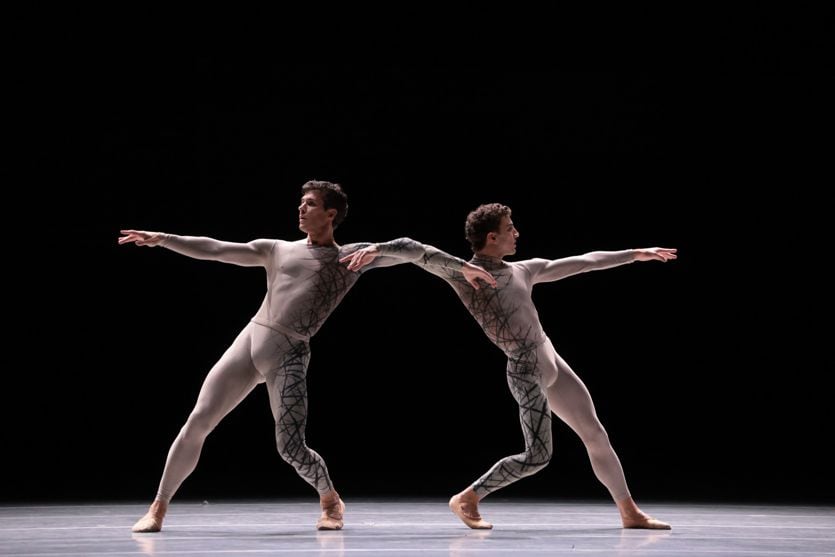
"The transitory seems to me to be the only possible permanent state", writes Jean-Christophe Maillot in the introductory notes to his "Dov'è la luna", the second of the three titles proposed in the evening at La Scala. The transition between life and death is, in fact, the cardinal theme of this creation signed by the Director of the Ballets de Monte-Carlo and dedicated to the twilight of his father's earthly existence. An intimate lyricism bestowed on Maria Celeste Losa, Roberto Bolle, Nicoletta Manni, Domenico Di Cristo, Agnese Di Clemente, Gabriele Corrado and Saïd Ramos Ponce engaged in the arduous task of exploring the need for an affable and velvety presence when grief approaches mourning. With them is a solid attempt to lap up, to the music of Aleksandr Skrjabin entrusted to the piano of Leonardo Pierdomenico, conciliatory sadness, refined nuance and poetic purity in a choreographic syntax sculpted between light and shadow.
.jpg)
Audience and performers with Mr. Gaga
Blurred is the semantic association between the title 'Minus 16' and the creation of choreographer Ohad Naharin proposed in the closing of the triptych. A segment that allows the Milanese troupe to encounter the Gaga movement language devised by Naharin himself and the related research into empirical and bodily awareness in dance.
A pièce that requires the spectator to be open to surprise and disorientation in order to better appreciate the unusual confrontation proposed between audience and dancers: the choice to involve the audience in the act danced on stage is irresistible, with results that inevitably lead one to imagine each performance always different because unique. An exploration freed from the usual conventions of stage performance and open to the new, to the singular, to the acclaimed metamorphosis: an opportunity not to be missed not only for the performers but also for those who believe they can remain placid among the velvety Scaligeri carpets.
.jpeg)

