
Scaroni: 'On nuclear power in Italy optimistic, let's create consensus'
The chairman of Enel in Trento: social acceptance is an unavoidable step, but we need energy from the atom. Net Zero target "almost unattainable", on renewables "5 trillion dollars spent in 25 years and covering only 2% of global consumption".

3' min read
3' min read
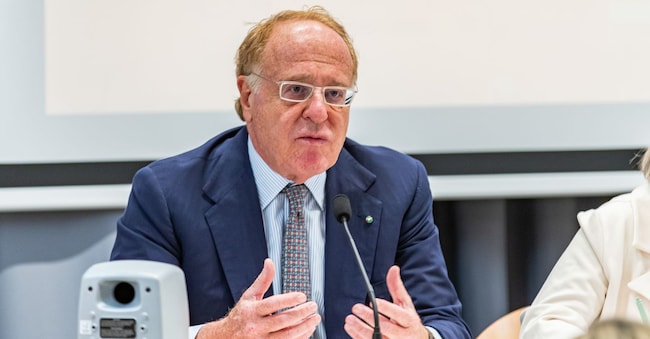
Nuclear power in Italy? A realistic and necessary goal for decarbonisation, but one that can only be pursued through 'consensus building' among citizens. Paolo Scaroni, chairman of Enel, professes to be 'optimistic' about the return of atomic energy in our country too. And it could not be otherwise, given that Enel is one of the leaders in this field, with 51% of the newly established Nuclitalia (in partnership with Ansaldo Energia and Leonardo): 'We are the main shareholder of future nuclear power, we believe in it,' he said from the Trento Festival of Economics. But he immediately emphasises that 'social acceptance' is an unavoidable step, as happened in France in the 1970s, when the country decided to equip itself with a large fleet of reactors.
"At stake,' Scaroni continued, 'is our energy independence, which is also political independence: these are not objectives of the right or left, there cannot be one party that pushes and one that goes against. We need to build a consensus that is an agreement of all'.
Davide Tabarelli, president of Nomisma Energia, agrees on the need for nuclear power, alongside continued investment in renewables: "It is a matter of common sense, if we want electricity available 24 hours a day, seven days a week," he said, participating in the same round table discussion, which focused on whether or not to rethink the energy transition pathway (title of the debate: 'European Green Deal on the Test Bench').
Clean sources - and nuclear power is among them, in terms of CO2 emissions - can also help us mitigate our dependence on foreign energy supplies, which remains very strong, recalls the expert: 'If in 1973 Italy was 83% dependent on foreign energy, today we are down to just 76% and Europe to 57%. First it was Russian gas, now gas from the United States, but it does not change much'.
There is still a long way to go, even on the decarbonisation front. And the path is as bumpy as ever. "In the last 25 years,' says Scaroni, 'we have made 5 trillion dollars of investments in new renewables that represent 2% of our consumption (of primary energy, ed.) and never in the history of mankind have we burned more fossil fuels than last year. This more than a transition is an energy addition'.


