
Schifano, retrospective at the Palazzo delle Esposizioni
Preview of the exhibition dedicated to one of the protagonists of the art of the second half of the twentieth century, a historical excursus of more than sixty years of his career

_1968_Coll%20priv_Foto%20Giorgio%20Benni-knqB-U15777413177RKB-1440x752@IlSole24Ore-Web.jpg?r=650x341)
Key points
The Palazzo delle Esposizioni di Roma dedicates to the artist Mario Schifano (1934-1998), opening on 17 March and closing on 12 July the first major retrospective since his death. An exhibition that continues the cycle dedicated to the protagonists of the art of the second half of the 20th century who worked in the context of the city of Rome. Curated by Daniela Lancioni, the exhibition offers a historical excursus through the artist's more than sixty-year career, in a research conducted in public and private collections in Italia and internationally. "We started from the sources, from the writings of critics and art historians who documented his work. Important for us was the collaboration with the galleries the artist had worked with,' Lancioni reports.
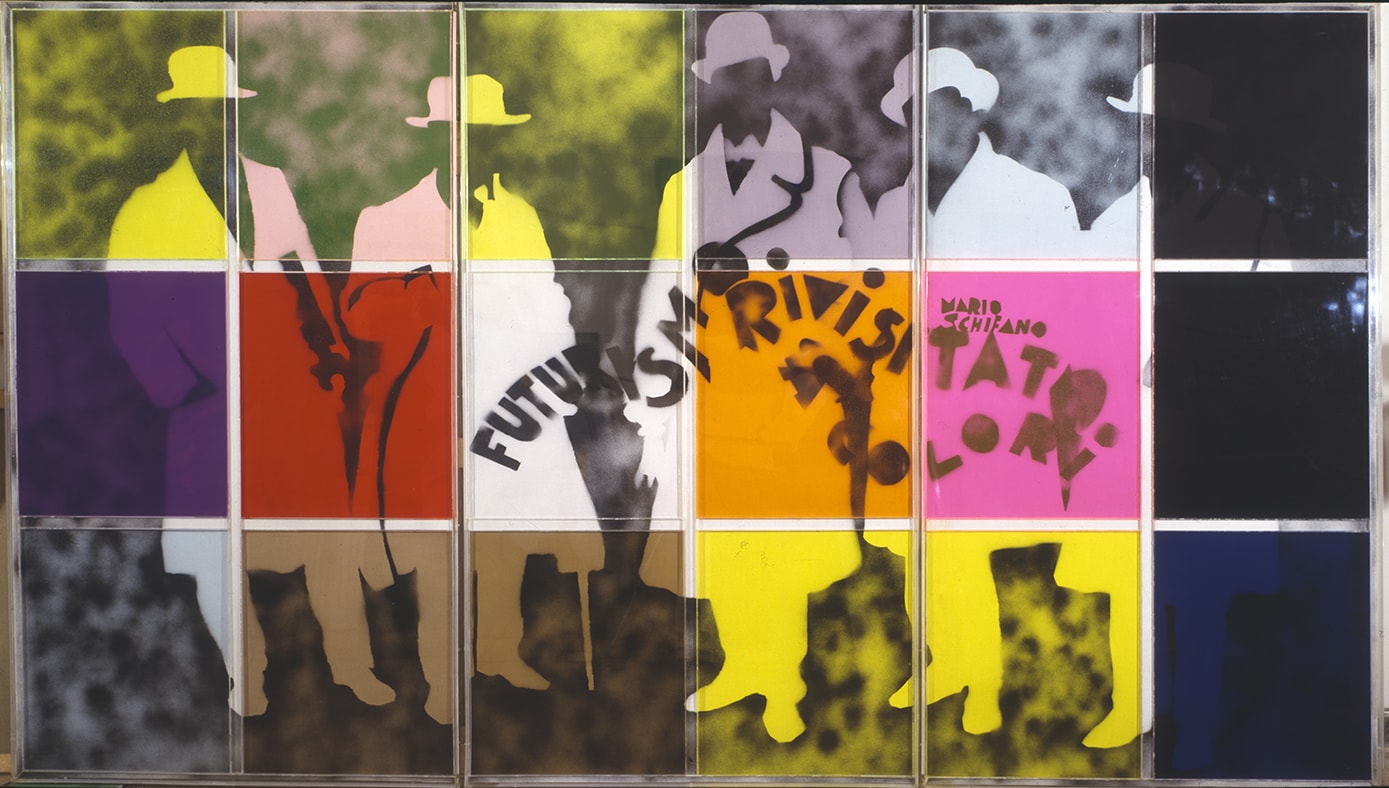
The retrospective opens with the 'Monochromes', paintings that Schifano first presented in 1959 at the Galleria Appia Antica, an exhibition in which Giuseppe Uncini exhibited his first 'Cements'. The idea then was to reset everything to zero, in contrast to the emotional painting of the Informal. The same exhibition also featured the works of Piero Manzoni and Francesco Lo Savio, all orchestrated by the poet Emilio Villa.
The 'Monochromes' soon became a series and included numbers, letters or, as in the case of the 'Modern Time' series, a frame of colour painted with the glossy enamel of those used for house walls, which hinted at a shift towards Pop Art, which he would later join together with Tano Festa and Franco Angeli.
"Mario Schifano wanted to be painting," an art critic wrote of him. He expressed it in all its communicative power, experimenting with its potential as a medium, linking it to television images or adapting it to the linguistic contaminations of the moment.
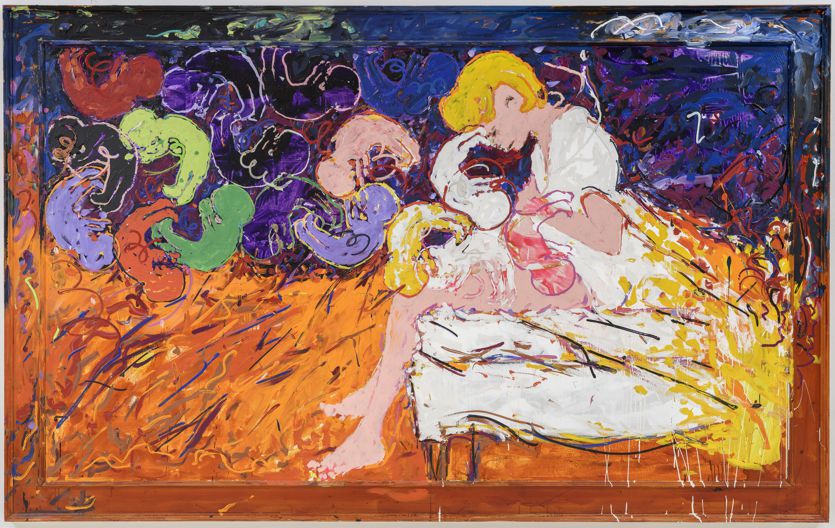
After years of success, including participation in the Venice Biennale (1964, 1978), solo and group exhibitions in Tokyo, Paris and Sao Paulo, Brazil, it was to painting that he turned following an ideological and existential crisis. Schifano then reinterpreted the works of the great masters, Giorgio de Chirico, Umberto Boccioni, René Magritte and began to repaint his works from the early 1960s, giving rise to the "Synthetic Inventory" cycle.
It was painting that he was talking about when in 1985 he chose to create "La Chimera", a four by ten metre canvas in Piazza Santissima Annunziata in Florence, the inaugural work of the exhibition dedicated to the Etruscans.
Mazzoli's remembrance
"Schifano painted a lot, fast," reports Emilio Mazzoli, the gallery owner from Modena who accompanied him throughout his career. "We met in Rome in the early 1970s. Seeing him paint was like living the present and the future together. He had a unique grace and sensitivity. We did many exhibitions together. We organised his first solo exhibition in 1977,' recalls Emilio Mazzoli.
_1963_Coll%20privata_foto%20BENNI.jpg)

