
School canteens improve but half the food is thrown away
The report confirmed the North as the area with the highest number of high quality canteens, with 37% of municipalities, against 28% in the Centre and 11% in the South
3' min read
3' min read
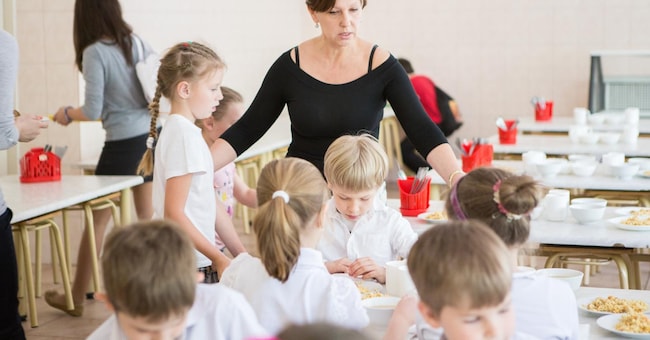
Canteen meals are improving, but children don't seem to notice: they refuse half of the dishes that end up in the rubbish and consequently the fare. This is what emerges from Foodinsider's 9th Rating of school menus on the state of the service, based on a representative sample of one third of Italian canteens. Compared to the previous year, the quality in 44% of the menus improves, remains stable in 29.5%, but falls in 20%. Those making the "leap" are the municipalities that have renewed their tenders, such as in Trento, Udine, Frosinone, Rieti and Siracusa. The 2023/24 data are compared with those of the last five years, confirming how the law of "Minimum Environmental Criteria", in force since August 2020, has made menus healthier and more sustainable, with a greater variety of foods, with more organic and legumes and local products. But more and more pupils are afraid to try new dishes and seek refuge in plain pasta and bread; a food whose offer has grown in form and variety, including wholemeal, with type flour, but also with ancient grains or reconstructing local supply chains.
The negative aspects
.However, there is no shortage of negatives on the menu, where the rise of processed food continues and the percentage of meals actually eaten falls. Doing better are schools that do nutrition education, with in-house kitchens where children have more time for lunch and less noisy refectories, but also where fruit is served mid-morning instead of at the end of the meal. According to MP Claudio Mancini, with more than 2 million meals a day, school canteens can give an impetus to Agrifood; hence the commitment for municipalities to become an instrument of sustainable territorial development.
The ranking
.And with the analysis also comes the ranking of the cities where the menu has best interpreted food as a tool for health, respect for the environment and promotion of the territory. This year's winner out of 60 municipalities is Sesto Fiorentino, in Tuscany (in 2017 it was in fifth place); second, tied, are Parma and Fano, while Cremona remains the best service in terms of cooks' gastronomic skills. Signs of recovery in the South, particularly Bari and Brindisi, and above all Syracuse, which scores 57 points more than last year.
As Foodinsider president Claudia Paltrinieri said, plastic and processed dishes are banned from the menu in Sesto Fiorentino, and 73% of the food comes from the short chain, from extra virgin olive oil from the olive groves of Sesto Fiorentino, Calenzano, Signa, and Carmignano, to trout from Lunigiana, mullet from the Orbetello Lagoon, and fresh pasta from Mugello.
The Report
The Report confirmed the North as the area with the highest number of high quality canteens, with 37% of the municipalities, against 28% in the Centre and 11% in the South; an area, the latter, where full time at school is not very widespread and the few canteens that do exist do not have a long tradition as in the North. At a regional level, Lombardy and the Marches win, respectively with Cremona, Bergamo, Monza and Mantua, Fano, Ancona, Jesi and Macerata, while in the Centre and the South stand out Frosinone, Siracusa and Rieti. At the bottom of the Foodinsider classification 'are Pescara, Viterbo, Pisa, Alessandria, Potenza, Cagliari, Grosseto, Prato, Reggio Calabria, Novara and L'Aquila'.
Brand connect


Newsletter Scuola+
La newsletter premium dedicata al mondo della scuola con approfondimenti normativi, analisi e guide operative
Abbonati