
School, inflation and healthcare: Italians demand protection and fear decline
Data from the survey carried out by Monitoring Democracy (Bocconi) in collaboration with SWG. 51% of young people see a widespread psychological malaise among students, against 32% of the over-65s. One young person in three believes that schools do not devote any attention to emotional wellbeing
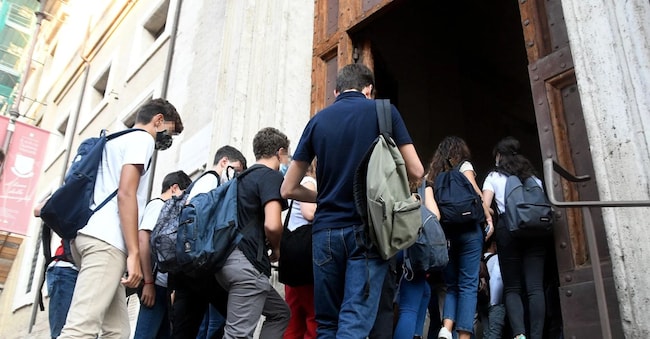
Youth unease is deeper than adults believe. Inflation is perceived as a huge welfare loss. Healthcare remains a top priority. These are the clearest data emerging from the survey conducted by the Monitoring Democracy Observatory of Bocconi University in collaboration with SWG on a sample of 2,049 Italians representative of the population, for the preview of the third edition of Pact4Future 2026, from 24 to 26 March (www.pact4future.it).
School: the generational divide is evident
51% of 18-24 year olds consider psychological distress to be widespread among male and female students in Italy. The percentage drops to 37% among 45-64 year-olds - the group of their potential parents - and 32% among the over-65s. Among the adult population as a whole, the figure stands at 38.5%. The distance increases when it comes to the role of schools. 35.7% of young people believe that Italian schools pay no attention at all to students' emotional and relational wellbeing. Among 45-64 year-olds the quota drops to 18%. A marked difference also emerges on the solutions: 30.3% of young people consider psychological support the most effective measure to prevent violent episodes caused by knives or dangerous objects in schools. Among 45-64 year olds the percentage stops at 17.5%.
"The generational divide on the school issue is one of the strongest results of the survey," notes Vincenzo Galasso, director of the Monitoring Democracy Observatory. "Young people perceive a much more intense discomfort and ask for prevention tools and psychological support with greater conviction than adults." The message is clear: the protection of the younger generation is not just an educational issue, but a matter of structural psychological well-being.
Inflation and health: the perceived cost of insecurity
Alongside schools, economic and social priorities emerge strongly. Through an experiment measuring willingness to pay for different policy scenarios, the survey quantifies the 'value' attributed by Italians to stability and public services. Italians attribute a value equivalent to about 1066 euro per month to living in a country where "prices are stable and household purchasing power remains constant" compared to one where "prices rise rapidly and purchasing power declines", (assuming an average income of 1,750 euro). In order to have healthcare where waiting times for non-urgent visits and examinations are 30 days instead of 90, the average availability is EUR 520 per month, rising to EUR 635 among the over-65s. "Inflation is perceived as a huge welfare loss, higher than any other dimension tested," Galasso explains. "Right after comes healthcare. These are two pillars of daily security. The demand that emerges is material, not symbolic."
A Country Fearing Decline
Looking at the economic future, the picture is not reassuring. Today, Italia ranks 26th in the world in per capita GDP. In 20 years, in the absence of structural reforms, the median position estimated by the Italians is 30th. Stagnation is not expected, but backwardness. Decline, in the widespread perception, is the likely scenario without structural choices. "The data on the economic future is consistent with the priorities that have emerged," Galasso comments. "If protection in the present is central and growth is not taken for granted, it means that people directly link reforms and the country's trajectory."
War and Climate: Global Instability as Background
When asked which changes in Italia and the world frighten them most, the answer is clear: war is mentioned by about one third of the respondents. It is the dominant fear. Immediately after comes a block of systemic risks: climate change, quality of democracy, immigration, crime, with shares between 7 and 10 per cent. Climate change consolidates as the second major category of global concern, especially among the highest income earners, where it takes on even more weight than the average. "War dominates the emotional horizon, but climate change emerges as a structural risk," Galasso points out. "It is no longer perceived as a specialist or distant issue: it enters firmly among the main fears, alongside the quality of democracy and international stability."
In contrast to the 2024 survey, where the lexicon of personal economic vulnerability prevailed, today the axis has shifted towards global instability. The economy remains important, but is no longer the exclusive focus of fear. The emotional horizon has become more international, more systemic, less tied to the domestic dimension alone

Brand connect


Newsletter Scuola+
La newsletter premium dedicata al mondo della scuola con approfondimenti normativi, analisi e guide operative
Abbonati