
Occupied schools: parents may also be held liable for any damage caused
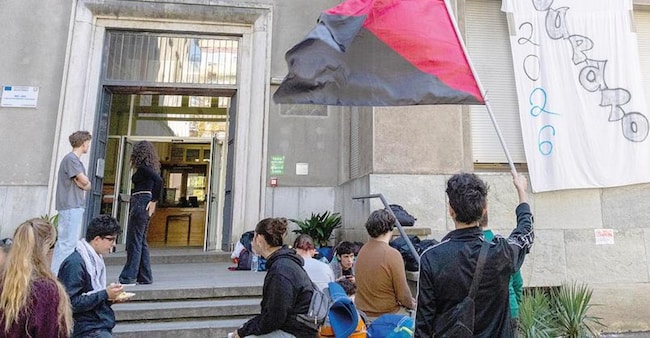
Student protests are continuing across Italia. The issue has also been addressed by the courts, but in order to hold families liable, it must be proven that their children acted with intent or through negligence

Key points
Student occupations and self-managed initiatives, which are springing up sporadically across the whole of Italia, have already been the subject of numerous court rulings in recent years. Judges have been called upon to strike a delicate balance between freedom of assembly, freedom of expression, the right to education and the smooth running of the school system. Whilst protesting is a right, it is not when it prevents others from entering classrooms or causes damage to school property.
Community service or a suspension?
In Bologna, a headteacher imposed a five-day penalty involving community or cultural service on a boy who was one of the organisers of a sit-in during which chains had been brought to block the entrances and abusive chants had been directed at the police. The boy’s parents lodged an appeal, arguing that their son had the right to freedom of expression. According to the Emilia Regional Administrative Court (judgement No. 1531 of 5 December 2025), ‘the occupation of the school does not constitute a lawful form of free expression of one’s opinions but a violent act of infringing upon the freedoms of others’.
The Court did not uphold the objections raised by the boy’s defence, which argued that the occupation fell within the scope of the right of assembly. In the judges’ view, the freedom of each individual ends where the freedom of others begins; therefore, the occupation of the school objectively constitutes a unilateral impediment to the other pupils’ right to education and to the teachers’ right and duty to carry out their educational role.
Disciplinary sanctions must, in all cases, comply with the rules and be proportionate. The Students’ Charter permits more severe sanctions in cases involving violence or physical or psychological coercion. The Council of State has recognised that expulsion from the institution may be legitimate in the case of particularly serious or repeated aggressive behaviour, where such behaviour is incompatible with the normal conduct of teaching activities (judgement No. 9647 of 2 December 2024). It is necessary, however, for the sanction to be imposed by the competent body and following a proper hearing: the Campania Regional Administrative Court has clarified that suspension cannot be ordered directly by an individual teacher and is not validated by a subsequent, purely formal ratification by the class council (judgement No. 3238 of 21 May 2026).
Furthermore, in disciplinary matters, the Lombardy Regional Administrative Court held that it was sufficient for the pupil and their parents to have been informed of the facts, involved in the proceedings and given the opportunity to defend themselves (judgement No. 1120 of 3 August 2026).


Brand connect


Newsletter Scuola+
La newsletter premium dedicata al mondo della scuola con approfondimenti normativi, analisi e guide operative
Abbonati