Then rising costs, indiscipline and social anxiety

School trips and unavailable teachers, more than 4 out of 10 students will stay at home

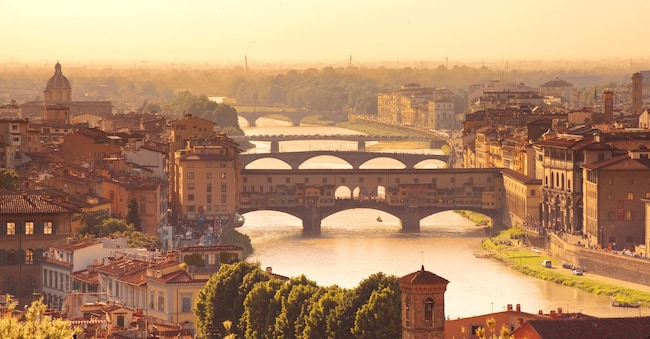
The dossier, Italian destinations preferred over foreign ones: Florence and Vienna win their respective rankings. International tensions frighten less than expenses and responsibilities for teachers

 Adobe Stock

6' min read

Translated by AI
Versione italiana

6' min read

Translated by AI
Versione italiana

Unavailable professors, excessively high costs, student indiscipline and even the personal choice to avoid forced cohabitation: these are the main reasons why almost half of the students (44%) from middle and high schools give up the traditional educational trip, the one with an overnight stay away from home.

School Trip Observatory of the specialised portal Skuola.net

This has been revealed by the annual School Trip Observatory of the specialised portal Skuola.net, carried out by polling a sample of 1,500 secondary school pupils on the threshold of the migratory season par excellence, not only for birds: of those who are leaving - 66% - about a third (34%) will do so from now until the end of the year, while 22% have already given in the past months.
But there could be more leavers. Because, to those who will almost certainly - barring last-minute second thoughts - have to give up the trip against their will (38%), we must add a resounding 6% who decided to abstain and bid farewell to their departing classmates. Among the latter, moreover, only 36% were forced not to leave by choice (economic or educational) of the family, while as many as 52% backed out spontaneously, in order not to be with their classmates.

Loading...

The numbers: we are back to pre-pandemic levels

The decision to avoid this experience, which in the past was considered indispensable, is therefore also influenced, at least in part, by the spectre of the now well-known and widespread social anxiety, which seems to affect the new generations of teenagers more than the previous ones.
For the rest, however, the Skuola.net Observatory notes numbers of non-departors (with relative reasons) that are absolutely in line with those measured in 2019. This is a sign that the side effects of the social isolation experienced in the post-pandemic period are slowly fading away.
Sign that this teaching practice, after the forced stop in 2020-2021, is back to business as usual. Moreover, in spite of the (possible) bureaucratic complication dictated by the fact that spending commitments for amounts over EUR 140,000 now have to be made through certified platforms or tools made available by central purchasing bodies, in line with the recent update of the Contracts Code.
Not surprisingly, according to 14% of students to whom the school did not propose an educational trip, this was one of the reasons for the 'niet'. Although MIM has initiated and concluded tenders that have allowed the identification of qualified suppliers from which to acquire turnkey services, without having to launch independent tenders.

Mostly, teachers and costs are the ones who blow the trip

But the reasons holding back multi-day educational trips are above all others. The main obstacle to student mobility is still linked to disciplinary reasons, which indirectly discourage teachers from making themselves available (at the root of the cancellation of the trip in 34% of cases) or represent the official reason for the refusal (12%).
At the same time, the weight of the aforementioned bureaucratic complexities and economic difficulties is also growing: 29% of the students who will not be going report that the school was unable to organise an educational trip due to the high costs or because an adequate number of participants was not reached. International wars and tensions, on the other hand, weigh only a modest 2% in the list of culprits.

Travel is getting longer again (and more expensive too)

Among those who are leaving, however, a clear trend can be seen: trips are becoming slightly more demanding, both in terms of duration and, predictably, expenditure. The average cost of the trip is around €440, up from the €424 recorded in 2025: a growth more or less in line with inflation but clearly noticeable on the final bill.
Almost half of the students (49%) are in a spending range of between 200 and 600 euros, a sign of a certain variability but also of a general increase in budgets.
But this, as mentioned, could be the result of a tendency to lengthen the duration of trips: in one year, the average goes from 3.94 to 4.06 days. This is the result of a two percentage point increase - from 36% to 38% - of students spending at least five days away from home. A signal indicating a willingness on the part of schools to make the experience more complete and structured.

Italy always in the lead, foreign countries advance: the trip speaks Florentine and... German

As far as destinations are concerned, Italia continues to be the predominant choice: 60% of students will stay within national borders. Although our country is losing ground slightly compared to the previous year. As a result, interest in foreign countries is growing, reaching 40% of preferences (twelve months ago it was 35%).
The most popular Italian destinations include the great cities of art: Florence (13%), Rome (12%) and Naples (11%) lead the ranking, followed by other classic destinations such as Turin, Palermo and Bologna.
Abroad, on the other hand, the German-speaking European capitals dominate: Vienna is first (9%), Berlin second (8%). Athens is second (8%), followed by Prague, Barcelona and Budapest.

Culture first, but price matters

What drives the choice of destination? Mainly cultural interest, indicated by 68% of the students as the decisive factor; but this is nothing new.
The economic aspect stops at 23% as the main criterion, but is still an important element: for about 7 out of 10 students, the need to save a little significantly influences the final decision.

Blocked departures and diversified transport: trains, planes, ships and... cruises are on the rise

When the trip is organised, then, participation is generally high: in more than 90% of cases, the majority of the class participates (69% of respondents report almost total adhesion). Only rarely (5%) are small groups involved. On the transport front, the coach is still the most used means of transport (46%), but it is losing ground compared to the past, partly because of the renewed fascination for departures abroad, which are often not sustainable by road.

It should also be considered that, as of this year, schools can no longer rely on 'low-cost' operators: in fact, the buses transporting students must be of the latest generation and equipped with autonomous braking systems. A decision that Minister Valditara vindicated following the in-service death of teacher Domenica Russo, who was killed in an accident that could have been avoided - if the bus had been equipped with these systems - because the driver had been distracted by looking at his smartphone.
Alternatives to road transport are therefore growing: 19% will travel by train, 28% by plane, 5% by ship. Moreover, for a fifth of sea travellers, the ship will not be a mere carrier, but an integral part of the experience in the form of a cruise ship.

Day trips: increasing risk of being stranded

For students who do not participate in multi-day trips, however, day trips are often the only alternative. However, also on this front some criticalities emerge. Only 31%, in fact, have already taken part in at least one educational visit and 35% plan to do so by the end of the year. This leaves a significant 34% who are afraid of not taking part in any outing, a sign that organisational difficulties may extend even to shorter activities.

Educational travel: an increasingly regulated sector

"Unfortunately, one can also die on educational trips: it can happen to students but also to accompanying teachers, as happened to 43-year-old Domenica Russo last 20 May. This shows the delicacy of an educational tool that is as useful as it is complex to manage, both in terms of the responsibility of teachers and of the schools' administrative staff, who are often called upon to manage tens of thousands of euros worth of assignments," notes Daniele Grassucci, director of Skuola.net.
"On both aspects," Grassucci continues, "the Ministry of Education and Merit has recently intervened, on the one hand issuing tenders that allow schools to rely on large, qualified suppliers with turnkey formulas, and on the other imposing quality requirements on the buses on which students and teachers travel. All this security, however, comes at an additional cost, for families, which limits the scope of educational trips to some extent. Although this is not the only reason why they cannot be organised: in fact, teachers have to manage (often undisciplined) students with few governing tools at their disposal and many responsibilities under civil and criminal law, in the face of laughable if not nil salary allowances because they depend on school funds'.

Scuola, tutti gli approfondimenti

La newsletter di Scuola+

Professionisti, dirigenti, docenti e non docenti, amministratori pubblici, operatori ma anche studenti e le loro famiglie possono informarsi attraverso Scuola+, la newsletter settimanale de Il Sole 24 Ore che mette al centro del sistema d'istruzione i suoi reali fruitori. La ricevi, ogni lunedì nel tuo inbox. Ecco come abbonarsi

Le guide e i data base

Come scegliere l’Università e i master? Ecco le guide a disposizione degli abbonati a Scuola+ o a 24+. Qui la guida all’università con le lauree del futuro e il database con tutti i corsi di laura

Lo speciale ITS

Il viaggio del Sole 24 Ore negli Its per scoprire come intrecciare al meglio la formazione con le opportunità di lavoro nei distretti produttivi delle eccellenze del made in Italy. Tutti i servizi

Copyright reserved ©
Loading...

Brand connect

Loading...

Newsletter Scuola+

La newsletter premium dedicata al mondo della scuola con approfondimenti normativi, analisi e guide operative

Abbonati