The dossier

School, Ugl-Luiss survey: 60% of young people are worried about choosing university

Technological disciplines are perceived by young people as the most relevant skills in the world of work: some 68% mention Computer Science, 62% Medicine (which includes Psychology), 62% Science, Pharmacy and Biology, 54% Engineering

4' min read

4' min read

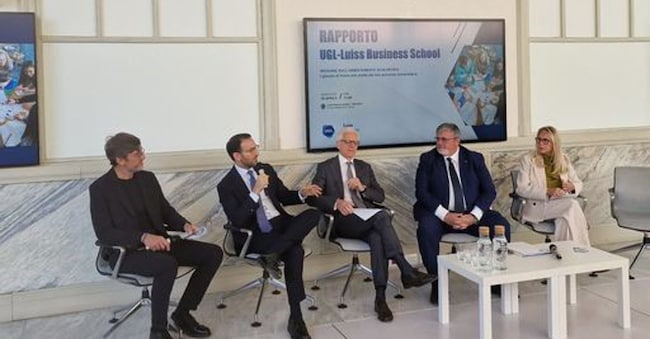
Almost two out of three young Italians are concerned about the choice of university path to follow. The figure emerges from a Ugl-Luiss Business School report conducted on a sample of 500 young people between the ages of 17 and 20 who either have concrete intentions of enrolling in their first year of university or are already enrolled in their second year and have to evaluate the university pathway most suited to their employment aspirations. The survey, presented in one of the University's Rome offices on the occasion of the forthcoming Workers' Day, shows that the decision on the university route is a source of concern for 60% of those interviewed (around a quarter even declared themselves to be "very concerned"), while for 63% the most common factor of choice is the type of job they would like to obtain in the future; 68%, on the other hand, consider IT skills to be among the most relevant in the world of work..


Loading...

The concern between North and South

.

The level of concern rises as we go down the 'Boot' and reaches 68% in the South and the Islands, while it falls between 52% and 56% in the North. Not having, or not having had, reliable support to make such a choice is the most widespread reason (38%) for this concern, together with the need to find a pathway that is truly exciting (40%). The type of job one would like to have at the end of university is the most common factor of choice among respondents (63%). Less than 10%, on the other hand, identify this factor in the advice of people 'followed' on social channels. In this area, therefore, influencers have little influence and, in any case, carry less weight than friends who are already enrolled at university (indicated by 20% of the sample). For some 42% of young people, knowing directly about the world of work and existing opportunities is a priority need, while for 38%, more information is needed on the jobs of the future and the type of skills needed.


Little clarity for choice

Some 37% of young people say they are 'moderately clear' about what skills they need to acquire at university in order to do the most in-demand jobs, and another third say they understand them very much or completely. However, the remaining 30% admit to a lack of awareness. This number is very high, rising to 38% for residents in the southern regions and Sardinia. This confirms the existence of a strongly disadvantaged area of the youth population in our country.


School-to-work

School-to-work alternation and the possibility of easily changing the course of university studies are reported by 27% as useful support. The contribution of the family is considered important and qualifying by just under 20%, highlighting the existence of a substantial segment of young people who benefit from a family channel useful for preparing for and entering the world of work.
Technological disciplines are perceived by young people (without any gender difference) as the most relevant skills in the world of work: about 68% indicate Computer Science, 62% Medicine (which includes Psychology), 62% Science, Pharmacy and Biology, 54% Engineering. Finally, for 63% of the sample it is necessary to continue training even after university in order to update and refine one's skills over time, and for 60% of young people it is important to acquire experience abroad..


Orientation

To help young people in their choice of university pathway, according to Ugl secretary Paolo Capone, "in the secondary school some professors can specialise in the field of 'Professional Orientators' and be able to provide awareness. Because one datum that emerges from this research is that 30% of those surveyed state that they are not aware of the importance of the university choice they will have to make in order to achieve the job they want to do. We must give this 30% the tools they need to make up this gap, and if we consider that in southern Italy this figure rises to 38%, we must do it quickly and well".
For the undersecretary to the Mef, Federico Freni, orientation "should even start from middle school to know how to cultivate boys and girls for what they can give and perceive their orientation, to which the family must also contribute. I see this with my daughters who are in primary schools, they are going to middle school, and there has been a very intelligent orientation activity by the teachers, even though there are few options that middle schools offer".
The ultimate goal of training "is not the accumulation of notions, sooner or later artificial intelligence will give us those, but to have heads that work" and that are What is missing in many of this generation is passion - concluded Freni - So much is done to earn money. In today's job market, people look at 'How much do I earn today' and not at the prospect'.
For the chairman of the Culture Committee at the Chamber of Deputies, Federico Mollicone, 'Parliament, the committee I chair and Ministers Valditara and Bernini have done a great job on orientation, from the Pnrr funds to specific funds, to give young people the chance not to make generic but directed choices. There is still a lot to be done to fill the gaps that exist in central and southern Italy in terms of strengthening orientation. We have excellent public and private universities, but we must be sure that the choice is the right one, so as not to waste time and to consolidate growth and training that will lead to rapid absorption into the world of work with success'.

Copyright reserved ©
Loading...

Brand connect

Loading...

Newsletter Scuola+

La newsletter premium dedicata al mondo della scuola con approfondimenti normativi, analisi e guide operative

Abbonati