
Science parks, innovative ecosystems must be designed for the long term
Majorana (director of Kilometro Rosso): 'The challenge is to generate a positive impact on the production system'
Key points
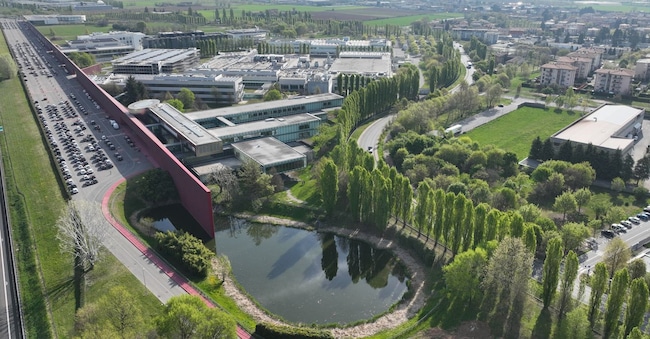
"Today, governing an innovation ecosystem such as a science park means not just offering spaces or services, but carefully studying the needs of companies and the potential of those who bring solutions, and honing the ability to combine them in a targeted manner. The challenge is to generate a positive impact on the production and industrial system, by making companies, universities, start-ups and research centres work together while respecting the peculiarities and diversity of each innovation player'. This is the vision of Salvatore Majorana, director of Kilometro Rosso, one of Europe's leading innovation districts strategically located in Bergamo, on the A4 axis between Milan and Venice.
Founded in 2009 and developed on a private initiative, today the campus is home to 85 companies, laboratories and research centres with a total of three thousand employees and researchers. In the end, it is still the territory - or as it was once called, the district - that makes the difference and rises in relevance and awareness. So even in dematerialised times, it is places that attract us like magnets.
In 77 countries 142 thousand innovative enterprises
Since a few months Majorana is also the new president of Iasp, International Association of Science Parks and Areas of Innovation. This is the world's largest network of science and technology parks, innovation areas, technology transfer hubs and innovation districts worldwide. Almost 400 members representing 142,000 innovative companies in 77 countries worldwide. A machine of exchange and acceleration that transforms science parks into bridges between universities, enterprise and capital that accredit themselves as true orchestrators of ecosystems. "In Italy, from north to south, experiences have multiplied over the years, a sign of the vitality of a world of innovation that wants to emerge.
Majorana: "Designing the growth of ecosystems"
There are many international examples to learn from: Zhongguancun Science Park in Beijing, High Tech Campus in Eindhoven, Málaga TechPark in Spain,' says Majorana. But for this lifelong engineer committed to designing the future - in the past he was also director of technology transfer at the Italian Institute of Technology - the divergences between the Italian model and that of countries such as China or South Korea are obvious. "The key is the ability to design and plan the growth of ecosystems. In Italy and Europe, long-term programmes systematically exclude innovation from the agenda. By contrast, in China, the US, South Korea and emerging economies such as Turkey, Brazil and India, governments support growth plans focused on skills and exchanges between universities, industry and finance'.
Untapped potential
The winning formula lies in the potential that must also be understood by the political and ruling classes. "In these countries, even those that are geographically very distant from Italy, science parks are strategic instruments that have transformed history: China is a leading industrial power, Turkey is tumultuously advancing, the USA is strengthening its supremacy. In Europe, despite decades of evidence on their strategic nature, measures to enhance them are lacking,' Majorana points out. From these structures that are so flexible and permeable to co-design and co-creation will arise the services that will design the future of cities, businesses, mobility, and our daily lives. "From here will pass technology transfer and the creation of new enterprises, which must become cornerstones of the country's industrial policy. There are different models for doing this. We are already active in classic venture capital, but also in venture client, which is valuable in bringing large corporations closer to new enterprises,' says Majorana.

