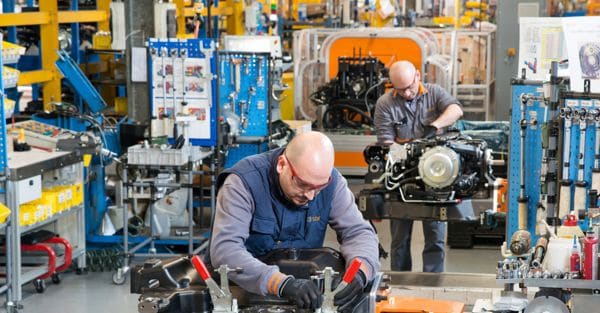
Sdf, from hi-tech route the anti-crisis shield
All-time top investments with a push on new technologies, growing market share, margins close to record highs
by Luca Orlando
3' min read
3' min read
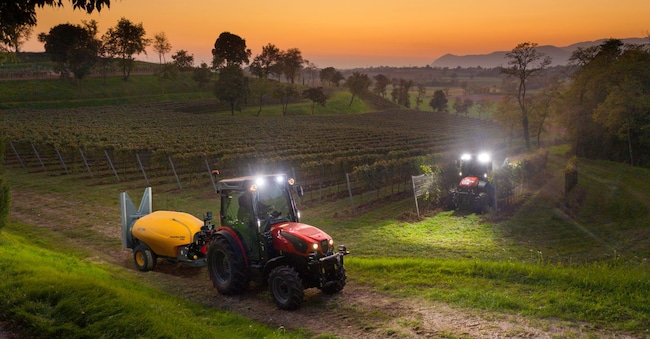
Soon S.T. will have to fill up again. His tractor, on the slopes of Mount Olympus, is travelling at 4 kilometres per hour, the power take-off is working at full speed, the oil is at 78 degrees, and the tank has 30 per cent autonomy. And probably, given the hour, he will take advantage of the lunch break for the necessary top-up.
On the maxi screen of the Sdf meeting room in Treviglio, the tractor at work in northern Greece appears like thousands of others, individual dots scattered on the geographical map of the world that in just a few moments can be 'interrogated' to provide every possible piece of information and enter the world of agriculture 4.0. "This real-time usage data," explains Sdf CEO Lodovico Bussolati, "is crucial for activating forms of predictive maintenance, but also useful for our design activity, feedback that allows us to constantly improve our products. It is indeed here, in the research and development-product activity, that the global agricultural machinery giant based in Treviglio has placed the heart of its strategy, a systematic investment of at least 60 million per year that precisely in 2024 will touch an all-time high both in absolute terms (75 million) and in relation to revenues, with the real-time connection of tractors sold representing just one of the many strands.
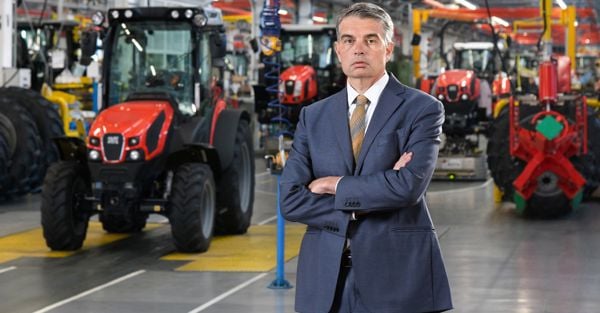
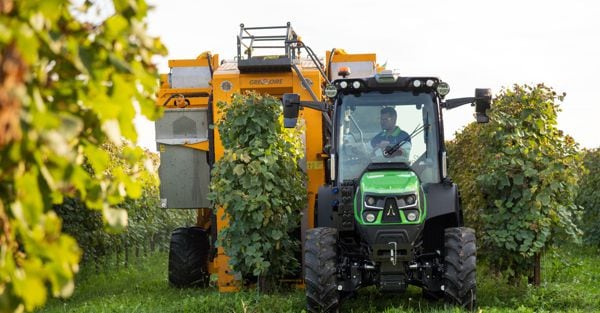
'The main components of the power train, as well as software and electronics,' comments the CEO, 'are developed in-house with continuous investment. The fruits of this sowing work are harvested after an average of five years, which is why, in order to build for the future, we have never stopped investing, all the more so when the market is at its most difficult". As is the case now, with a drop in global demand for tractors well into double figures that is reverberating in the numbers of all the big players and that for Sdf is worth a 19% reduction in revenues from the historical highs of 2024, still 30% above pre-Covid levels. Reduction largely absorbed in Ebitda, close to 200 million, over 11% of revenues, the second best result ever, fueling the innovation circuit. "Thanks to continuous product upgrades," explains Bussolati, "even at a complex time like the present, our market share is constantly progressing, both in Italy and in Europe, a trend that will continue in 2025, comforting us in our forecast of maintaining last year's levels. Decisive for the group's development has been its international projection, with new branches opened in Ukraine, Tanzania and Mexico, but above all production sites in India, China and Turkey. A market, the latter, which in 2019 developed just 36 million in revenue, which has now jumped to over 300 million. Sdf's strong point, an area in which it is a world leader, is the area of special machinery dedicated to orchards, olive groves and vineyards, a category reinforced with the recent acquisition of a start-up, Vitibot, capable of building an electric, autonomously driven machine.
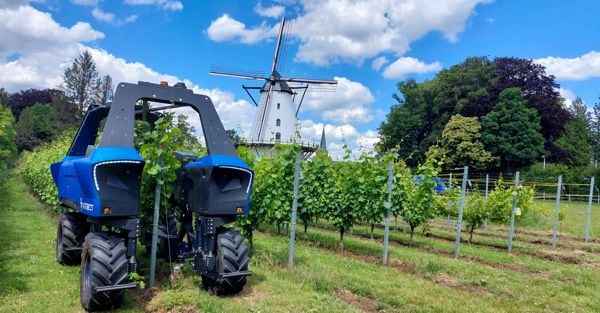
'An important acquisition,' comments Bussolati, 'which has brought within the group a know-how that we did not have, allowing us in parallel to extend these applications elsewhere, for example in the development of an autonomous driving tractor, an experiment already at an advanced stage.
Technological developments that for Sdf, 1.64 billion in revenues and over 4 thousand employees, are guaranteed by a robust research department, 250 people in the Treviglio headquarters alone, a 1400-employee headquarter that also this year benefits from an individual result bonus of over 5 thousand euro, a consolidated trend that in 10 years has developed 50 thousand euro in value. This bonus is in addition to other welfare measures, part of a 30 million euro investment plan that includes new changing rooms and offices, car parks and cycle paths, green spaces and an infirmary where specialist examinations can also be carried out. The production set-up envisages a 38-hour week for blue-collar workers and a 39-hour week for white-collar workers (paid 40 hours in both cases), with closing time on Friday afternoons on average and flexibility of entry and exit for the white-collar part during the week.