Confindustria

Sea economy grows but 175,000 workers are missing

Zanetti: 'Increased demand clashes with adverse demographic dynamics The wealth produced by the supply chain rose by 16%
by Raoul de Forcade

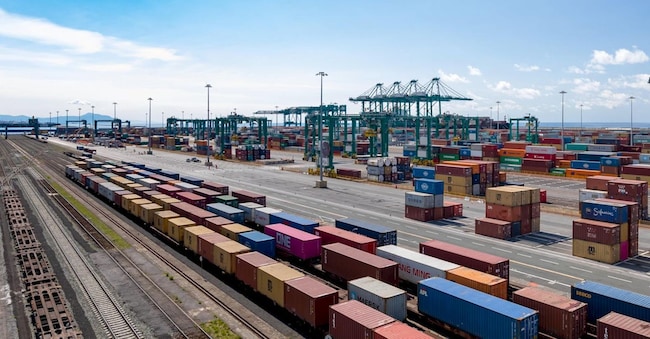
Porto di Genova (Imagoeconomica)

3' min read

Translated by AI
Versione italiana

3' min read

Translated by AI
Versione italiana

Confindustria (Confederation of Italian Industry) turns a spotlight on the employment emergency in the blue economy, which will suffer a deficit of 175,000 workers in the next five years, which is difficult to find. The alarm was raised by Mario Zanetti, delegate for the blue economy, who highlighted the results of a report produced by the association with the support of Bcg (Boston consulting group).

Zanetti highlighted this situation during the conference Genoa and Liguria Capitals of the Maritime Economy 2026; a meeting that represents the first of a series of appointments conceived by Confindustria to enhance the maritime sector and present its proposals on the sector (the next one will be in 2027, in Naples).

Loading...

Opening the day was the president of Confindustria, Emanuele Orsini, who recalled that 'the sea economy is worth 11.3% of GDP, 216 billion in turnover, and more than one million employees; with the supply chain we are at two and a half million people. I believe it is very important to highlight this economy, especially for a country like ours with over 7,700 kilometres of coastline. At a time like this, we need to support all sectors so that our country can continue to do well'.

An appeal accepted by the Prime Minister, Giorgia Meloni, who, in video link-up, emphasised that "to support the economy of the sea" the Government is focusing on "simplification, innovation, and the valorisation of human capital, as it has done with the sea resource bill, which is finally about to conclude its process in Parliament".

Zanetti, illustrating the data of the Confindustria-Bcg report, stressed that 'the four main EU countries (Germany, France, Italia and Spain) together account for 60% of the added value and 52% of the total employment of the European blue economy. At EU level, the sea economy employs 4.82 million people, generating an added value of EUR 250.7 billion and a turnover of EUR 890.6 billion. Italia, moreover, is second in Europe for employment and added value in the blue economy'.

The wealth produced by the supply chain, he added, "grew by almost 16% in the two-year period 2022-23, at current values, against 6.6% of the total economy; a growth rate of about 2.5 times the national average. Even more significant is the employment figure: with 1.1 million directly employed, the increase in 'blue' employment was four times that of total employment'.

In short, says Zanetti, 'the sector is booming and will have a growing need for workers that, however, it risks not finding. The total employment requirement of the blue economy, over the five-year period 2026-2030, is estimated at around 175 thousand workers: 55 thousand new posts generated by the sector's growth and around 120 thousand to replace outgoing profiles. An enormous demand, which clashes with an adverse demographic dynamic: the Italian population of working age between 2025 and 2050 will shrink by 10 percentage points. Added to the quantitative problem is a qualitative one: Italy's education system does not produce enough profiles with the specific skills required by the blue economy. And the employment problem of the sea is not cyclical but structural: it requires a systemic response'. A response that, according to Zanetti, 'is built by acting on three levers: simplifying, innovating and training, because without the right skills, everything else remains on paper'.

Antonio Gozzi, Confindustria's special advisor for European strategic autonomy and the Mattei Plan, also emphasised that, for the sector, 'a lot of training is needed. The economy of the sea is a strong point for Italia, due to its history and geographical location; the geopolitical role of Italia in the Mediterranean is destined to increase enormously in the coming years: we must prepare ourselves to be equal to this role, first of all by training human capital'.

Riccardo Di Stefano, Confindustria's delegate for education and open innovation, in turn, recalled that the maritime economy is the emblem of the country's supply chains: 'Peaks of excellence, great opportunities, an extremely positive outlook but a complex structural gap on access to skills, both new ones and those that need to be constantly updated'.

Taking part in the 'blue' day were, among others, Alvise Biffi, Marco Gay, Paola Carron and Piero Formenti, presidents of Assolombarda, Unione industriali Torino, Confindustria Veneto Est and Confindustria nautica, respectively; as well as Alessandro Panaro of Srm (Intesa Sanpaolo's research centre) and Maria Raffaella Caprioglio, president of Umana.

Copyright reserved ©

Brand connect

Loading...

Newsletter

Notizie e approfondimenti sugli avvenimenti politici, economici e finanziari.

Iscriviti