
Sea is investing 600 million to support Malpensa’s growth
Among the most significant projects is the northward extension of Terminal 1 at the airport

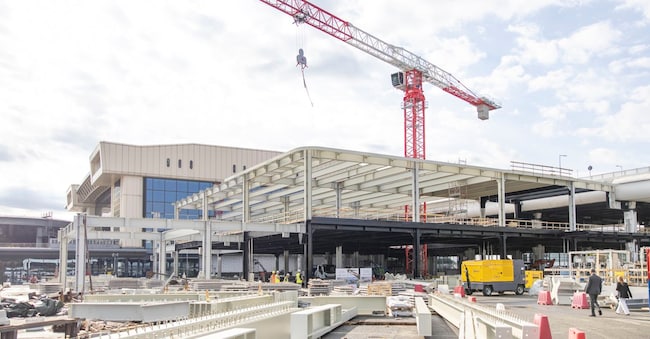
Malpensa Airport is embarking on a new phase of development, with around 600 million euros of investment planned by 2029. Of this, 50 million will be allocated to technology. The aim is to make Malpensa Airport – Italia’s second-busiest airport after Rome Fiumicino in terms of passenger traffic and the country’s leading airport for freight traffic – stronger and more attractive on the global air transport market.
This was stated by Armando Brunini, Chief Executive of SEA (the company that manages the airport), speaking at the event ‘Malpensa, Gateway to Italia. Milan and Lombardy as seen from around the world’, which took place on Thursday 17 September 2026 at the airport. The event, organised by SEA and Socialcom, was attended by, amongst others, the presidents of Assolombarda, Alvise Biffi, and Confindustria Varese, Luigi Galdabini, as well as the President of the Lombardy Region, Attilio Fontana.
Brunini explains: “In SEA’s 2025–2029 plan, we have included a doubling of annual investment. The focus will be partly on creating new infrastructure and new spaces, but also on a genuine revamp of the airport.” Passengers and cargo: two aspects that reinforce Malpensa’s role as a strategic infrastructure for the competitiveness and appeal of Milan and Lombardy.
A key feature of the investment plan for Malpensa is the allocation of over 100 million euros to the T1XL (Terminal 1 Extra Large) project, the new expansion and refurbishment scheme for Terminal 1 promoted by SEA. The project involves the northwards extension of T1, with the creation of approximately 15,000 square metres of new space and the refurbishment of over 28,000 square metres of existing areas. This project will enable the infrastructure dedicated to international passengers to be enhanced, passenger flows to be managed more effectively, and the range of services on offer to be expanded.
Malpensa Airport, Brunini emphasises, is one of the key infrastructure hubs through which Milan connects with the world. Its growth is closely linked to the increasing international focus of the city and the Lombardy region. Brunini continues: “Today, Malpensa connects Milan to 204 destinations in 83 countries, confirming its role as a gateway to international markets. Malpensa is also a strategic hub for the manufacturing sector: in 2025, it handled 763,000 tonnes of freight, accounting for over 60 per cent of the country’s air cargo.”


