
Sea temperatures are rising even at a depth of 40 metres
The data contained in the report *Mare caldo*, produced by Greenpeace with the support of the Universities of Genoa and Urbino

Key points
The temperature of the Italian seas (and elsewhere) is rising. Greenpeace has sounded the alarm with the latest report from the ‘Mare Caldo’ project, which reveals that ‘Italian seas, too, are continuing to warm, with heatwaves reaching depths of up to 40 metres, necrosis or bleaching of gorgonians and corals, and the spread of thermophilic and alien species”.
14 monitoring stations
The report is based on data collected in 2025 at 14 Italian monitoring stations – 13 of which are located in Marine Protected Areas – using underwater thermometers and periodic monitoring. According to Copernicus data, this was the third year in a row and the hottest ever recorded globally, with an average surface air temperature of 14.97°C, which is 1.48°C above pre-industrial levels.
This ongoing work has seen the environmental organisation collaborate with the Department of Earth, Environmental and Life Sciences at the University of Genoa, the National Institute of Oceanography and Experimental Geophysics, and the Department of Biomolecular Sciences at the University of Urbino.
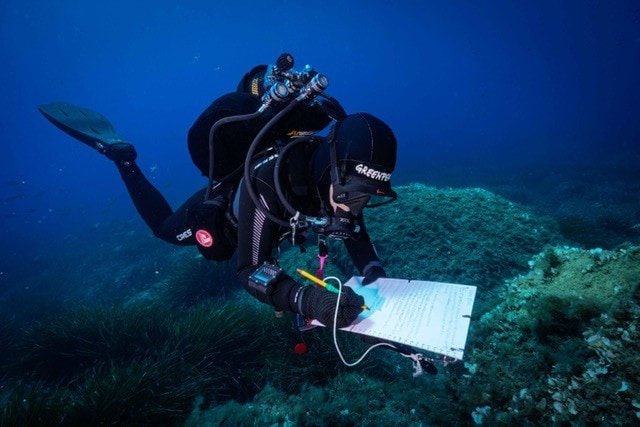
The Mediterranean is changing
“The Mediterranean is changing rapidly, and the effects of global warming no longer affect just the sea’s surface,” points out Valentina Di Miccoli, a campaigner for Greenpeace Italia’s Mare programme. “Today we are seeing temperature anomalies that are reaching deeper habitats and directly affecting the health of marine ecosystems, even within marine protected areas.”
In Sardinia, +3.5 degrees
The highest sea surface temperature anomaly, at +3.5° above the climatological average, was recorded in Sardinia between late May and July 2025 in the Asinara Island Marine Protected Area, during a heatwave lasting 41 days. The other major anomalies were recorded in Sardinia within the marine protected areas of Capo Carbonara and Tavolara, at +3.46° above the average. Then in the Sicilian marine protected areas of Capo Milazzo at +2.94° and Plemmirio at +2.71°. ‘The heat accumulated on the sea surface during the summer – the report emphasises – has also been transferred to greater depths, through the mixing of the water column caused by the wind, resulting in temperatures of up to 25° at depths of 30–40 metres and subjecting the organisms living on the rocky seabed to severe stress.”

