
Searching for words in Friuli, a land of happy people
From Aquileia, where Saint Mark brought the Christian faith, to the parish church of Zuglio, and on to the Tagliamento: the Friulian language contains echoes of Celtic, Samnite, Latin, Thracian, Median, Lombard, Carolingian, Slavic and German influences

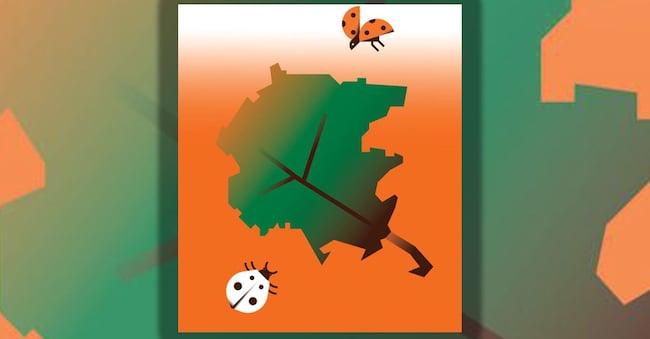
As a child, I really loved the expression arc di San Marc, which is how the Friulian language describes a rainbow. It seemed more dreamlike and colourful to me than the Italian version and, above all, I felt enriched because I had another way of describing that arch that spanned the Tagliamento, the great river of my childhood. It is the interweaving of stories and the privileges of those who live on the border – which is a sharing of the finis, never a frontier, that is, standing face to face with one another. Many years after that linguistic infatuation, Dad, whilst also reminding me of the marcule (the somersault), explained to me that the church of Aquileia – from which Christianity spread throughout Friuli – could be traced back to a Judeo-Christian branch of Petrine-Marcian origin. St Mark – as revealed by the research of Don Gilberto Pressacco, a refined scholar who passed away far too soon – came from Alexandria in Egypt and was a member of the brotherhood of the Therapeuts, who turned their backs on the city, preferring life in the countryside: that rusticitas spills over from faith into words and, for example, into the orgiastic rhythm of Scjaraçule maraçule, our dance made of ‘reed and fennel’ which recalls the benandanti and which Angelo Branduardi was so fond of.
St Mark, then. Aquileia in the 1st century AD was a multi-ethnic city and one of the wealthiest in the empire; it embraced the new faith, through which, as recounted in Marco D’Agostini’s documentary film *i* *Incanto* , God is willing to save even those who are different, those who are distant, and those who are far away. And that message of salvation for the peoples of all nations takes shape in the mosaic floor of the Basilica of Aquileia and then walks on the legs of men and women through a network of sermons and new places of worship; it is more than an emotional map – it is the map of feeling like a daughter of a thousand peoples, a thousand languages, a thousand stories. Of feeling rich and fortunate.
The Via Iulia Augusta runs northwards from Aquileia; it is the route of amber, salt and iron, and passes close to Iulium Carnicum – today’s Zuglio – the northernmost Roman settlement. As you enter the village, with the Bût valley and the immense Mount Coglians stretching out before you, the remains of the forum speak of its former glory. And even more so does the Archaeological Museum. Deputy Mayor Anna Pia Zamolo opens the doors for me because, in small towns, everyone does everything – that’s the sense of community: ‘We’re putting the finishing touches to the renovation, with new exhibition rooms to highlight how this colony was a vibrant melting pot, as revealed even by the bronze plaque commemorating Bebius Atticus: he had been prefect in Moesia and Treballia – that is, in the Balkans – then in the Maritime Alps, in Noricum and, finally, here in Zuglio’. And I see that mix again as I look up from the village towards the mountains. Hanging against the sky, amidst dazzling greenery, stands the mother church of San Pietro in Carnia, with its ‘onion-domed’ bell tower, so distinctly Slavic in profile. The setting is spectacular, and Monsignor Giordano Cracina is a man of deep faith and culture: ‘Up here,’ he reminds me, ‘there used to be a place of worship for the Avars, then an 8th-century cathedral and, finally, the present church, commissioned by the Patriarch of Aquileia in 1312. How many worshippers from all over have stopped here to implore grace...’. And this interweaving of peoples and buildings is also reflected in the words: ‘tasca’ can be gofe, scarsele and sachete, whilst ‘to go’ is lâ and zî (the Latin ambulare and ire).
From Zuglio, the ‘Verbo Marciano’ made its way up through the mountains and gave rise to eleven parish churches, linked by the ‘Cammino delle Pievi’ for those seeking footpaths and great beauty, and by the ‘Bacio delle Croci’ ceremony, where faith and identity intertwine every year on Ascension Day. You walk through valleys and over high peaks, and in Sauris/Zahre, in the presence of His Majesty the Bivera – the ‘mountain of the beavers’ – you hear yet another dialect: Friulian and Italiano give way to a language of Germanic origin, a linguistic relic from the 12th century. Then, more parish churches: from that of Forni di Sotto to that of Santa Maria oltre Bût, and finally to the parish church of Illegio. San Floriano watches over and overlooks the Bût stream, which flows into the Tagliamento. Crystal-clear waters carry me back towards the plain as far as Tabine, a hamlet in the municipality of Pinzano. This narrow stretch, mentioned by Venanzio Fortunato (6th century AD) in his *i* *De reditu* */i* as the perfect ford across the river, is a fitting place to conclude my journey through languages, spirituality and hybrid traditions. I step into the Tabine tavern; it is a bright Saturday in July and the place is buzzing with the cheerful hustle and bustle of young people. That marvellous storyteller, Angelo Floramo, is here with his students; he has guided them through their school-leaving exams and helped them reach for new dreams. In the archive records at the Guarneriana Library in San Daniele (do go and see for yourselves!), they found traces of Malvasia and Terrano, and the owner of the Tabine, ever obliging, treats them to a veritable seminar on taste, washed down with a glass of Emilio Bulfon’s Scjaglìn (how we miss you, dear Milio), the Schiavolino wine whose very name marks its connection with the Slavic world. The lads are delighted, and Angelo urges them: ‘Always remain travellers between your wonders; never become prisoners of a cage you do not deserve.’
In this borderland, there are no borders because the words of the Friulian language make us feel like children of the world; we are Celts, Samnites, Latins, Thracians, Medes, Lombards, Carolingians, Slavs and Germans all at once. And our words are as sweet as blueberries, the glasimi’ (another Celtic origin) sung by Novella Cantarutti, the greatest Friulian poetess of the twentieth century: ‘May they be / written down there / like “glasimi” as you say, / from “gjoldi”, / one at a time, / they are the lips of a child / that taste the flavour with their mouth, / the mind with its thoughts / and the heart with its blossoming’ (If only / the words were written / like blueberries in a basket, / to be savoured, placed one by one / upon the lips of a child / who tastes the flavour with his mouth, / the mind with its thoughts / and the heart as it blossoms).


