
Sebino: the €15 scenic train journeys along Lake Iseo are fully booked – new dates have been added
The rail tourism project showcases the local landscape and history using panoramic carriages converted from goods wagons, offering an immersive and sustainable experience on Lake Iseo.

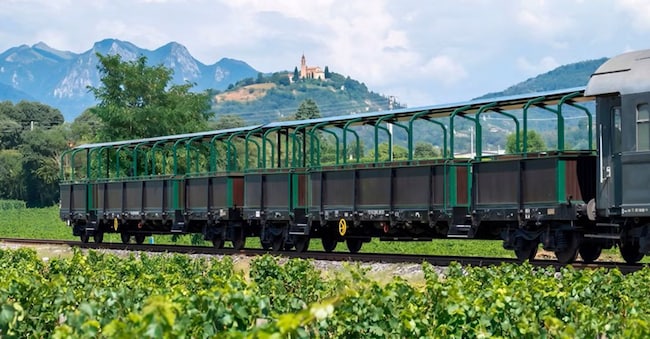
The summer services featuring the new panoramic carriages on the Palazzolo sull’Oglio–Paratico Sarnico line are sold out. The Fondazione FS Italiane announced that the service is fully booked, confirming the success of the initiative launched on a trial basis during the summer of 2026. To meet the demand, new dates have been added to the calendar: services will resume on Saturday 5, Sunday 6 and Saturday 12 September. Tickets can be purchased on the Fondazione FS website and via Trenitalia and Trenord sales channels.
The project and the history of the line
The initiative was announced on 20 June and was launched by the Foundation – the organisation established in 2013 to protect Italy’s vast railway heritage – on 27 June, to mark the 150th anniversary of the line’s opening. Construction work on the historic tracks began in 1874 and was completed two years later. Initially, the line was used primarily to connect the steelworks of the Sebino area, between the provinces of Bergamo and Brescia, to the main railway network and for freight transport. At Paratico, the journey continued by water. The wagons were transferred onto barges bound for the factories on the lake. Regular passenger services remained a secondary activity for a long time and were discontinued in 1966, whilst freight services continued to operate until 1998.
“Timeless Tracks”
It was only in 2014 that tourist trains resumed running on the line, which has become part of the ‘Binari senza Tempo’ scheme, the FS Foundation’s project aimed at breathing new life into ten railway lines criss-crossing the Italian province, creating an innovative model of rail tourism and helping to ‘revitalise the areas they pass through by creating a widespread museum of small villages and Italy’s scenic gems’. The project for the Palazzolo sull’Oglio–Paratico Sarnico line involved not only the FS Italiane Foundation but also Trenord, under the patronage of the Lombardy Region’s Department for Transport and Sustainable Mobility and the Department for Tourism, Regional Marketing and Fashion.
An immersive experience
The journey is short – just 10 kilometres – but the experience is charming and authentic. The panoramic carriages depart from Palazzolo sull’Oglio and take passengers to Paratico Sarnico through cultivated fields, neat rows of vines and wooded stretches. The views change with every bend. The railway follows the course of the River Oglio right up to the shores of Lake Iseo. The carriages – designed specifically to offer direct contact with the surrounding environment – are partly open-top, allowing tourists to immerse themselves in a breathtaking panorama steeped in history. The train travels slowly, giving passengers the chance to ‘observe every detail of the landscape, breathe in the scents of the countryside and experience the area from a different, more authentic and mindful perspective’, as stated on the Fondazione FS website. Once at your destination, you can continue the experience on foot or by bike along the numerous cycle and footpaths and riverside trails that wind through the area. The initiative was launched to recapture ‘the charm of the railway journeys of yesteryear, transforming the journey into a unique visual and sensory experience: not just a means of transport, but a veritable moving viewpoint’.
An example of regeneration and sustainability
The Foundation envisages that the panoramic carriages will not only offer an immersive experience but also serve as an example of restoration and sustainability. The project arose from the conversion of three decommissioned flatbed freight wagons, which were transformed into panoramic carriages at the Officine Grandi Riparazioni in Rimini. This has given rise to a mode of transport that is already widespread in some Northern European countries but is still absent from the Italian landscape.

