
Secondary school exams are about to begin, but don’t worry: only 0.1% will fail, and 10% of candidates will achieve top marks
Whilst all eyes are on the Maturità exams, around 500,000 younger students are already raring to go for their ‘mock exams’. No need to panic, though: the figures show that failing is a rarity
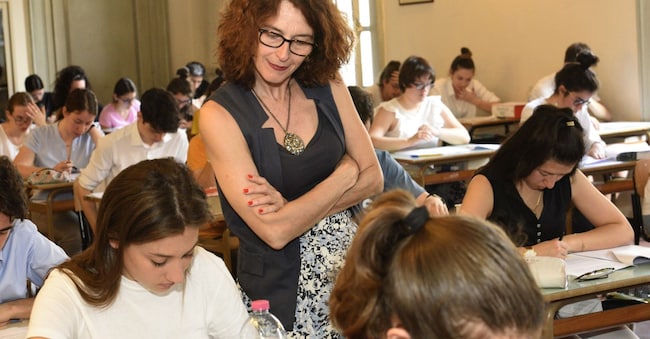
Although all eyes are on the half a million sixth-formers sitting their final A-levels, there is an equally large, though considerably younger, cohort currently engaged in the ‘battle’ for their GCSEs.
However, although for many teenagers this represents the first major test of their lives – one that can even keep them awake at night – the statistical reality tells a very different and far more reassuring story: virtually all of them sit the exam and pass their lower secondary school certificate, often with excellent grades.
This becomes clear when reading an in-depth analysis by the Skuola.net portal, which combines an analysis of ministerial data with a practical guide on how the exams work. A comprehensive resource useful for students and families, especially for easing the tension.
The figures are reassuring: almost everyone has been admitted and passed
The first major reassurance for those about to sit the exam comes from the statistics for the most recent sitting (the one held at the end of the 2024/2025 academic year). The figures speak for themselves: the exam itself is by no means an insurmountable hurdle – quite the opposite.
The real, albeit mild, selection process takes place, if anything, beforehand, during the admission exams: nationally, 98.8% of students are admitted, which is enough to put your mind at ease.
Once you’ve secured a place for the exam, the road is literally downhill: 99.9% of candidates obtain their diploma, reducing the percentage of those failing the exams to a minuscule 0.1%. This trend has been continuing for years.
Not only that: as well as passing almost everyone, the exam rewards candidates with particularly good marks. Looking again at the figures from the last exam session, the vast majority of students fall into the middle grade bands, with 27.3% achieving a ‘seven’ and 27.9% achieving an ‘eight’.
There is certainly no shortage of top performers: almost 20% achieve a ‘nine’, whilst 5.6% and 5.2% of graduates reach the top marks of ‘ten’ and ‘ten with honours’ respectively, more than double the number who scrape through with a ‘six’ (14.2%).
The anatomy of grades: the stumbling block of maths and the dominance of girls
A closer look at the results over time – thanks to the Ministry’s Focus on the 2022/2023 academic year, the most recent comprehensive analysis available – reveals some fascinating trends regarding individual exams and the differences between candidates.
Breaking down the marks for the various subjects, we discover, for example, that the real ‘bête noire’ for Italian students remains the written maths exam, which recorded the lowest national average mark, at 7.4. Conversely, students manage to perform at their best precisely at the moment that is theoretically the most anxiety-inducing, namely the oral examination, where the national average jumps to 7.9.

Brand connect


Newsletter Scuola+
La newsletter premium dedicata al mondo della scuola con approfondimenti normativi, analisi e guide operative
Abbonati