
Security, Crosetto: 'Adding Carabinieri personnel to the voluntary reserve, made up of citizens'
A Strategic Committee, which met for the first time on 16 January, is to draw up a draft of a comprehensive defence review bill. The measure will be sent to parliament in the near future

Key points
- Crosetto: "The Ministry of Defence is developing the concept of voluntary reserves"
- "To add to the reserve personnel to be recruited from among the Carabinieri, in support of internal security"
- A Strategic Committee has the function of identifying the model
- The moves of France, Germany and Poland
- "On Kiev we are credible if everyone goes in the same direction"
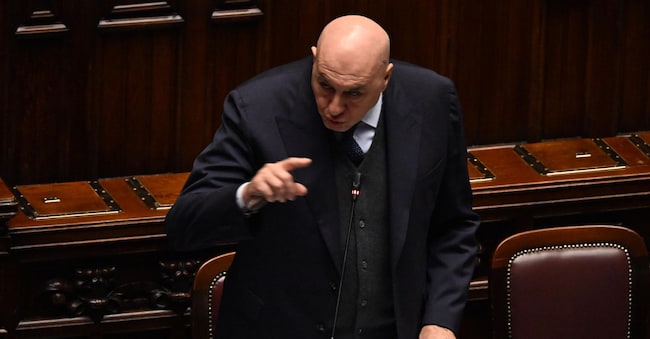
On the internal security front, Italy is thinking of a voluntary reserve, capable of playing a bridging role between the armed forces and society. "The current situation is marked by the return of competition between the great powers and high-intensity conflicts at Europe's doorstep. Security is no longer an accessory variable, but a condition for guaranteeing freedom and democracy,' stressed Defence Minister Guido Crosetto, speaking on Wednesday 28 January during question time at the Chamber of Deputies to answer questions on military support to Ukraine and on initiatives to adapt the defence model to the current international context, including through the instrument of the military reserve.
Crosetto: "The Ministry of Defence is developing the concept of the voluntary reserve"
"In line with what our allies are doing," he explained, "the Ministry of Defence, in addition to the study on increasing personnel and the professional model, is developing the concept of the voluntary reserve, on which I have been working for some time. A resource that is still modern, flexible, composed of citizens who provide the State with skills that are decisive today, from cybersecurity to digital technologies, from space to artificial intelligence. It is not an instrument designed to make up for the temporary unavailability of professional military personnel, personnel that cannot continue to diminish, but a bridge between the Armed Forces and society capable of strengthening not only defence but also that culture of security that is fundamental'.
"To add personnel to the reserve to be recruited from among the Carabinieri, in support of internal security"
"It is my intention,' he explained, 'to add to this reserve contingents of auxiliary personnel, e.g. to be recruited from the Carabinieri Corps, to support internal security, providing more specialised professionalism for this need, and progressively freeing up resources for the now growing commitments of the other armed forces.
A Strategic Committee has the function of identifying the model
"The development of this model," continued the minister, "is one of the central themes entrusted to a Strategic Committee that I launched on 16 January, with the participation of all the representatives of the Armed Forces and the task of defining a draft bill for the overall revision of Defence. A draft bill that will be sent and illustrated to parliament as soon as possible, not only by the government but by the representatives of the Armed Forces themselves, because I really want it to be those who work in the field who clearly indicate to this House the answers they need to protect and defend their country and their institutions".
The moves of France, Germany and Poland
The minister referred to what other major European countries are doing. "The major European countries," he explained, "are also intervening decisively on the front of what is called the 'human factor' of the military instrument. France has initiated a structured strengthening of its reserves, which seems to want to increase to over 100,000 reservists by 2035. Germany now has 182,000 military personnel and has set a target to grow to 260,000 by 2035. Poland, another example, seems to have chosen the even sharper path: today it has more than 215,000 professional soldiers with a declared goal of exceeding 500,000 over the years, complementing the Armed Forces with an extensive training programme of civilians and reservists'.


