
Senate gives the green light to the reform of 15 professional bodies
The bill now passes to the House of Commons. The professions affected by this bill are: employment advisers, social workers, agricultural technicians, architects, actuaries, customs agents, industrial property advisers, journalists, agronomists and foresters, geologists, surveyors, engineers, agricultural experts, industrial experts and food technologists

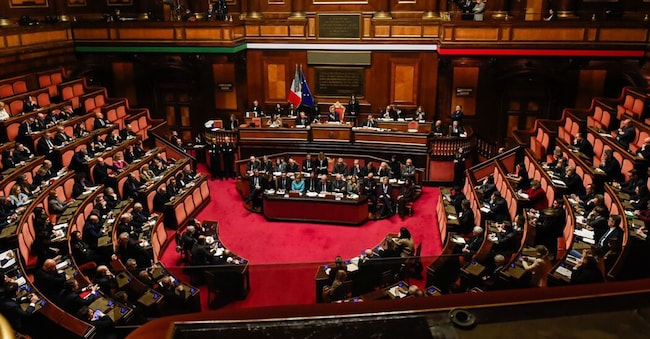
With 81 votes in favour, none against and 50 abstentions, on Monday 3 August, the Senate plenary session approved Bill 1663, which grants the Government powers to reform the regulations governing fifteen professional bodies. The bill now passes to the Chamber of Deputies for final approval, following which the legislative decrees will be adopted. The professional bodies affected by this bill are: employment advisers, social workers, agricultural technicians, architects, actuaries, customs agents, industrial property advisers, journalists, agronomists and foresters, geologists, surveyors, engineers, agricultural experts, industrial experts and food technologists.
Rosario De Luca, president of ProfessionItaliane (an association representing the professions covered by the reform) and of the National Council of the Order of Labour Consultants, expressed his satisfaction: ‘This is a measure that redefines the role of regulated professions, bringing them into line with changes in society, the economy and technology. This milestone has been achieved thanks, in part, to the great spirit of collaboration amongst the 15 professional bodies involved, which have been able to set aside their individual interests for the common good – which is, after all, the best guarantee for enhancing the individual professional identities.”
The text commits the Government to promoting the social and economic role played by the professions and to recognising their contribution to the country’s development. Legislative decrees will be required to define the activities reserved for members of the professional registers in accordance with the legislation in force at the time the enabling act comes into force, and professionals will also be authorised to provide consultancy services, whilst non-reserved activities will be open to all professionals. Access to the profession must be gained through a qualifying examination, but this is without prejudice to the provisions concerning qualifying university degrees under Law 163/2021.
The delegation confirms that the Professional Bodies operate as non-economic public bodies with a view to safeguarding the public interests associated with the practice of the profession. The regional branches act as representatives of their members, whilst the national councils represent the profession as a whole. For the purposes of electing the latter, a principle of proportionality must be observed in such a way as to ensure adequate representation even for the smallest regional councils.
“The implementation phase,” De Luca emphasised, “will be crucial in translating these principles into concrete regulations, and the experience we have gained over recent months allows us to look towards this with great confidence and optimism. Unity and a sense of responsibility will continue to be a defining feature of the reform, because modernisation does not arise from conflict between different groups but from their ability to move forward together.”

