
Debt agreement between Senegal and the IMF; $2.2 billion released
A turning point in the Dakar financial saga. The agreement unlocks the funds that had been frozen following the discovery of the hidden debt by former President Macky Sall
from our correspondent Alberto Magnani
 Aggiungi Il Sole 24 Ore
ai preferiti su Google
NAIROBI – The Senegalese government and the International Monetary Fund have reached a preliminary agreement on a three-year loan package worth US$2.2 billion, unblocking funds that had been frozen since the discovery of US$7 billion in hidden debt by the previous administration (the figure is said to have risen to 11 billion following further investigations).
The Ministry of Economy and Finance in Dakar has stated that it has agreed to a ‘shared framework’ to restore the sustainability of Senegal’s public finances. The IMF noted in a statement that the agreement remains subject to final approval by the Fund’s Executive Board and Board of Governors and requires, amongst other conditions, the ‘necessary financial assurances’ from Senegal.
The hidden debt scandal
The IMF had put a $1.8 billion programme with Dakar on hold when the government of the current leader, Diomaye Faye, revealed in 2024 the existence of billions in accumulated debt that had been concealed in the budgets by former President Macky Sall. Washington’s freeze cut Dakar off from international markets and forced the government to borrow on the domestic market, hampering a period of growth spurred by the change of leadership at the top and the billions in investment pouring into the country’s onshore and offshore energy reserves.
The Fund praised the strength of the Senegalese economy, citing a 6.7 per cent rise in GDP in 2025, driven by oil production, inflation at 1.4 per cent and growth in non-hydrocarbon GDP at an annualised rate of 4.7 per cent in the first quarter of the current year. The key reforms supported by the Fund are now expected to ‘restore the sustainability of public finances, whilst protecting vulnerable households’, whilst the ‘fiscal strategy focuses on strengthening domestic resource mobilisation and rationalising expenditure [...]’.
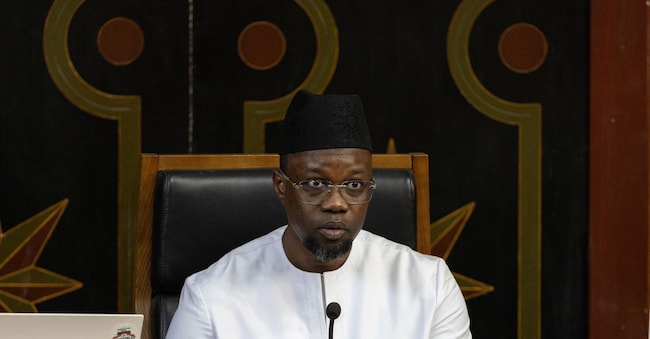
The agreement reached in Dakar marks a turning point in a saga that has lasted at least two years and has had both financial and political repercussions for Senegal. The approach to the debt crisis was a recurring source of friction between the former leadership duo of Faye himself and his former Prime Minister, Ousmane Sonko, who were divided over the former’s more conciliatory stance and the latter’s more confrontational approach. Sonko himself, who was dismissed as Prime Minister but has re-emerged as Speaker of Parliament, has indicated a willingness to consider debt restructuring.


