
The experience of senior staff and the energy of young people to help the company grow
Massimo Foresti. The CEO of Elettrotecnica Imolese: a new corporate culture

Key points
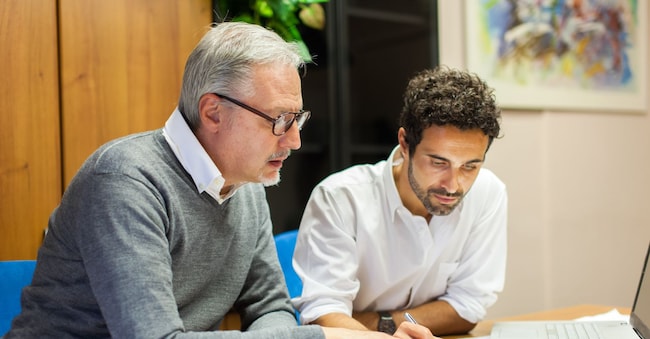
‘We take on 50 new staff members a year, mainly young people. Over the last 6 or 7 years we have grown significantly; today we have 240 employees, and at least three or four generations work side by side within the company. Over the next five years, a number of key figures – managers and technicians – will be retiring. For these reasons, we have begun to address the issue of generational renewal. The aim is to ensure that the wealth of knowledge and specialist skills we possess within the company is not lost.” These are the words of Massimo Foresti, CEO of Elettrotecnica Imolese, a company with deep roots in Emilia-Romagna (with its registered office in Mordano, Imola, and factories and offices in San Marino, Sasso Marconi, Sassuolo) which provides services to businesses relating to industrial manufacturing processes in the field of electrical automation.
Doctor, how much has your company changed?
A great deal in recent years. Today, like many other companies in the local area – and, I imagine, across Italia – we find ourselves working with people of different ages, career paths, skills, values and expectations, who collaborate every day to achieve common business objectives. In recent years, we have been recruiting a great many young people, including minors, thanks to the positive partnerships we have built with ITS Academy, schools and training institutions in our local area. The challenge – but also the path we are following – is to bring together the human and technical skills honed over the years, the experience and organisational memory of our more senior staff, with the energy, fresh approaches and familiarity with the latest technologies of the younger generations.
Are you managing it?
There are no off-the-shelf solutions. It is a process that has already begun. Internally, we have set up a team of staff who engage with our younger colleagues. We work very much as a team. We have also retained some professionals who have retired but who continue to lend us a hand on a part-time basis. For some colleagues approaching retirement, we are adjusting their duties and roles – in consultation with them – to facilitate the empowerment and growth of younger colleagues. We have introduced opportunities for dialogue between managers and new recruits to discuss expectations, growth objectives and development pathways, both during the initial induction phase and as their career progresses. The reason is always the same: to maintain the organisation’s high technical standards and to facilitate the transfer of knowledge through structured on-the-job mentoring programmes, in which senior staff can support the development of younger colleagues.
Are these challenging routes, but are they also long?
Creating a corporate culture in which different generations can truly work together is not something that happens overnight. It requires listening, dialogue and, above all, the ability to recognise that no single generation has all the answers. Each generation brings something important to the table: those with years of experience safeguard the company’s history, its values and the knowledge built up over time; those who have joined more recently bring new ideas, new skills and a different way of looking to the future. Value stems precisely from the ability to bring these perspectives together, create opportunities for dialogue and build bridges between different generations. Succeeding in this means being better prepared to tackle change, attract new talent, innovate and face the challenges ahead with greater confidence.


