
Senior housing: the social challenge facing an ageing Italia

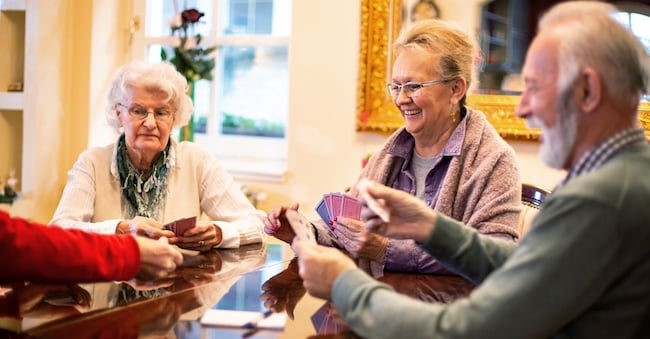
Independence, safety and social relationships are increasingly central aspects when discussing the quality of life of older people. It is these needs that have given rise to senior housing, a housing model designed for independent living that combines self-contained accommodation with services and communal spaces. It is therefore not a care facility, but rather an advanced form of living, which is still not very widespread in Italia but is becoming increasingly significant in light of the demographic changes currently taking place. Yet, to view it merely as a new segment of the property market risks being reductive. Senior housing is, first and foremost, a response – still partial but increasingly necessary – to a profound transformation of our society.
Italia is one of the countries with the longest life expectancy in the world and is ageing rapidly. This is not merely a numerical increase in the population aged over 65, but a qualitative change: people now live longer and, above all, enjoy better health for longer. Consequently, there is a growing segment of the population comprising independent, active older people, whose needs extend beyond healthcare to include quality of life, social relationships, safety and everyday well-being.
It is here that senior housing takes on a value that goes far beyond the physical property itself. It is not an ‘alternative home’, but a housing model that seeks to address an increasingly pressing social issue: loneliness. In Italia, a significant proportion of older people live alone, often in homes that are no longer suitable in terms of age, accessibility or size. At the same time, the strong attachment to home ownership – which affects around 90 per cent of those over 65 who live alone – makes it difficult to envisage alternative solutions, even when these could significantly improve their daily lives. Senior housing fits precisely into this context: not as a substitute for one’s own home, but as an evolution of the concept of living – a place where individual independence is combined with the opportunity to share spaces, services and moments of social interaction. In the most advanced models, the central element is not so much the flat itself, but the community that builds up around it.
In this sense, the true value of these initiatives lies in their ability to prevent future frailty. Creating living environments in which people can maintain relationships, feel part of a social fabric and have easy access to support services means reducing the risk of isolation, with positive effects on the health and care system as a whole. This is a preventative approach, which is still underdeveloped in Italia, where, historically, intervention only takes place once a person’s lack of self-sufficiency has already become apparent.
There is also another factor that is often underestimated: the relationship between generations. Senior housing, particularly in its most innovative forms, can become a space for integration, not separation. Projects that encourage interaction with the local neighbourhood, that make services available to the wider community, or that are integrated into vibrant urban settings help to avoid the risk of creating ‘enclaves’ for older people, whilst strengthening the sense of community.

