
Senior housing and Rsa, Italy remains below the EU average
More projects, but supply remains insufficient. Strong North-South divide

Key points
Italy has the highest proportion of elderly people in Europe (24.7 per cent of the population, against an EU average of 21.6 per cent), but spends much less on long-term care per capita (ranging from proper health care to home care, from physiotherapy to nursing homes) - EUR 303.9 against EUR 607 - and is first in terms of the weight of pensions on GDP.
This is revealed by Gabetti in its latest report dedicated tosilver economy and social housing. Considering the demographic winter we are experiencing (in 2080 there will be 45 million of us -22.6% compared to 2021), it is clear that the management of the elderly - both when they are still relatively self-sufficient and when they are lost - should be priorities for planning and resources. At present, this does not seem to be the case.
The numbers
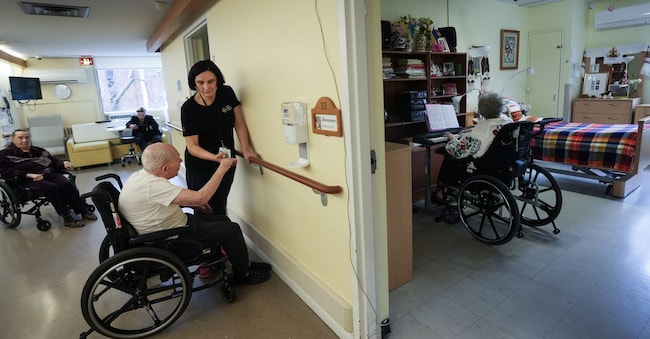
On the services front, the country lags behind in beds in Rsa: 512 per 100 thousand inhabitants, compared to over 1,100 in Sweden, Germany and Finland, and below the EU average (699). Yet, in Italy, the number of elderly residents in RSAs is increasing sharply, with a 36.5 per cent growth since 2017, accelerated after the pandemic and the consequent increase in non-self-sufficiency. In 2023, the highest percentages are recorded in the North-East (Trentino-Alto Adige and Veneto), followed by the North-West (Piedmont and Lombardy), while the South remains far behind, with very low rates of residential care in Campania, Basilicata, Molise, Apulia and Sicily. The supply of beds also reflects the territorial gap: by 2022 there are 12,363 residential care facilities for about 408,000 beds. From a legal point of view, almost 78% of the beds are in the hands of private entities (with 45% managed by non-profit organisations), while only 22.5% are public.
An offer that already appears insufficient today: most regions do not reach the parameter of 50 beds per thousand over 65. Projections to 2050 show a further worsening, with particularly serious deficits in regions such as Lombardy, Lazio and Campania.
Senior Housing
For those who are self-sufficient, one option is also the senior housing, a residential model born in Northern Europe in the late 1960s and spread to the USA, Canada, Japan, Spain, Portugal, France, Belgium, Germany and Scandinavia thanks also to tax breaks.

