
Casa Serafini: the ontology of eviction

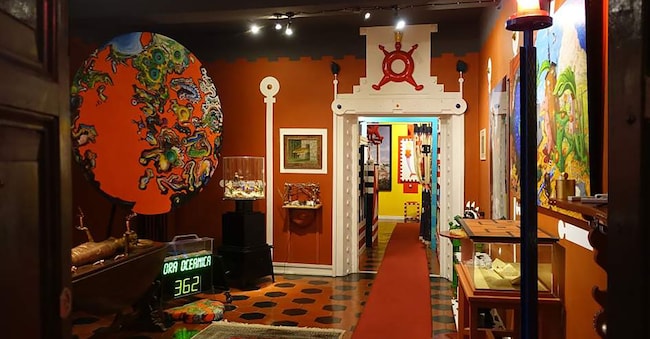
I’ve never been keen on appeals: I think they serve little purpose and, usually, come when it’s already too late. So I’m not making one. I’ll simply make an observation. The eviction from the home of Luigi Serafini – the artist behind the Codex, whose surrealist dreams, his eggs, his little figures, his indecipherable yet meticulously precise squiggles have been the driving force behind Italy’s most bizarre art since the 1980s – is almost final. In mid-October, or thereabouts, the bailiff will turn up at his home to ‘return it’ to the – for goodness’ sake – legal owners. The problem – no appeals, I repeat, just a simple observation – is precisely this. Serafini’s ontological and pataphysical home, over the years, is no longer simply the house where the artist lives; it has become, to all intents and purposes, a work by the artist Serafini, inseparable from the rest of his body of work: this is obvious to anyone who crosses its threshold even just once, for a single moment. I do not know, nor do I claim to understand, nor am I even interested in delving into the legal proceedings, which I hope will be resolved amicably: I am merely saying that the Superintendency, the Ministry of Culture or whoever acts on their behalf should take this matter very seriously. Serafini’s ‘ontological house’, which has featured in leading international magazines for years, is a project worth preserving (is there a way to do so?), a dream in the form of a house that expresses the imagination and eccentricity of an artist who was recently exhibited at the Mart or at Franco Maria Ricci’s Labirinto – the man who launched his career. This is not a matter of landlord versus tenant, and that would not be the right approach. I believe, I hope, that something can still be done, that a constructive compromise can be found, so that it is not stagnation or property speculation that triumphs, but art, the unusual. Wonder. For once.

