
Germany wants to block Israel's new settlements in the West Bank
Berlin denounces the risks of the plan: 3401 houses will split the region in two. Violence continues in the region, school fire reported

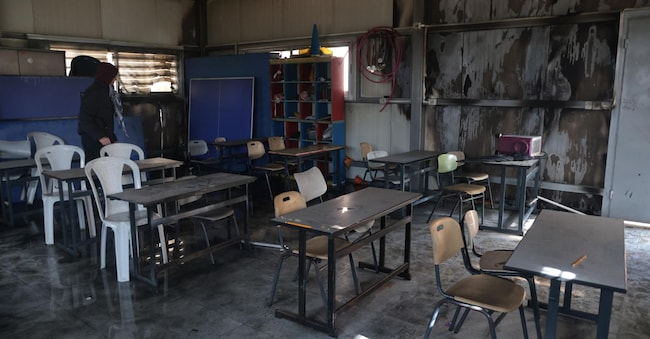
Germany does not like the Israeli acceleration of the E1 project in the West Bank. Yesterday, a German Foreign Ministry spokesman denounced the risk of increased instability in the occupied territories and called on Israel to halt the project. The German pressure comes in the aftermath of the call for tenders issued by the Ministry of Construction and Housing for the construction of the 3,401 housing units that would start in East Jerusalem, dividing the West Bank in two and compromising the territorial continuity of the future Palestinian state.
The plan, says the Israeli NGO Ir Amim (City of Peoples), raises "serious concerns about a large-scale expulsion of vulnerable Palestinian communities in the area, due to Israeli plans to annex and close the area to Palestinians". Meanwhile, tensions continue in the occupied territories. As reported by the Wafa agency, several settlers allegedly set fire to a classroom of a middle school in the village of Jalud, south of Nablus and set fire to five vehicles in the village of Bazariya. According to the UN, from 7 October 23 to 13 November 2025, Israeli forces and settlers killed at least 1,017 Palestinians, including 221 children.
The situation in Gaza continues to be difficult, where yesterday rain and wind put refugees camped in tents at a disadvantage and there is a lack of food, basic necessities and sanitary products. Yesterday, the IDF claimed to have eliminated six Hamas members on Thursday. Since the beginning of the truce there have been 439 casualties (71,409 since the beginning of the war), and 1,223 injured (171,304 since October 2023).
But the work to proceed to phase two continues. Yesterday, the former UN envoy for the Middle East and probable next representative of the Board of Peace envisaged in the agreement, met in Ramallah with Palestinian Vice President Hussein Al-Sheikh (in the aftermath of his meeting with Netanyahu).
Egypt also insists on the acceleration of phase two. In a telephone conversation between the foreign minister and the European Commissioner for the Mediterranean, Egypt urged European involvement and called for more pressure on Israel to 'ensure the provision of sufficient humanitarian, relief and medical aid and to help create an environment conducive to rapid recovery and reconstruction'.


