
Battery recycling: Seval opens new facility
In Colico (Lecco), a plant capable of processing 15,000 tonnes is set to open, with another similar facility due to open soon in Basilicata. Total investment: 30 million

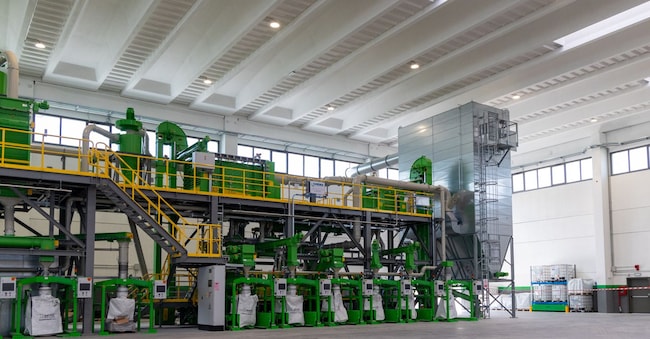
Seval has opened, at its headquarters in Colico (Lecco) a new production facility for the processing of lithium-ion batteries, the first stage of an industrial plan worth over 30 million euros – partly funded by the National Recovery and Resilience Plan (PNRR) – which also includes the construction of a similar facility in Balvano (Potenza), which is now complete and awaiting testing.
In the new plants, using Duesenfeld technology (without heat treatment), the batteries will be discharged, inerted and ground. The aim is to produce black mass, a cathode powder rich in lithium, cobalt and nickel: critical materials that can subsequently be recovered and reintroduced into production processes. The Colico and Balvano sites will each be capable of processing 15,000 tonnes of lithium-ion batteries per year.
Seval, which already has 500 employees, nine production plants, a turnover of around 130 million euros and a processing capacity of 180,000 tonnes of waste per year – mainly WEEE – “aims to become one of Europe’s leading producers of black mass”, according to a statement.
The company has been involved in the processing of various types of batteries for around twenty years; lithium-ion batteries – found in everything from consumer electronics to electric cars – have proved to be the fastest-growing category in recent years, hence the idea of developing a dedicated recycling platform.
Environment Minister Gilberto Pichetto Fratin was also present at the opening of the new plant in Colico, demonstrating the government’s focus on a sector that is becoming increasingly strategic in the context of national technological and energy self-sufficiency. Moreover, the European Critical Raw Materials Act sets out, amongst its targets for 2030, that at least 25 per cent of the European Union’s annual consumption of critical raw materials should come from waste recycling.


