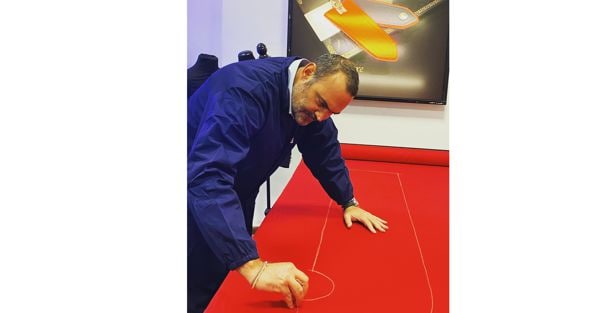
Sewing excellence: the history and future of Sartoria Tammaro, a military fashion atelier
Since 1922 in Rome's Prati district, the atelier has been making uniforms and garments for the Italian armed forces: Marco Tammaro, the founder's grandson, recounts the company's long history, its encounters and projects

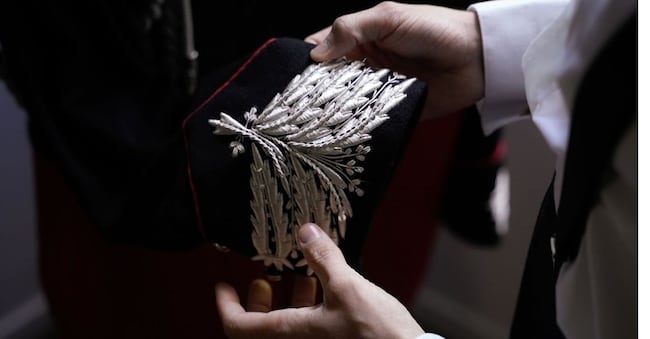
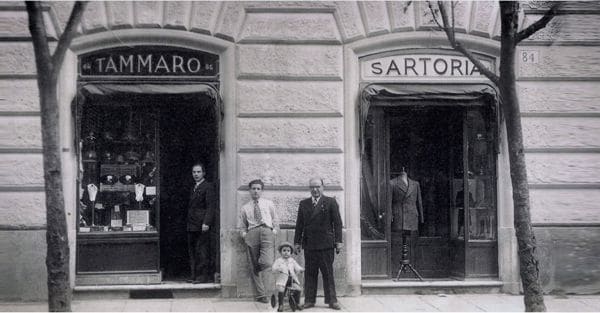
A uniform does not admit of mismatches. The story of Tammaro's military tailoring begins with the same rigour as a musical score. Gennaro is a first violinist at the San Carlo in Naples and maestro of the House of Savoy. He travels all over Italy, playing at concerts and events. On his return home in Rome, his wife Giuseppina is waiting for him. 'Taking my grandmother around the boot would have been complicated. So my grandfather, on the advice of his friend and composer Pietro Mascagni, decided to open a tailoring business for her, facilitated by the proximity of the Carabinieri barracks'. This was in 1922
This is where the story of Marco, the third generation of the family, who now runs the company, based in the Prati district of Rome, begins.
"My grandfather was a man of the late 19th century, known by everyone. My father used to tell that one day a young boy rang the doorbell to ask for the 'Professor' to come downstairs'. Waiting for him downstairs was Prince Antonio De Curtis, Totò, busy filming the movie 'Guards and Thieves', together with Aldo Fabrizi. 'They ate and drank together, they also shared a passion for music and the violin, to which my grandfather was very attached,' he recalls. So close that he recognised it even without seeing it: 'After an accident during conscription, my grandfather fainted and woke up in a military camp without his violin. Five years pass, the war ends and while he is at an honours evening,' Marco continues, 'he hears a sound from the car park that is unmistakable to him'. The musician holding it is unaware that he bought Tammaro's violin, whose initials are engraved on the inside, from a junk dealer. "We kept it at home for many years. It is a source of pride to know that today it belongs to Uto Ughi, one of the greatest exponents of the contemporary violin school'.
Between one gig and another, Gennaro and Giuseppina's business continued until the seventies, when their son Guglielmo chose to stop it and turn it into a military supplies shop. Twenty-five years would pass before Tammaro would once again become a tailor's shop, thanks to Marco's determination, the same determination he used to tell his father of his ambitions: 'I want to take the needle and thread back into my hands. If I sell well, if I don't sell, it means I'll do another job'.
Today, the workshop has surpassed 100 years of activity, amidst anecdotes and satisfactions. "One day I receive a phone call from a person asking me to prepare some uniforms for him, in view of a trip to Brussels. On the other end of the phone is General Claudio Graziano, Chief of Staff of the Italian Army, whose tragic death would fill the pages of all the newspapers a few years later. 'It didn't seem real to me. I had only just started again and I was already dealing with one of the most important members of the Arma. Anxiety and joy at the same time,' he recounts.