
Shining ceramics from the Albuquerque collection

4' min read
4' min read
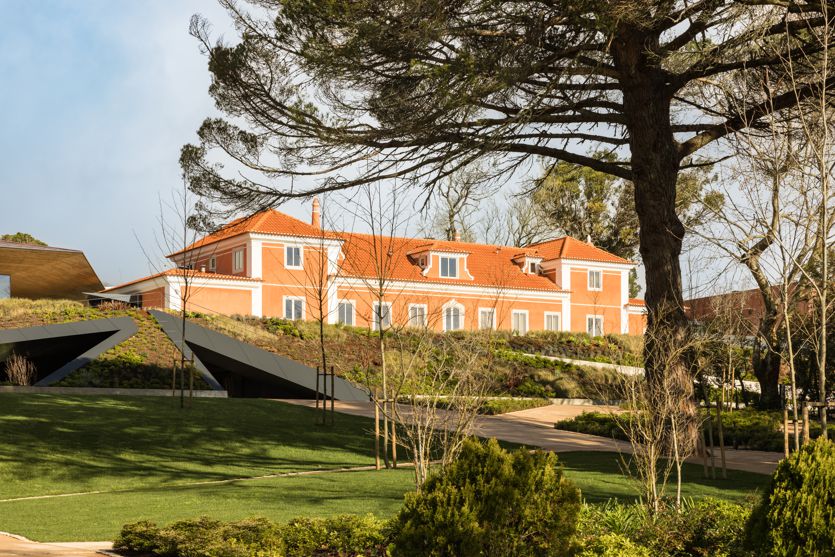
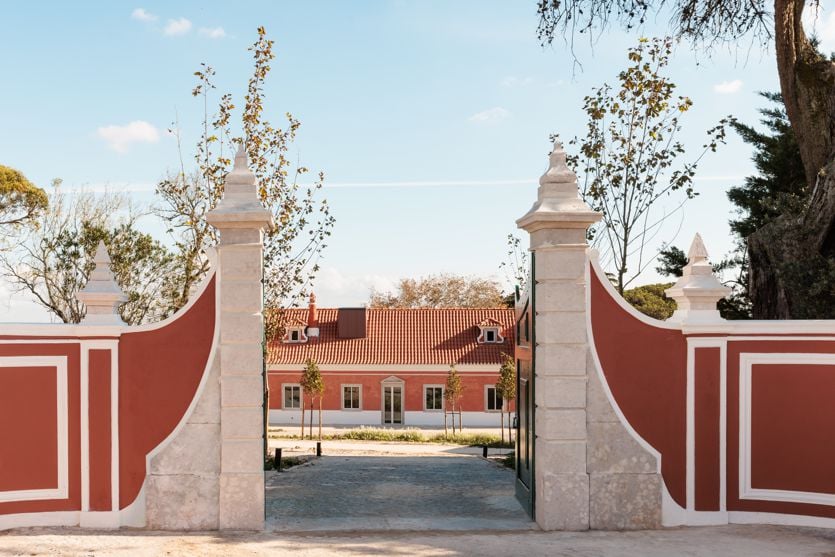
With singular timing, at the very moment when historians and economists are recording the cracking of globalisation processes, a museum celebrating one of its first, refined expressions has opened in Sintra, Portugal. The Quinta de São João, an estate where the de Albuquerque family used to spend their holidays, has now become a foundation and houses the extraordinary collection of Renato, a Brazilian civil engineer almost 100 years old: 2,600 pieces, mostly export porcelain produced in large quantities in the kilns of imperial China to satisfy the whims of the European, Asian, Islamic and American wealthy classes - a trade that exploded in the 15th century, when the network of connections that had brought luxury goods such as tea, spices and silk around the world from Asia took advantage of new navigation technologies and, in the wake of the great sea expeditions, was consolidated.
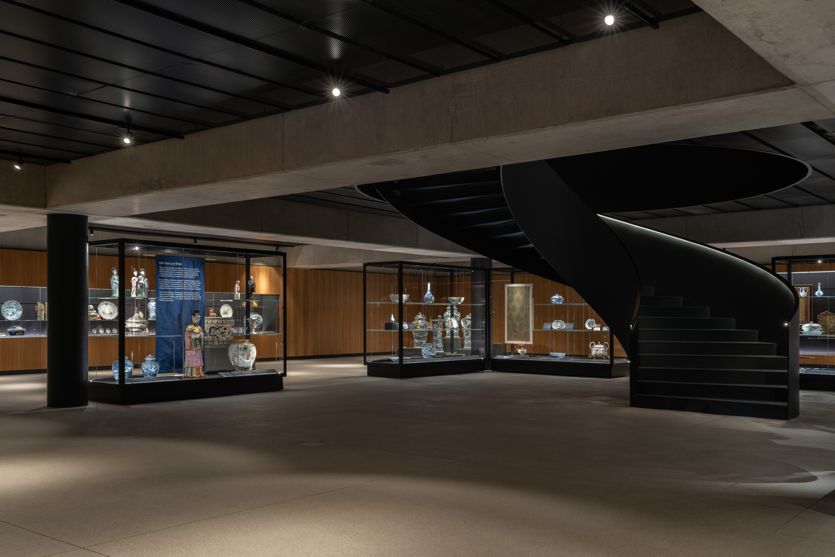
The collection was built by Renato de Albuquerque by reassembling sets that history had separated and especially by chasing early orders (the customised artefacts with Western iconography, made during the Ming and Qing dynasties on commission from the Portuguese and Spanish), as well as opening up related themes, such as Chinese porcelain made for the domestic and imperial markets. And it is unrivalled in focus, size and importance. Only in 2016 did its existence become public knowledge, on the occasion of an exhibition at the Metropolitan Museum of Art in New York and a six-volume publication. Now Becky MacGuire, with the exhibition 'Connections', has chosen around 300 objects and arranged them in three sections: one on the spiritual dimension, documenting the intertwining of Buddhism, Islam and Christianity; one on encounters, both between Asian countries and between these and European traders and missionaries; the third on everyday life in East and West, of which the works offer both direct testimony and representation.
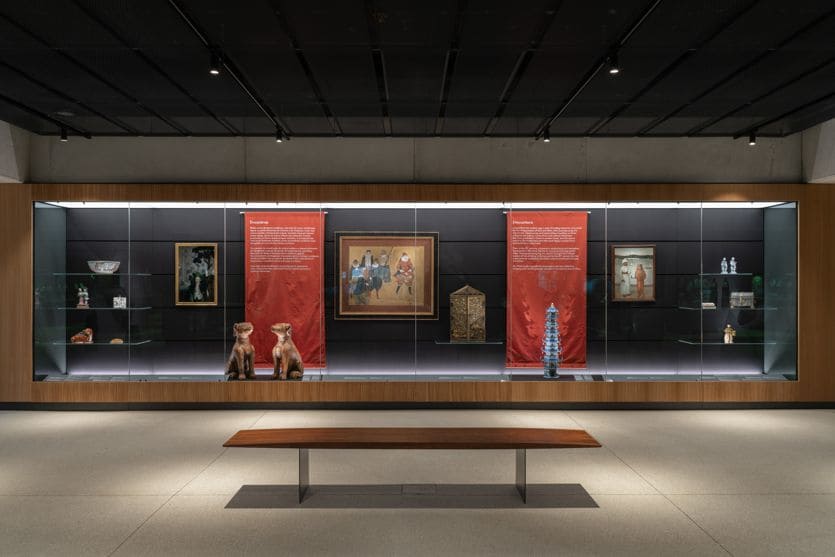
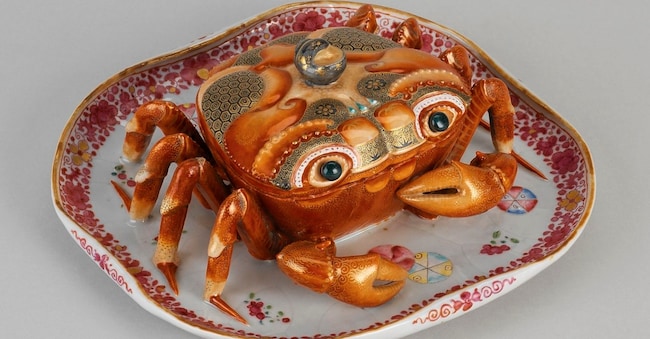
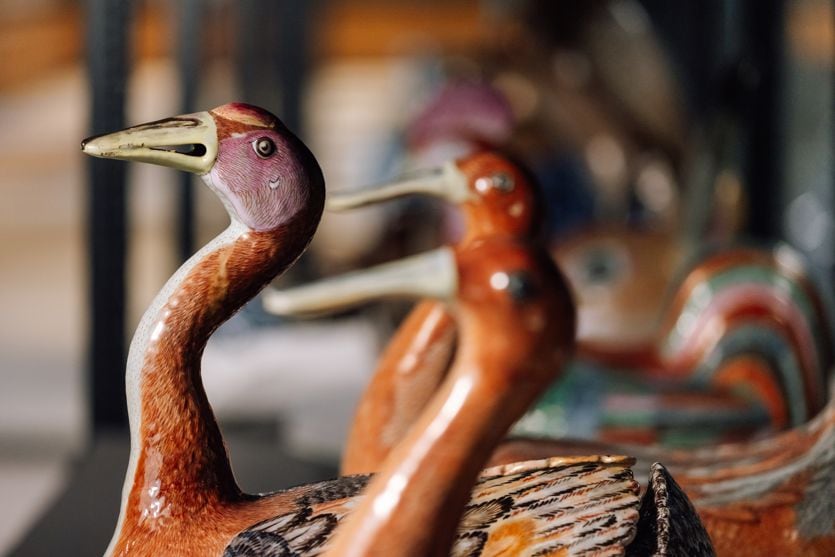
From objects for sumptuous tables to large ornamental vases, from the 'photo-record' subjects capturing the trade in hong, where foreign traders could obtain supplies and in which they could only reside, to objects of a religious nature, to entice the visitor's curiosity - even of those without the means to appreciate the quality of workmanship or the rarity of individual pieces - are the bizarre and daring shapes, such as a tureen in the shape of a crab or one in the shape of a Buddha (a subject much loved even in the West), and above all the intertwining of cultures. Angels made by those who had no idea how tradition wanted them to be depicted and a white porcelain Saint Anthony holding Jesus in his arms (11th-12th cent.), used by missionaries for educational and conversion purposes; chubby European peasant girls and Persian women in dialogue, statuettes of good-luck animals, scenes of dance and music, plates that take up subjects by European artists, effigies of patrons and inscriptions in all languages: it seems as if one is touching upon the eagerness to make someone else's exceptional one's own (it was not until the 18th century that the mystery of how porcelain was made was solved outside China). Westerners, recognisable by their robes and long noses, not only buy, but slowly and despite Chinese caution and protectionism, contaminate the producers' taste. It is a story that oscillates between curiosity about the culture of others and the protection and exaltation of one's own. After Becky MacGuire, the task of delving into the deposits of the Albuquerque Foundation and intercepting new narrative threads will pass to others.
.jpg)
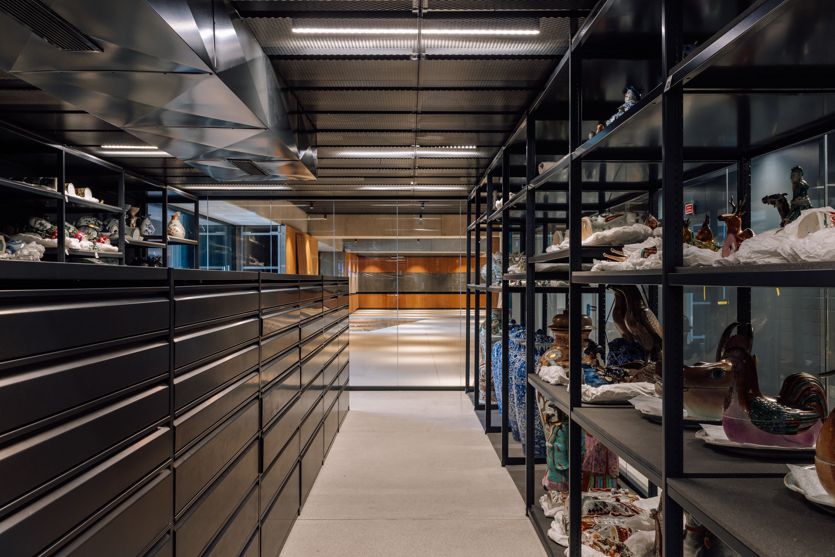
The Foundation was created at the instigation of the family, in particular Renato's granddaughter, Mariana Teixeira de Carvalho - formerly a human rights lawyer, then involved in the world of contemporary art galleries, and now president of the Foundation. Surrounded by a park, the building houses flats for curators and researchers (a residency programme is planned), Renato de Albuquerque's library and a contemporary ceramics shop. The old family home has been respectfully extended by Brazilian studio Bernardes Arquitetura, which has added a slender, oblique sail to contrast with the traditional outline of the fifth. From here one descends to the basement museum and storage spaces (inaccessible but visible), as well as an additional room dedicated to temporary exhibitions by contemporary masters.
For the debut of this section, the director of the Fondazione Jacopo Crivelli Visconti - the Italo-Brazilian former curator of the 34th São Paulo Biennial and of several pavilions at the Venice Biennale - involved Theaster Gates (Chicago, 1973), who celebrates the artistic and social dignity of ceramics, and who in turn has built up material and affabulatorous textures throughout his career in the United States, Africa, Japan, China and Korea.

