Training

Ships, trains, tugs and cranes: learning to drive them with a simulator

At the Accademia Logistica & Mare in Venice, students will use state-of-the-art technological tools that accurately reproduce different contexts

by Barbara Ganz
4' min read

Translated by AI
Versione italiana

4' min read

Translated by AI
Versione italiana

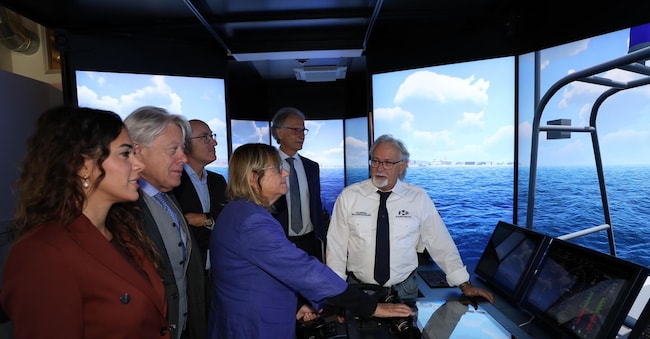
Four new simulators for driving ships, tugs, trains and harbour cranes will allow students to practise in simulated environments that faithfully reproduce real navigation, railway driving and harbour manoeuvring scenarios.

L’accademia

Yesterday, in Venice, at the headquarters of the Accademia Logistica & Mare, the official inauguration took place. The new immersive instruments, which will support the two-year post-diploma courses promoted by the Venetian training pole, were acquired thanks to a 4 million euro investment, with the technical collaboration of the subsidiary Venice Maritime School (Vemars), to enrich the educational offer of the ITS Marco Polo.

Loading...

The Accademia Logistica & Mare is a Venetian training centre that brings together three entities under one roof: the ITS Marco Polo Academy, specialised in port, industrial, rail and art logistics, the Venice Maritime School (Vemars), a 20-year-old consortium for maritime training, and the Centro di formazione logistica intermodale (CFLI). The headquarters are located in the Santa Marta port area in Venice, but teaching activities also take place in Mestre, Treviso, Portogruaro (VE) and Rovigo. The Academy's mission is to be not only a training platform for the maritime and logistics professions, but also a cultural bridge between the past and the future, enhancing Venice's port and industrial heritage and projecting it towards a sustainable and productive future.
The formation

.

The new state-of-the-art technological tools reproduce with extreme precision the professional contexts in which the students will work, and represent not only a quantum leap in practical training, but also a significant strengthening of the link with the territory's productive fabric, which will be able to count on young people already trained and ready to respond to the concrete needs of companies.

The Logistics & Sea Academy for the two-year period 2025-2027 recorded an increase in enrolment of +23% and is confirmed as a centre of excellence for higher technical training in the maritime, rail and logistics-port sectors.
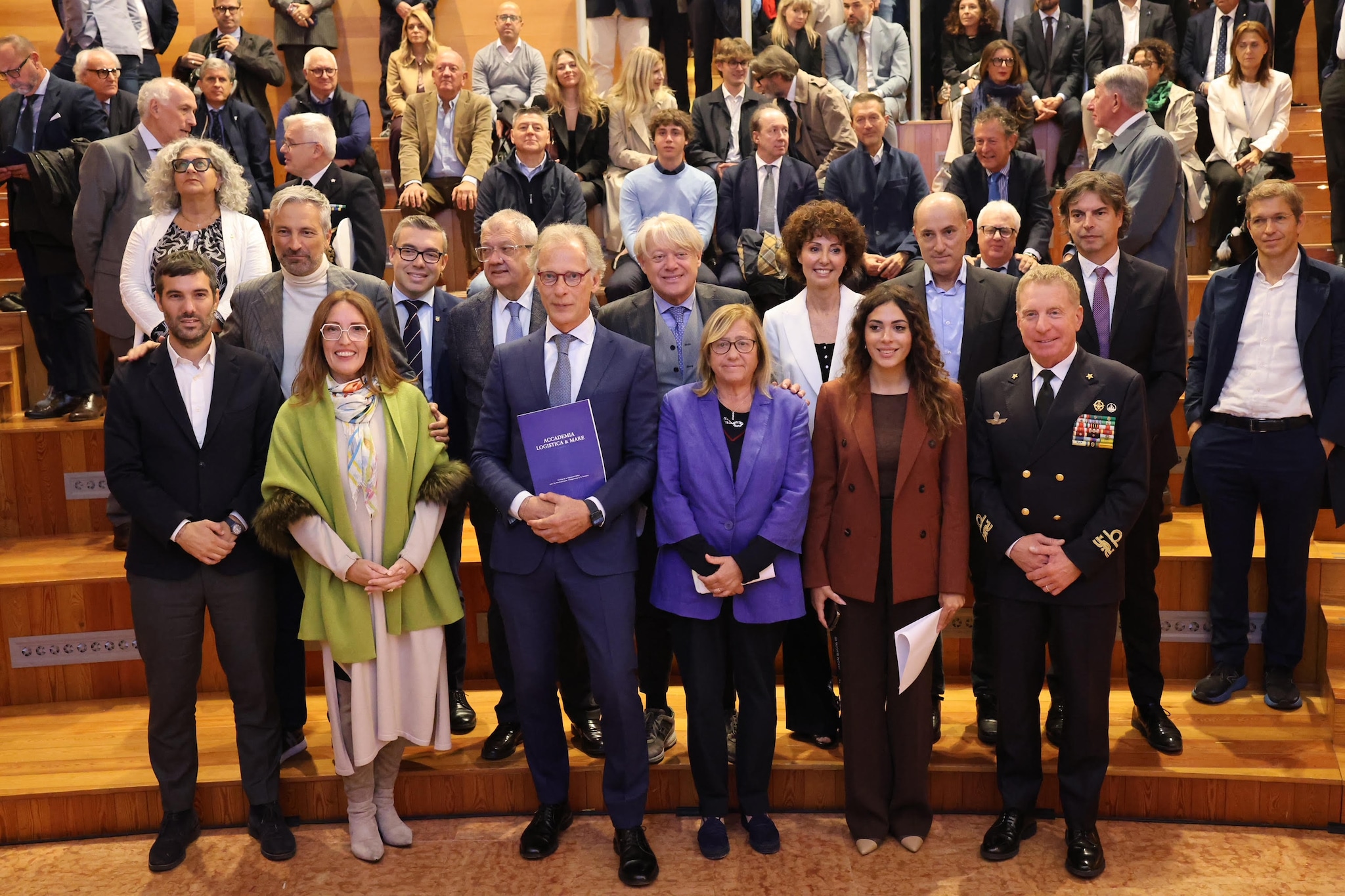
The event was attended by Elena Donazzan, vice-president of the European Parliament's Committee on Industry, Research and Energy; Paola Frassinetti, undersecretary of the Ministry of Education and Merit (MIM); Valeria Mantovan, councillor for Education of the Veneto Region; Andrea Tomaello, Deputy Mayor of Venice with responsibility for, among others, the Port, who also spoke on behalf of Mayor Luigi Brugnaro; Rear Admiral Filippo Marini, Commander of the Port of Venice and Maritime Director of the Veneto Region; and Damaso Zanardo, President of the Accademia Logistica & Mare, which includes, in addition to ITS Marco Polo and Vemars, the Centro di Formazione Logistica Intermodale (CFLI).

"We are proud to have filled a training gap, first with the creation of the Academy, which Venice lacked, and today with the introduction of cutting-edge international technical equipment to train and support the competitiveness of companies and the territory," says Damaso Zanardo, president of the Logistics & Sea Academy. "The presence of such innovative tools shows that we represent a true training and cultural hub, able to listen to companies and respond to their needs. Today, our employability rate, referring to graduates who find a job within a year, already exceeds 93%. With these technologies, we can further reduce the mismatch between demand and supply of highly specialised profiles.

The Veneto Region's ITSs,' said Valeria Mantovan, councillor for Education of the Veneto Region, 'are today the most advanced higher technical education in Italy, and Veneto has been able to make them a winning model. With the new simulators, we are not only celebrating a technological investment, but reaffirming a vision: to give our students concrete tools to enter the world of work as protagonists and to offer highly specialised skills to companies. The Academy is unique on a national level, a hub that makes Venice a reference point for maritime and logistics training".

The Four Simulators

.

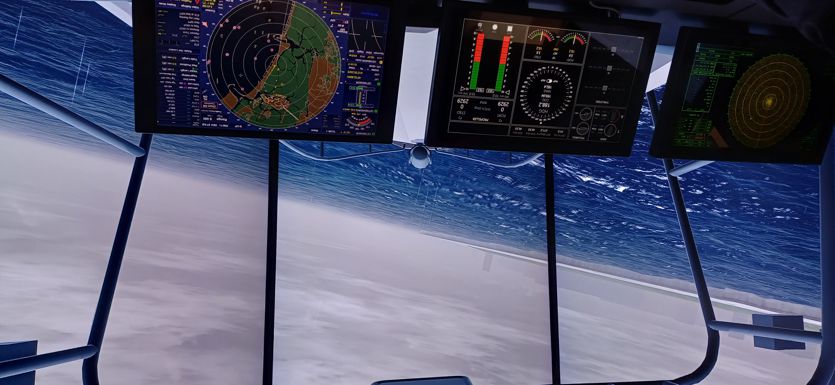
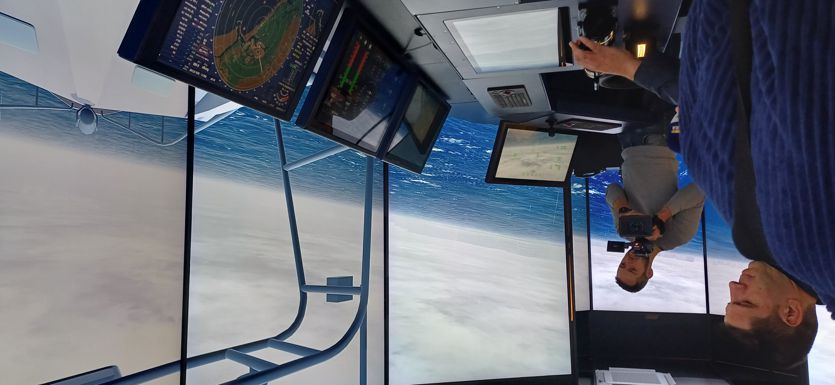
In the detail, the navigational simulators (ship and tug) offer a highly realistic simulation of the docking of ships and tugs in the world's major ports. Thanks to over 300 degrees visibility from the bridge, virtual reality systems and large liquid crystal monitors, students in the Engineer and Deck Officer courses will be able to practise in variable weather and sea conditions, deal with emergencies in the engine room and learn operating procedures as if they were actually on board. Alongside the simulators, two training areas have been created with six ship decks for radar, communications and digital chart management activities.

The train simulator is an absolute novelty in the Train Driver and Train Preparer course: it enables students to obtain their European driving licence and train shunting, training and testing skills. In the absence of the possibility of training on a real line, the simulator allows students to familiarise themselves with the driver's cabs, diagnostic systems and signalling, simulating different traffic modes, weather conditions and emergency situations, including breakdowns and contingencies. The line chosen for virtual training is the Ferrara-Bologna line, one of the most complete in terms of complexity and variety of safety systems.

Finally, the harbour crane simulator enables the simulation of the operation of Ship-to-Shore cranes, reach stackers (intermodal container handling vehicles) and other terminal equipment. The system integrates a mobile cabin, six high-resolution screens and software capable of reproducing acceleration, vibration and slippage in a highly realistic manner. Students on the Logistics Manager and Port and Airport Logistics courses will be able to practise safety, improve risk awareness and acquire skills on different models of equipment in use in modern ports.

Copyright reserved ©
Loading...

Brand connect

Loading...

Newsletter

Notizie e approfondimenti sugli avvenimenti politici, economici e finanziari.

Iscriviti