
Catering in shopping centres is worth 5.7 billion
The value of the average receipt is increasing and the forecast for the two-year period is for moderate but steady growth

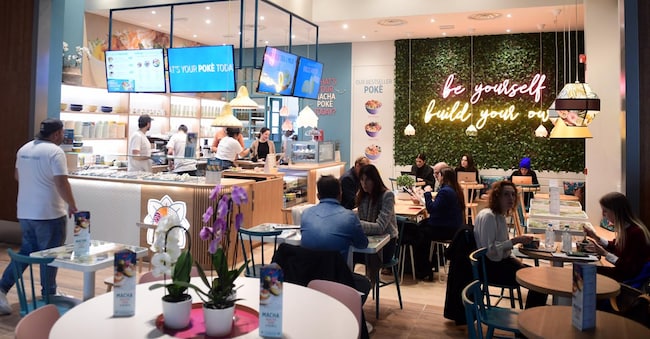
It is a successful and synergetic union between shopping centres and the restaurant industry. Consumption in restaurants and fast food outlets is rising slightly, with expenditure in 2025 reaching 5.7 billion, an increase of 2.6%. Growing, and by a lot, is the average receipt, which sees a +15% increase, while the number of patrons has remained substantially stable with a decrease in the second half of the year. A trend that is being interpreted as a greater propensity to spend by consumers when visiting shopping centres, favouring quality and experience. Turnout in centres remains stable, +0.6% year on year, with a strong polarisation at weekends. The key role of entertainment as a factor of attractiveness is confirmed: centres offering such experiences register higher levels of both attendance and catering. This is what emerges from the new "Observatory on Catering in Shopping Centres" carried out by Deloitte for Aigrim - Fipe, the association joined by the main chain catering signs and the National Council of Shopping Centres (CNCC).
"The data confirm the crucial role that modern catering plays as a strategic partner for the shopping centre industry," said Corrado Cagnola, Vice-President of Aigrim-Fipe. "We are a fundamental anchor that not only attracts flows, but also qualifies the offer and increases the stay of visitors. The growth in the value of the average receipt shows that consumers recognise and reward the quality and innovation of our offer. In order to continue to be competitive, we must know how to interpret the new needs of customers, investing in attractive formats, digitalisation and, above all, in the valorisation of our people, who remain the beating heart of our service'.
Within the total sales of shopping centres, the foodservice item year after year has seen its weight increase to about 14% of total turnover, with higher peaks in large centres and in Northern Italia. The foodservice sector thus recorded growth of +2.6% compared to the previous year. As far as future prospects are concerned, according to shopping centre operators and their tenants, there is some optimism that the growth of this type of catering will continue to be steady but moderate, driven in particular by fast food and restaurants with service, with moderate growth of up to 5%. Self-service restaurants are back on a growth trajectory, albeit reduced to +3%. All regions showed positive, albeit slight (up to 5%), growth sentiment for both revenues and attendance.
"Catering is confirmed as a fundamental driver of attractiveness for shopping centres and an increasingly strategic element within the offer mix," points out Roberto Zoia, President of the CNCC. "It is precisely its growing importance that makes it necessary to adopt a more organised and strategic development, based on careful planning, a targeted choice of formats and an in-depth knowledge of the area, to ensure consistency, sustainability and lasting results. The choice of a correct entertainment offer, for example, can support the incidence of the sector from the point of view of the shopping centre as a place of experience as well as of purchase'.
Fast food restaurants accounted for the largest share of sales in terms of volume with more than 70% of receipts growing in value. Restaurants with table service had lower volumes but a growth driven by the number of receipts (+3.5%), showing a greater ability to intercept new demand, and are positioned as strategic in larger shopping centres with entertainment offerings. "Catering is consolidating as a key lever of value creation for shopping centres; however, in a context of economic uncertainty, economic development will depend on the ability of operators to retain and expand their clientele and optimise their value chain also by exploiting new technologies," warns Tommaso Nastasi, Strategy & value creation leader at Deloitte Italia.

