
Shops and offices are driving investment in commercial property in Italia
In the second quarter, sales of shops and offices rose, driven by investment and changes in use. Following years of rapid growth, sales of industrial units fell slightly

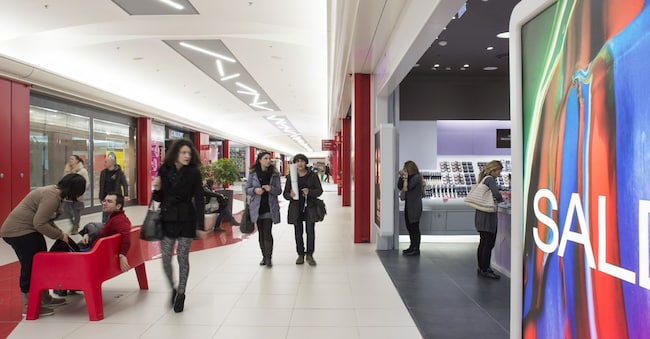
In the first half of 2025, commercial properties showed the strongest growth, up 6.1 per cent. Retail premises are still regarded as a sound investment. Office transactions also rose by 4.2 per cent. Meanwhile, a slight decline in sales was recorded for industrial units (-1.6 per cent); however, these have seen exponential growth in recent years, linked to the rise in e-commerce and the storage of goods (food and medicines) as a result of the pandemic. Overall, the trend in investment in commercial property in Italia is positive.
Market overview
According to analyses carried out by the Tecnocasa Group Research Department, rental rates for industrial units have been rising since 2017, to the extent that, over the last ten years, industrial units have been the only asset class to have seen an increase in rental rates: +23.1 per cent for second-hand properties and +13.5 per cent for new ones. Logistics drives a significant proportion of the demand for property, particularly near motorways, ports, airports, freight terminals and rail networks, whilst in the industrial and craft sectors, spaces are sought to expand or scale back production. Tariffs have also prompted export-oriented businesses to reorganise. A significant driver of demand for this asset class comes from those wishing to set up data centres. Italia ranks fourth in Europe for the number of data centres, which are concentrated mainly in the north, with Milan leading the way, followed by Rome and Turin.
In the first half of 2025, however, the retail market was affected by consumer spending trends, which, according to Confimprese data, were not particularly strong during the period in question. Uncertainty linked in part to the geopolitical situation also had an impact on purchasing behaviour, causing consumers to be more cautious.
“A significant boost has come from tourism, particularly from overseas visitors,” explains Fabiana Megliola, head of the Tecnocasa Group Research Department, “which has helped to offset the decline in domestic sales. In cities such as Milan, Rome and Florence, overseas tourism has played a key role in supporting the retail sector. The same trends have been observed in the most popular seaside, mountain and lakeside tourist destinations.”
As regards the office sector – which has been hardest hit in recent years – Tecnocasa has noted an increase in purchase transactions, which, according to the company, rose from 16.8 per cent in 2024 to 21.4 per cent in the first half of 2025, whilst also observing a rise in the number of professionals choosing to share premises to reduce rental costs.
“Demand for office lettings is recovering following the slowdown seen after the pandemic,” explains Megliola. “The most sought-after locations are prime sites for representative offices and newly built offices that meet ESG criteria. Properties in good or excellent condition are in high demand, preferably located near the underground, even if in semi-central or outlying areas.”
Brand connect


Newsletter RealEstate+
La newsletter premium dedicata al mondo del mercato immobiliare con inchieste esclusive, notizie, analisi ed approfondimenti
Abbonati