Short map for getting around inside and outside Biennial, without feeling like a foreigner anywhere
Away from the crowded opening days, some tips for organising a two-day art event and a full immersion in the best the city has to offer in May.
3' min read
3' min read
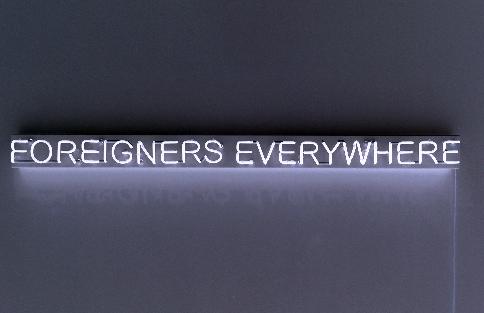
The operation of compensation to categories that have been excluded for decades from an art world that is too western and too male-dominated continues. After Cecilia Alemani returned the stage to women in 2022, now Adriano Pedrosa makes four categories of artists the protagonists of his Biennale, entitled Strangers Everywhere: queer, outsiders, folk and indigenous. A veritable re-reading of art history from the 20th century onwards, as the exhibition is divided into a Contemporary Core and a Historical Core. Space for openly political and radical art is provided by the Archive of Disobedience section, while the history of Italian art is reread through an investigation of the diaspora, that is, of Italian authors who have moved and reinvented themselves elsewhere. A Biennale, in short, in which the majority of the artists will be discoveries, with the aim of overturning certainties and acquired canons. A total of three hundred and thirty authors are invited; Anna Maria Maiolino and Nil Yalter are this edition's two Golden Lions for Lifetime Achievement.
In the national pavilions, the participations of Eva Kot'átková for the Czech Republic, Julien Creuzet for France, John Akomfrah for Great Britain, and Wael Shawky for Egypt stand out. Italy is counting on a solo exhibition by Massimo Bartolini - a name that caused some surprise when it was announced, while the Holy See pavilion opts for a group show with big names such as Maurizio Cattelan, Claire Fontaine (also in the main exhibition) and Simone Fattal. In Nigeria's group show, artists of the calibre of Yinka Shonibare and Toyin Ojih Odutola are exhibiting, while the Netherlands is making one of its most radical choices: to be represented by the Cercle d'Art des Travailleurs de Plantation Congolaise, a cooperative that uses the proceeds from the sale of artworks to implement ecological and solidarity-based interventions. Equally radical is the title of the pavilion: The International Celebration of Blasphemy and The Sacred.
Walking in the city
What to see: from the I.A. with Pierre Huyghe to de Kooning narrating Italy.
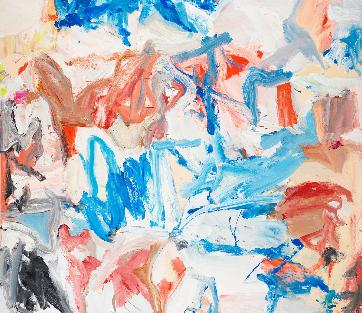
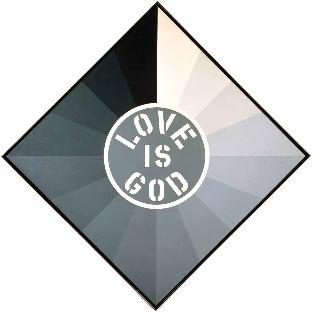
It promises to be a tour de force for the art lover: even more than usual, the exhibitions in town in conjunction with the Biennale offer big names, some not to be missed. The aforementioned Dine, Vezzoli and De Bruyckere are joined by many other big names. Such as Pierre Huyghe, who proposes at Punta della Dogana a journey into perception based on Artificial Intelligence and a renewed relationship with nature, Julie Mehretu, at Palazzo Grassi with her sociologically oriented abstraction, and William Kentridge with his Self-Portraits in the guise of a coffee pot at the Arsenale Institute for Politics of Representation. It is very rare to see works by Willem de Kooning at our latitudes, and therefore the monographic exhibition at the Gallerie dell'Accademia investigating his relationship with Italy becomes even more important.