
Shorter supply chains and more frequent flows: the new centrality of the European road
In the context of more volatile supply chains, road transport in the EU is growing. Between daily coverage, flexibility and split loads, how are European logistics leaders responding ?

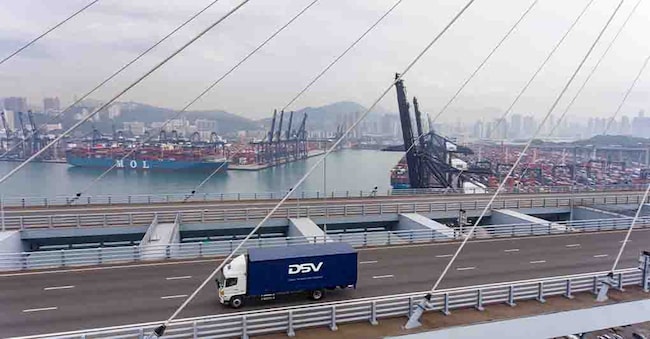
Global value chains are undergoing a profound metamorphosis: the model based on cost optimisation and predictability of flows has given way to a condition of structural volatility, in which European companies are confronted with tariff tensions, disruptions along key global hubs and the need to revise the geography of supplies.
The average distance travelled by EU imports has increased by around 6% in six years: that is about 114 kilometres more per shipment than in 2019. Rather than shortening, supply chains seem to have fragmented. Road transport is therefore once again becoming an important strategic variable. In the European Union, the segment covers 52.6% of goods moved in tonne-kilometres. The road network is the backbone of the last mile and of intra-European relations and its resilience now depends on the ability to absorb smaller and more frequent flows.
In order to contain stocks and react more quickly to the market, companies are increasingly replacing large periodic shipments with fragmented flows. This is driving the growth of the Less-than-Truckload segment, which is projected to reach $231 billion by 2026 with an annual rate of 4.7 per cent, while in Europe a CAGR of 5.8 per cent to 2033 is expected.
Two mechanisms that redefine the cost-compliance equation are weighing on the market: the extension of the ETS to road transport (ETS2), which is already operational in price expectations, and the Carbon Border Adjustment Mechanism (CBAM), which entered its final phase on 1 January 2026. Industry associations estimate an impact of up to EUR 6,000 per truck per year related to ETS2. Within this framework, the value of a logistics partner is measured by its ability to compose and manage networks.
A European network redesigned after the DSV-Schenker integration
The acquisition of Schenker by the Danish DSV group, completed in April 2025, is the most significant transaction in the industry: a move that has propelled the group to number one worldwide in the logistics sector in terms of volume of shipments handled, while redefining its position in European land transport. Today, the perimeter counts around 150,000 people in 90 countries and a gross profit 2025 of 9 billion euros (+59%). For the Road division, this means over 50,000 vehicles per day and 100 million shipments per year, managed through more than 200 terminals and 300 offices. In Italia 23 locations, more than 680 employees and 457 million in 2025 revenue between DSV and Schenker.
What changes is not just the scale, it is the frequency: daily coverage to all European destinations, as opposed to the weekly frequency of some of the competing offerings. For companies, it means testing new markets with part-load shipments, i.e. the Less-than-Truckload standard ranges from two to eleven metres, without tying up resources. At a time when many companies are rethinking their sourcing and sales geographies, the ability to access new markets through split shipments allows them to reduce commercial risk, validate new logistics corridors and gradually build a more resilient international presence.
And once the market has been tested, it is always possible for companies to step up their flows from a few departures per week to one per day. Flexibility is not only about entering a market, but also about the ability to accompany its growth: from starting with partial loads to gradually increasing distribution frequency, without having to rethink the logistics model.
The portfolio integrates customs clearance with Authorised Economic Operator qualification, proprietary insurance, intermodal road-rail and a dedicated package for CBAM with book-and-claim mechanisms on sustainable fuel.
On the transition front, the group is proceeding on a double track: progressive introduction of electric trucks and biofuels to immediately reduce the carbon intensity of the existing fleet. In the summer of 2024, it signed an agreement with Volvo Trucks for 300 zero-emission electric trucks, to be integrated into the European network between 2024 and 2026, and 500 energy-efficient diesel and gas vehicles, with a target of 2,000 zero-emission units by 2030.
Thanks to this agreement, DSV will have one of the largest company fleets of heavy electric vehicles on the Old Continent.
The group is aiming for a 28% reduction in Scope 1 and 2 emissions by 2026, validated by the Science Based Targets Initiative. On the compliance side, the group supports customers in reporting on supply chain emissions, with a dedicated CBAM package that ranges from analysing products subject to the mechanism to extracting customs bills and preparing annual reports and book-and-claim mechanisms that certify in a verified manner the volumes of sustainable fuel purchased.
Logistical reliability returns to the centre of strategic choices. As supply chains fragment and compliance becomes more stringent, the value of a partner is no longer measured in transit times but in the ability to accompany growth, scale frequencies and geographies, and hold service and reporting together.

