
Shows and immersive screens, advertising focuses on shops
According to Teha research, promotion at the point of sale and during digital shopping represents the third wave of communication investments: 25 billion in Europe by 2026

4' min read
4' min read
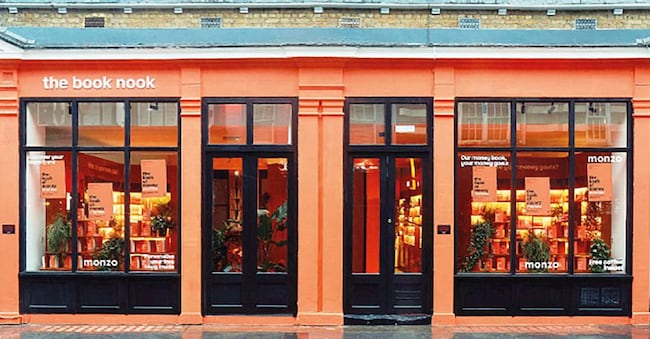
A paper book. It is one of the firstBritish internet only banks to be born with smartphone services that decides to print it. More, to relaunch it in a bookshop in London's iconic Soho district. The guide is called "The Book of Money" and was designed by Monzo, an online bank founded ten years ago that now has 12 million customers and £1.2 billion in turnover. In addition to digital notifications, multichanneling scatters paper and focuses on physicality. Thus the experience is transformed into a collective ritual. It's a move you don't expect, or maybe you do. The dematerialised bank becomes a bookseller and decides to take to the streets and money becomes a story to read, to browse, to share. Because sometimes the future can also be smelled in the old smell of printed paper. Codes mingle, media become contaminated, boundaries jump. It is the new grammar of the book, where value is not only measured in screens.
The augmented shop
."The retail media represents the third big wave of digital marketing, after search and social," wrote the Financial Times recently. Today, the point of sale becomes a multi-platform stage. And it is revolutionary: the shelf as advertising space, the trolley as media, the aisle as channel. The Guardian called the new stores experiential cathedrals in which experience and communication merge. No longer a simple purchase, but something more. Surprise, or maybe not. Retail media, driven by strong digitalisation, is a candidate to represent the third wave of online advertising. Italy is still lagging behind the rest of Europe and the American market, but the potential is enormous and represents a relational treasure trove.
In Europe, investments in retail media will reach the threshold of EUR 25 billion by 2026. This is what emerges from the new Community Retail 5.0 research by Teha - The European House Ambrosetti. The snapshot, previewed in Sole24Ore, presents the geo-localised potential and describes a new experiential vitality in shops. On the other hand, according to consumers, the most distinctive trait of specialised retail is precisely its widespread presence throughout the territory: these spaces offer an important contribution to sociality and aggregation (28.6%), they are models for sharing interests and habits with a view to verticality of consumption (24.6%), they represent value-added services (20.9%), and they define the creation of new relational ties (14.5%). Retail's ability to be close to the consumer represents a distinctive element in consumer choices: this year 77% of the sample feels closeness with their trusted brand. A proximity that becomes a purchase intention for an omnichannel relationship. Because multi-channeling becomes pixel and shelf.
New formats and narratives
."Retail media is an extremely valuable paradigm because it intercepts the consumer's attention in the moments closest to the product analysis and eventual purchase decision. Today, consumers are overwhelmed by thousands of advertising messages between online and offline, which they often ignore or from which they filter partial information. In retailer channels, on the other hand, information arrives contextualised and useful. A retailer's ability to use its own first-party data and activate narrative spaces at the point of sale or on its digital platforms becomes a unique lever of relevance and trust,' says Teha partner Benedetta Brioschi. Beyond transactions, towards entertainment. "Think of immersive digital signage, co-branded events, themed areas within shops: we will increasingly experience a transformation of the store into a media and community hub. It is the natural response to the emergence of platforms such as TikTok Shop, which focus on promotions and engaging content. If media becomes retail, retail can only embrace a path that leads it to also become media,' Brioschi points out.
Every touch point has an identity and consistency is needed. The new challenge? Integrating narratives. The thousand and one stories of brands: on shelves, in social feeds, inside apps, in fitting rooms, at airport entrances. Every touchpoint is a fragment of a narrative. Marketing analysts speak of phygital retail: hybrid environments, where data is intertwined with behaviour. Research by the Wharton School sums it up this way: 'Stores are back at the centre because they can generate engagement and measurability together'. It is not a nostalgic return to the store, but its evolution as a proprietary, trackable, actionable media.

