
Sicilia En Primeur, the wineries' challenge: transforming wine tourism into value
In Palermo, Assovini Sicilia focuses on wine tourism: over one hundred journalists from all over the world, 56 companies and more than one thousand labels. The data say that the market is already there. The leap is to increase value by visit, repurchase and relationship
by Nino Amadore
 Aggiungi Il Sole 24 Ore
ai preferiti su Google
Key points
- Palermo showcase of Sicilian wine
- The market is already there: now it must be monetised
- From charm to margin, the unfinished transition
- Fewer confusing experiences, more saleable proposals
- Accessibility and sustainability, the two operational nodes
- Generation Z is not far from wine
- Cellar as a new place for consumer education
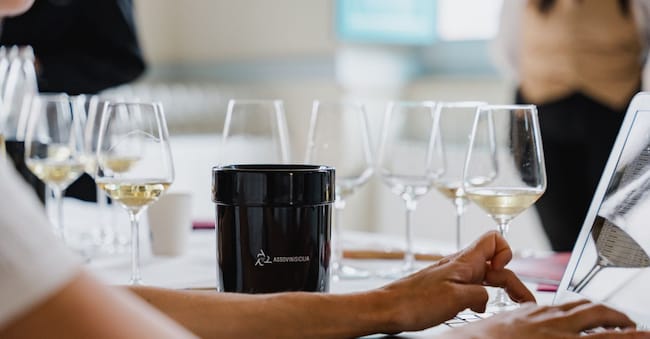
The Sicily of wine must no longer just be discovered. It must learn to make those who have already chosen it better. This is the message that runs through the 22nd edition of Sicilia en Primeur, the international event of Assovini Sicilia that started at the Oratorio dei Bianchi in Palermo with the conference 'Taste the Island. Live the Story'. Until 15 May, the event will bring more than one hundred journalists from all over the world to the island, including tastings, cellar visits, and experiences in the territories. Protagonists will be 56 member companies, with over a thousand labels for tasting.
Palermo showcase of Sicilian wine
Palermo becomes part of the story: Real Albergo delle Povere, newly renovated and the venue for the tasting with the producers and the technical tasting, Church of Santa Maria dello Spasimo, Palazzo Sant'Elia. Wine is no longer presented as an isolated product, but as the key to accessing a Sicily made up of landscape, art, history and community.
Mariangela Cambria, president of Assovini Sicilia, said at the opening: 'Talking about wine in Sicily inevitably means talking about a journey. A journey that goes beyond tasting and becomes a cultural experience, an encounter with the territories, with the communities and with the deep-rooted identities of the island. We chose Palermo for this edition of Sicilia en Primeur because it perfectly represents this stratification of history, cultures and visions that makes our land unique. Today, wine tourism is a fundamental strategic lever: not only an economic opportunity for companies, but a powerful tool to tell the story of wine through Sicily's landscape, gastronomy, art and human heritage. This is the meaning of our invitation: taste the island, live the story'.
The market is already there: now it has to be monetised
The theme, however, does not remain evocative. The 2026 report 'La Sicilia del vino che accoglie il mondo' (The wine Sicily that welcomes the world), edited by the Centro Studi Enoturismo e Oleoturismo of the Lumsa University, describes a system that is already mature: 74.7% of wineries indicate a predominantly foreign clientele, 61.4% declare visitors will increase in 2025 and almost four out of ten wineries exceed two thousand visitors per year. The market is not to be invented: the challenge is to monetise it better.
From charm to margin, the transition still unfinished
The weak point is the shift from charm to margin. For 58.3% of companies, wine tourism, excluding direct wine sales, weighs less than 10% of turnover. Visiting works, but often remains a complementary lever. Yet the tourist buys, ships, seeks authenticity. He is not just buying a bottle, but a story. If that story is well constructed, it can generate online re-orders, loyalty and returns.

