Crafts

Sicilian ceramics is taking on the challenge: moving from souvenirs to design, but there is a shortage of workers

The island is home to 407 businesses, employing around 2,600 people and generating a turnover of 400 million. The sector is focusing on the luxury market and overseas markets, but a shortage of lathe operators and decorators is holding back growth

3' min read

Translated by AI
Versione italiana

3' min read

Translated by AI
Versione italiana

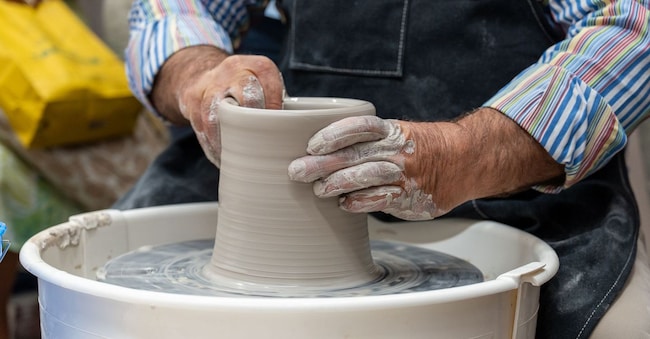
The orders are there, and so are the markets. What’s lacking is the workforce. Sicilian ceramics are worth over 400 million euros a year, employ around 2,600 people – including those directly employed and in related sectors – and are striving to move beyond the realm of souvenirs to find their way into luxury hotels, private residences and architectural projects. But there are fewer and fewer artisans standing at the potter’s wheels, capable of transforming clay into a finished piece.

The sector comprises 407 specialist firms, over 2,300 direct employees and around 300 workers in related industries. This sector is spread across Caltagirone, Santo Stefano di Camastra, Sciacca, Burgio, Monreale and Collesano, where ceramics bring together manufacturing, local identity and tourism.

Loading...

The workshop remains at the heart of production, but the market has changed. Alongside tourists buying a plate or a vase, there is growing demand for wall tiles, tables and home accessories intended for interior design, the international hospitality sector, the contract market and high-end homes.

From souvenirs to design

Sicilian ceramics cannot compete with mass production in terms of volume and price. However, they can compete on the basis of uniqueness, customisation and design quality. This is the leap from souvenir to design: using tradition to enhance the value of the product and win over international customers.

One of the most interesting innovations is glazed lava stone. Basalt from Mount Etna, decorated and fired using ceramic techniques, is used for tables, kitchen units, flooring, cladding and outdoor installations. This range of products is opening up new opportunities in the hospitality sector, outdoor design and landscape architecture.

The sector also has its own organisational structure. In 2008, the Region recognised the Sicilian Ceramics Production District, based in Santo Stefano di Camastra; in 2021, the ‘Made in Sicily’ Ceramics District, based in Palermo, was recognised for the five-year period 2021–2025.

The district-level approach serves to overcome the fragmentation of businesses and to support activities that individual workshops would struggle to undertake on their own: joint promotion, innovation and internationalisation. Through the regional ‘Cluster in Sicily’ programme, a project by the District was funded to strengthen collaboration and boost both tangible and intangible investments. In 2026, the District was also accepted into the New York Now Summer Market, an event dedicated to design, home décor and craftsmanship.

Orders are on the rise, but the number of craftspeople is falling

Whilst new overseas markets are being sought, a problem is emerging within the workshops that threatens to stifle growth. There is a particular shortage of potters – the craftspeople who shape clay on the potter’s wheel – as well as decorators and modellers. Some businesses reportedly have orders exceeding their production capacity but are unable to increase output because they cannot expand their workforce.

The reduction in practical training at vocational colleges has undermined the next generation of workers. Several companies are now looking for skilled staff in Tunisia, Morocco and Egypt. ‘The main obstacle to the sector’s development does not relate to market demand,’ states the sector report. The crux of the matter is the transfer of skills that require years of practical experience and cannot be replaced by automation.

Santo Stefano di Camastra: a workshop for the Geographical Indication

Against this backdrop, Santo Stefano di Camastra has been chosen as the sole Italian municipality to be the beneficiary of a European pilot project for the recognition of the Geographical Indication for ceramics. The initiative, promoted by the Ministry of Enterprise and Made in Italy, the European Commission and the EUIPO, will support the local area in setting up the producers’ association, drawing up the specifications and initiating the registration process.

Loading...

“The selection of Santo Stefano di Camastra recognises the historical, artistic and productive value of our ceramic tradition,” says Mayor Francesco Re. The Geographical Indication, he adds, will be able to “combat imitations and counterfeits and boost the competitiveness of businesses in national and international markets”.

For the Regional Councillor for Productive Activities, Edy Tamajo, the project ‘recognises the value of a centuries-old tradition, the talent of our master craftsmen and the ability of businesses to combine identity, quality and innovation’. The certification will help protect the name and strengthen the commercial presence. However, it will not produce new artisans. The real challenge therefore remains twofold: to make inroads into the world of design and international markets without losing the skilled hands capable of working with clay.

Copyright reserved ©
Loading...

Brand connect

Loading...

Newsletter

Notizie e approfondimenti sugli avvenimenti politici, economici e finanziari.

Iscriviti