
Sicilian industrial clusters at risk with decarbonisation
This is what Banca d'Italia says in its report on the island's economy in 2023: growth still weak, agriculture and industry hurt

5' min read
Key points
5' min read
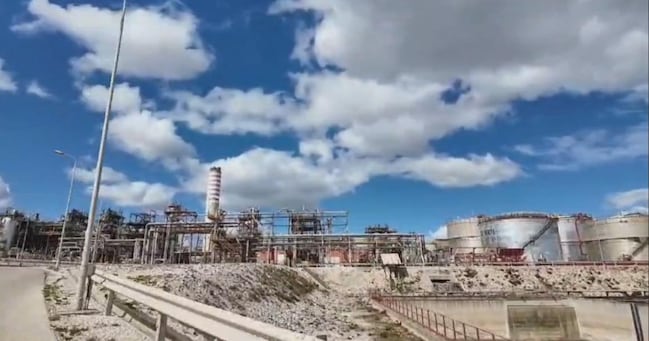
The concentration of activity in a single sector or excessive dependence on a small number of large operators are potential risks for Sicily's industrial clusters. Moreover, the overall activity of the island's industrial clusters could be affected by the reconversion processes associated with the energy transition and the progressive decarbonisation of our economies. These are two passages of a focus on Sicily's industrial clusters from the Bank of Italy's report on the island's economy presented in Palermo. According to Bankitalia's researchers, the positive and significant correlation, especially in the oil poles, between the quantity of crude oil processed and the turnover of other manufacturing companies based in the same area could be affected. And this is just one aspect of the Sicilian industrial system that, the Bank of Italy report goes on to say, counts (the data are from 2021) around 4,200 local units belonging to multinational groups that 'represent a marginal share of active establishments (1.4%) but employ almost 9% of the workforce and generate more than a fifth of the added value of the non-agricultural and non-financial private sector'. Added value that between 2017 and 2021 in Sicily remained substantially stable compared to a slight increase in the rest of the country.
Economy grows at a very moderate pace
The focus on industrial clusters is part of the overall examination of the Sicilian economy, the condition of which, according to the Bank of Italy, is less brilliant than has been reported. In 2023, economic activity in Sicily grew at a very low rate and lower than in the previous year: the product increased by 0.7%, slightly less than the Italian GDP. "The signs of recovery that had appeared in the first quarter faded in the months that followed," the report reads, "Based on the qualitative indications gathered, economic growth would be modest even in the current year.
Male industry and agriculture
.Things are not going well for agriculture due to the weather situation: the added value, which had fallen by 3.7% in 2022, fell further in 2023, albeit less sharply than the national and Mezzogiorno averages. Industry is not doing well due to a weak economy and the high cost of credit, which have held back business investment: "In 2023, the contraction in industrial added value continued, with a reduction substantially similar to that recorded in the Mezzogiorno and nationally. Based on our elaborations on Istat data, the decline in regional industrial production, more marked in the first half of the year, eased in the last quarter of 2023," write the Bankitalia researchers.
With regard to construction, although 'decelerating, activity remained at high levels, still benefiting from the stimulus provided by tax incentives as well as demand from the public sector. The weakening of consumption was reflected in the performance of private non-financial services, the dynamics of which, however, were supported by the positive results of tourism and air and maritime transport,' it continues.
Weak credit market
.The weak credit market is beginning to show worrying signs: the growth of loans to the non-financial private sector in 2023 has gradually weakened to a standstill. "Credit risk indicators, which had reached very low values in 2022, showed some signs of worsening," it reads. "For households, the flow of new impaired loans has increased; for the productive sector, the incidence, among performing loans, of those with delayed repayments has increased.


