
‘Sicilian museums need connections and a strategy’
Elisa Bonacini, archaeologist and researcher in museology, speaks

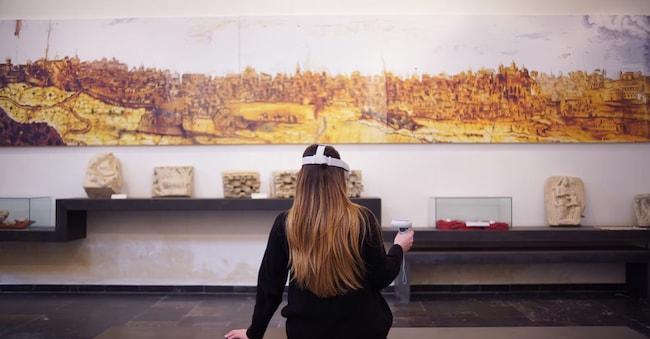
‘The real revolution in Sicily would not be to digitise each museum separately, but to build a digitally connected cultural heritage, overcoming administrative and territorial divisions. We don’t need robots, but a strategy.’ This is the view of Elisa Bonacini, an archaeologist and researcher in museology at the University of Bari. She has been working in the field of museology and the digital promotion of cultural heritage for twenty years now.
A starting point for this renewal is the ‘Regional Innovation Strategy for Smart Specialisation – S3’ drawn up by the Department for Productive Activities of the Sicilian Regional Government, which includes cultural heritage among its key areas of focus. Its aim is to guide programmes and initiatives in support of businesses and organisations across various sectors that wish to use advanced technologies to revolutionise local enterprise.
A change that could lead to the further development of a sector – the cultural and creative sector – which, in Sicily, generates over 3.7 billion euros in added value and employs more than 67,000 people, according to annual report ‘Io sono cultura 2026’ by the Symbola Foundation, Unioncamere, the Tagliacarne Research Centre and Deloitte. And which, according to Bonacini, must necessarily begin with greater integration between the various organisations.
These days, we hear a lot about virtual reality, blockchain, NFTs, artificial intelligence, advanced ticketing, digital guides and robots in museums. Which technological revolution could best meet Sicily’s needs and transform the island’s historical and cultural sector?
I believe that the most significant change could come from the integration of artificial intelligence, interoperable databases and digital storytelling. I am not so much thinking of a single museum equipped with spectacular technology, but rather of a system capable of digitally connecting Sicily’s entire cultural heritage. I envisage a visitor being able to create personalised itineraries across regional, municipal, ecclesiastical and private museums, discovering the historical and cultural links between different sites. Artificial intelligence could make these experiences more accessible, multilingual and adaptable to each individual’s interests and needs, provided the content is scientifically validated. Sicily has every potential to become a vast, widespread museum, where technology fosters knowledge and encourages people to visit the region in person.

