
Sicilian Region, green light for the Publishing Fund
The Sicilian Regional Assembly approved the regulation as part of the financial manoeuvre: over 4 million per year for information, employment and innovation
by Nino Amadore
Key points
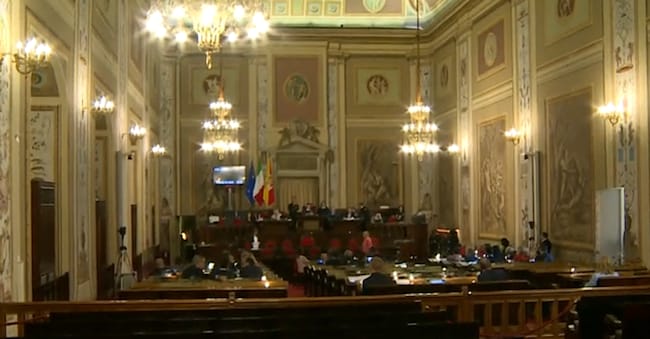
The Sicilian Regional Assembly has approved the regulation of the 2026-2028 Stability Law establishing the Fund for Publishing, marking a long-awaited political and institutional step that was anything but a foregone conclusion. The go-ahead comes after two previous failed attempts in recent months, sunk by the secret vote, and is based this time on an open vote that recomposed the Chamber. The measure provides more than EUR 4 million per year for the three-year period 2026-2028 and is aimed at a wide range of subjects: print and digital publishing companies, local radio and television broadcasters, press agencies and operators of book publishing linked to Sicilian culture. The financial management of the resources is entrusted to Irfis FinSicilia, while the operational implementation will be defined by a specific decree of the Regional Department of the Economy.
The technical installation of the standard
The fund is structured as an annual plafond, divided into non-repayable contributions, subsidised financing for investments (technological, organisational, infrastructural) and working capital requirements. The regulation also introduces a 20% reserve in favour of emerging titles (operational for no more than 36 months), with a clear priority towards: recruitment and collaborations with registered journalists, digital innovation of editorial and distribution processes. In addition to the publishing sector in the strict sense, the text also provides for a specific intervention in support of local Fsma television broadcasters in the technical area 17, with 300,000 euro for 2026 alone to compensate for the costs of using the Rai Way transmission network.
Schifani: 'Dutiful choice for pluralism'
Vindicating the political value of the rule is the President of the Sicilian Region, Renato Schifani, who frames the Fund as a structural element of regional policies: 'The approval of the rule on funds for the publishing industry represents an important and long-awaited result. A dutiful choice that my government has always supported to strengthen the pluralism of information typical of a democratic country'. A statement that places the Fund not only as an economic support measure, but as a systemic act, in a context in which local information continues to suffer structural fragility, especially in terms of employment.
The Role of the Parliamentary Press: Employment at the Centre
The Sicilian Parliamentary Press, of which Alfredo Pecoraro is president, also played a significant role in the parliamentary process and was heard at a hearing by the Budget Commission. The parliamentary reporters demanded the inclusion, in the final text, of the criterion of contracted journalists as a qualifying element for access to contributions. The declared objective is to prevent the Fund from becoming an indistinct support for companies, decoupled from journalistic work, and to orient it instead towards real and stable employment: the Parliamentary Press announces careful monitoring of the implementation phase.
The Fed: 'Information is civil infrastructure'
In the digital publishing sector, the Federazione editori digitali (Fed) also intervenes, which reads the approval of the rule as a cultural step before a financial one. "With this decision," emphasises Biagio Semilia, president of the Federation of Digital Publishers, "the Sicilian Region finally recognises the role of information as a fundamental civil infrastructure of democracy, especially in its local and hyper-local dimension, which constitutes the first garrison of pluralism, transparency and democratic control in the territories.


