The feature article

Sicily: private capital breathing new life into local areas

From the revitalised square in Catania – along with a new venue – to the historic buildings on Via Maqueda, and the seafront at Villa Margi in Reitano (Messina): entrepreneurs and foundations are investing in areas where buildings and neighbourhoods have fallen into disuse, creating jobs, services and new economic opportunities

4' min read

Translated by AI
Versione italiana

4' min read

Translated by AI
Versione italiana

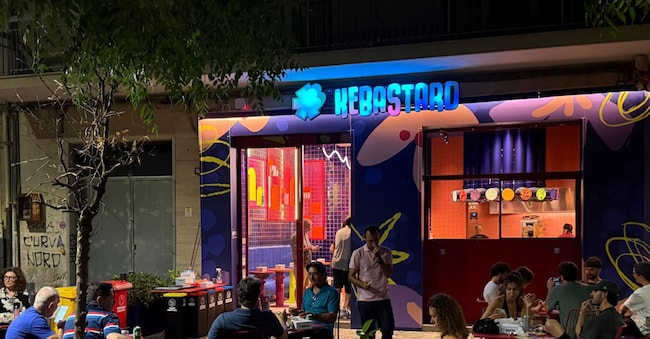
In Catania, to open Kebastard, Andrea Graziano had to start with the square itself: cleaning, CCTV, lighting, greenery and maintenance were all part of the investment of around 250,000 euros, made jointly with Abdallah Dadi. In Palermo, Francesco Caravello has restored the historic premises of the Martorana monastery to create a venue that combines a restaurant with a market for small-scale producers, and plans to transform the space in front of it into the ‘Strada dei Giusti’. Spanning Villa Margi, the Fiumara d’Arte and Librino, Antonio Presti has built a system in which artworks, hospitality and the image of the local areas generate visitor flows.

Three projects that have one thing in common: the investment does not stop at the property itself, but also extends to the wider area.

Loading...

In Catania, investment starts in the town square

Piazza Sciuti had been redeveloped in 2017, but since 2020 its condition had gradually deteriorated. The presence of squatters and a lack of maintenance had made the area less liveable. With the arrival of Kebastard, Graziano and Dadi therefore decided to take on a broader role than is usually expected of those starting a business.

“We’ve always believed that the value of a business doesn’t stop at the door,” says Graziano. “A business can become the driving force behind a wider transformation.”

At its own expense, the company organised cleaning, rodent control and cockroach control. In collaboration with the local council, it helped to install litter bins, glass recycling bins, ashtrays and CCTV, as well as improving lighting, street furniture and green spaces. “Taken individually, these may seem like routine measures,” says Graziano, “but together they transform the quality of a place.”

Kebastard opened on 27 May. The investment included the refurbishment of the shop, based on a design by architect Fatima Costa, and work on the square. The venue covers around 70 square metres, in addition to the outdoor area, and operates on a fast-casual model: orders are placed via an app or self-service kiosks. Prices are mostly between five and ten euros.

The business employs six people on permanent contracts, as well as a number of contractors. It also tells the story of Dadi’s journey from employee to entrepreneur: having arrived from Tunisia, he worked alongside Graziano for a long time before becoming a partner.

Kebastard is therefore a format with the potential to be replicated, but also an investment that seeks to transform a square redeveloped by the local council into a commercial destination. “Many of these activities are not part of our core business,” notes Graziano, “but they were essential for the whole scheme to work.” The private sector, he adds, “can act as a catalyst, but cannot permanently replace the local authority.”

Palermo: enterprise, local produce and heritage

In Palermo, Francesco Caravello’s venture is based on a stretch of Via Maqueda that is less well-known than the area between the Quattro Canti and the Teatro Massimo. La Bottega del Monastero, which opened in the historic premises of the Martorana, combines a restaurant, delicatessen, ice-cream parlour and a shop selling Sicilian specialities. It has 36 seats between the indoor and outdoor areas, in addition to those at Casa Panna. But the most interesting aspect is the network it has built with dairies, patisseries and artisan producers, who often lack the scale and commercial clout to break into the large-scale retail sector.

The venue thus becomes a direct-sales platform, capable of attracting residents and tourists and channelling some of the demand towards small-scale producers.

Loading...

Opposite the Bottega stands the Faculty of Law of the University of Palermo. Caravello proposes dedicating the area in front of the building to the magistrates murdered by the Mafia who were educated at the University of Palermo’s Faculty of Law: Pietro Scaglione, Gaetano Costa, Antonino Saetta, Rocco Chinnici, Giovanni Falcone, Paolo Borsellino, Francesca Morvillo and Rosario Livatino.

The “Strada dei Giusti” is set to become a route of remembrance capable of attracting students, residents and visitors. The project has yet to involve the university and the local council, but it embodies the underlying idea: to use the regeneration of a historic space to set up a business, expand the market for local producers and help enhance the area.

Presti and the economy built around local areas

The longest-running project is that of Antonio Presti. It all began in the 1980s with the Fiumara d’Arte, an open-air museum comprising monumental works scattered throughout the Nebrodi Mountains. Alongside these installations, Presti established the Atelier sul Mare, a hotel-museum in which the rooms become habitable works of art and a starting point for exploring the local area.

The project has got underway again at Villa Margi, a coastal hamlet of Reitano, opposite Tano Festa’s *Finestra sul mare*. The aim is to develop accommodation facilities linked to the Fiumara d’Arte, Santo Stefano di Camastra and the inland towns. These initiatives generate visitor flows that can boost overnight stays, catering, craft sales and services; the hotel captures a portion of this demand and aims to encourage visitors to stay longer.

Presti has applied the same approach to Librino as well. For over twenty years, the Foundation has been working with schools, local residents and artists through workshops and community-based installations. The economic impact is less direct, but it has an effect on the area’s reputation: Librino is no longer portrayed solely in terms of urban decay and unfinished projects, but is becoming a place capable of attracting visitors and initiatives.

The model is not exclusively private: it has also involved foundations, institutions and public funding. However, individual initiative remains central, having used art and hospitality to build new local economies.

Copyright reserved ©
Loading...

Brand connect

Loading...

Newsletter

Notizie e approfondimenti sugli avvenimenti politici, economici e finanziari.

Iscriviti