
Sicily, drought alarm: hoteliers on the alert. Tankers to avoid crisis
High additional costs for the sector: water from cisterns costs up to EUR 30 per cubic metre

3' min read
3' min read
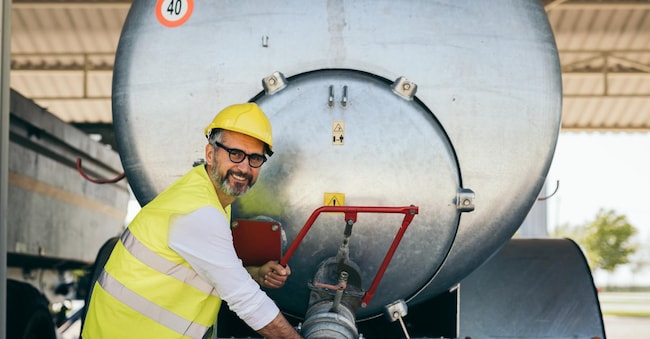
Averting the water emergency. This is the sticking point for the hoteliers of Sicily and Sardinia grappling with the drought. "We are in a situation similar to that of the 1980s when the entire coastline with hotels, villages and second homes was supplied by tankers," recalls Paolo Manca, president of Federalberghi Sardegna. 'We never thought we would relive a situation like that. The lack of the State is weighing heavily while the infrastructure is making water and the inconveniences are weighing on everyone's life. Once again this year, hotels will not be without water, just move in advance and take on this extra cost'.
In some places on the island, such as Budoni and San Teodoro, people are trying to deal with the situation with the appropriate urgency. The local chronicles speak of Giovanni Sanna, an entrepreneur who heads the 'Studiovacanze' group with 18 facilities, some of which are in the red drought zone. At the beginning of May, he announced the purchase of two desalinators at a total cost of between 300 and 400 thousand euros, not counting the costs for the sea intake and electricity consumption. This project stems from the decision to fight the drought quickly and free itself from the 'tank' service, whose prices fluctuate like those of black gold. It should not be forgotten that in the winter season Budoni and San Teodoro respectively have 5 thousand and 3 thousand residents, while in the summer it reaches, between second homes and holidaymakers, 50 thousand people.
The water emergency is gripping Sicily with a dramatic situation in the province of Agrigento with parties throwing accusations at each other. 'The reservoirs are empty. There used to be a desalinisation plant but it was dismantled ten years ago,' explains Francesco Picarella, president of Federalberghi Agrigento, summoned to Palazzo d'Orléans by the regional president Renato Schifani on the matter. 'Tourism is the territory's predominant industry and we have to understand whether the water reserves will be sufficient,' he says. His first step is to demand the installation of a desalinisation plant. 'We are asking for immediate solutions to solve the problem,' continues Picarella, who hypothesises renting desalinator ships but reminds us of the vice of not doing and of a water network that in Agrigento loses half of the water injected. 'One councillor said it would take three years to remake the water network but there has been talk of this since 2011,' Picarella urges.
Throughout the island the situation is emergency, while in Puglia there are no particular problems. "There is no problem in the supply of drinking water but the point is to work to recover efficiencies," explains Francesco Caizzi, president of Federalberghi Bari. The region is among the 12 with high water stress, according to the Community value of water for Italy by The European House - Ambrosetti, together with Liguria, Friuli and Marche.
As far as extra costs are concerned, the price of buying a tanker of drinking water is affected by fluctuations as for black gold. The price per cubic metre starts at over 5.5 euro for that supplied in Sardinia by a local utility, but can reach 20-30 euro and more if the tanker has to travel long distances, while the same desalinated quantity fluctuates around 6 euro. In this case, the real unknown is the cost of energy, because the treatment is energy intensive.

