
Sicily, the economy grows but remains fragile
Employment is growing, but agriculture is in crisis and exports are falling; IA is advancing, but Sicily lags behind the rest of the country

3' min read
Key points
3' min read
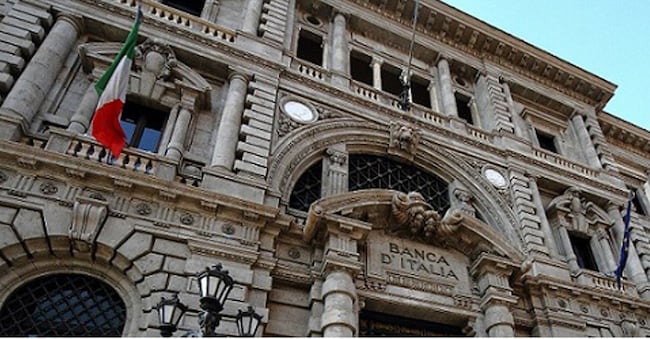
Employment is growing, the added value of construction is up, but agriculture is down, affected by the water crisis, and exports are down due to the collapse in the export of petroleum products (-15.2%). This is how one can summarise, broadly speaking, the trend of the Sicilian economy as it emerges from the annual report edited by the researchers of the Bank of Italy's Palermo office, headed since April by Milena Caldarella. The report, to begin with, underlines one fact: in 2024 economic activity in Sicily grew by 1.3% "a variation that is greater than that of the macro area (the Mezzogiorno) and of Italy, but less intense than last year". With one clear point: 'Despite the robust recovery following the pandemic, activity levels prior to the 2008-09 crisis have not completely recovered, unlike what was observed for the country as a whole'. In 2023, the added value of the Sicilian economy was still more than 4% lower than in 2007, despite post-pandemic growth above the national average. Industry lost almost 25 per cent and construction 20 per cent, with sharper declines than in the Mezzogiorno and Italy. Services grew by just 0.5%, compared to the national +7.8%. According to the Bank of Italy, the demographic decline also weighed heavily: -4% in the population and -1.7% in the share of working age.
Agriculture in crisis: wine and oil plummet, tomatoes resist
In 2024, Sicilian agriculture suffered a sharp drop, with marked declines in the production of cereals, oil and wine (the latter down by almost 30%). Only vegetables, particularly tomatoes, recorded growth thanks to an increase in cultivated areas. The impact of the drought was decisive, especially in central and eastern Sicily, with a 40% reduction in water resources available for irrigation compared to 2023.
U.S. tariffs worry
In 2024, Sicilian industry maintained a positive trend, with growth in turnover and hours worked. Investments remained stable, thanks also to public incentives, focusing on advanced technologies and energy efficiency. However, geopolitical uncertainty and the risk of US tariffs on European imports are worrying businesses. Exports fell, especially to non-Euro countries, with the United States - a key market for Sicily - accounting for 7.6% of regional exports. Sales were particularly affected by the collapse of petroleum products.
The impact of AI
.In 2025, 27% of Italian companies will use artificial intelligence technologies, up from 2024. In Sicily, adoption is more limited (17%, up from 8% the previous year). Employment on the island is less exposed to substitution by AI (20.3% compared to 24% nationally), but more involved in activities where AI can work alongside human labour, such as in public services and commerce. Approximately half of Sicilian high school graduates and over 80% of university graduates are exposed to AI, mainly through complementarity, with figures in line with the national average.
Jobs: +4.6% employed, better than the rest of Italy
In 2024, employment in Sicily continued to grow, marking an increase of +4.6% compared to the previous year. Although slower than in 2023 (+5.5%), the increase is still well above the national average (+1.5%) and that of the Mezzogiorno (+2.2%), according to ISTAT data from the Rilevazione sulle forze di lavoro. The employment rate for the 15-64 age group rose to 46.8%, registering a leap of 5.6 percentage points compared to 2019. This is more marked progress than the national figure, which grew by 3.2 points to 62.2 per cent over the same period.


