Electronics

Semiconductors: Sicily is aiming for a European alliance

The Region is submitting its application to Esra, the network of European microelectronics clusters. At the heart of this is Catania, home to STMicroelectronics’ SiC Campus and the European pilot line for wide-bandgap semiconductors

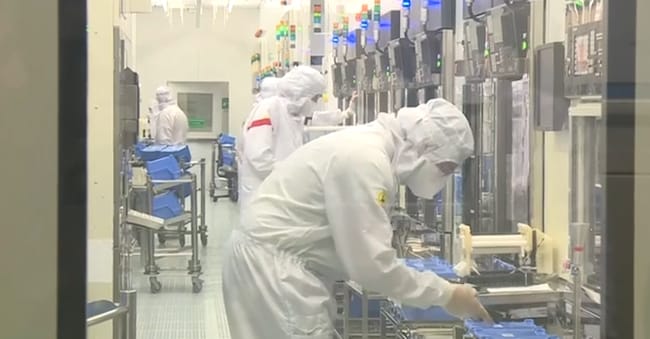
Addetti al lavoro all’interno dello stabilimento StM di Catania

3' min read

Translated by AI
Versione italiana

3' min read

Translated by AI
Versione italiana

Sicily is seeking to capitalise on the industrial clout Catania has established in microelectronics to secure a stronger role within the European semiconductor sector. The Regional Department for Productive Activities has formally submitted its application to join the European Semiconductor Regions Alliance (ESRA), the alliance that brings together the European regions most closely involved in the sector’s development.

This is a step that goes beyond the formal recognition of the Catania district. The Region’s aim is to join the network in which some of Europe’s leading semiconductor ecosystems engage in dialogue, and to play a more direct role in shaping EU policies on chips, skills and technological sovereignty.

Loading...

“Sicily does not want to be merely a beneficiary of major European industrial policies, but a key player in shaping them,” says Edy Tamajo, Regional Councillor for Productive Activities. “In Catania, we have one of Europe’s most important microelectronics ecosystems, and today we want to link this industrial, scientific and skills-based heritage with the most advanced regions.”

The SiC Campus at the heart of the strategy

The main selling point of Sicily’s bid is the STMicroelectronics site in Catania and, in particular, the Campus SiC project, which is aimed at developing a new integrated facility dedicated to silicon carbide power devices.

This is a strategic technology for applications ranging from electric mobility to renewable energy and network infrastructure – sectors in which wide-bandgap semiconductors are playing an increasingly important role. The Catania-based programme is supported by an agreement between the Sicilian Regional Government, the Ministry of Enterprise and ‘Made in Italy’, Invitalia and STMicroelectronics, and is set to receive total public co-funding of around 2 billion euros. Up to 300 million may come from the Sicily ERDF Programme 2021–2027 via the ‘STEP’ priority, the European instrument aimed at the development of strategic technologies.

For the Region, this is one of the main pillars of its high-tech industrial policy strategy.

“The investment in silicon carbide shows that it is possible to implement a high-tech industrial policy in Sicily,” emphasises Tamajo. “The challenge now is to transform these major projects into an increasingly strong supply chain, capable of involving businesses, universities and research centres.”

And this is precisely the most delicate stage. The challenge is to ensure that the major investments already underway help to strengthen an ecosystem in which production, research and skills can grow together.

One of the four pilot schemes under the Chips Act

Rounding off the picture is the Microchip PL4-WBG Pilot Line in Catania, one of the four pilot lines approved under the European Chips Act. The project focuses on power and radio-frequency semiconductors based on so-called wide-bandgap materials, with the CNR acting as coordinator under an institutional agreement that also involves the Sicilian Regional Government and the City of Catania. The combination of industrial production capacity, research and scientific infrastructure is the key factor on which the Region is focusing to present Catania not merely as the site of a major investment, but as a European microelectronics ecosystem. This vision is also linked to ‘Step Sicilia’ and the ‘S3 Sicilia 2021–2027’ strategy, through which the Region aims to channel European resources towards productive investments in strategic technologies and to strengthen the links between businesses, universities and the research sector.

The challenge facing the supply chain

Joining Esra could serve precisely to take a further step: to establish a stable relationship between Catania and the other continental districts, to develop new partnerships and to take part in the discussions in which European strategies on semiconductors are formulated.

Loading...

Sicily intends to position itself with a specific area of specialisation: silicon carbide power devices. This is a sector in which Europe is seeking to reduce its dependence on non-EU sources and which is used, amongst other things, in electric mobility, renewable energy and network infrastructure.

“We have an opportunity before us that goes far beyond a single investment,” Tamajo continues. “We want to make Sicily a region where research, production and innovation can grow together.”

This is where the most important industrial battle is being fought. The major investments already planned and the research infrastructure have strengthened Catania’s position within Europe. Now, the challenge set out by the Region itself is to transform these projects into an increasingly robust industrial sector, capable of involving businesses, universities and research centres and of creating new opportunities for skilled employment.

The application for membership, signed by Tamajo and the Director-General of the Department of Productive Activities, Dario Cartabellotta, also states the Region’s willingness to present Sicily’s microelectronics ecosystem to the Alliance’s Sherpa Group as early as the next available meeting.

For Catania, this would be another step on a journey that is now taking on an increasingly European significance: not only hosting major industrial investments, but also seeking to bring the influence of an ecosystem – which the Region now regards as strategic for its industrial policy – into the arena of continental debate.

Copyright reserved ©

Brand connect

Loading...

Newsletter

Notizie e approfondimenti sugli avvenimenti politici, economici e finanziari.

Iscriviti