
Siemens Mobility: ‘Partnering with Mermec to strengthen our position in the rail sector’
Michael Peter, Global CEO of Siemens Mobility: following the acquisition of Mermec, the German group aims to revitalise Ferrosud, export its diagnostic services and prevent breakdowns through digital technology

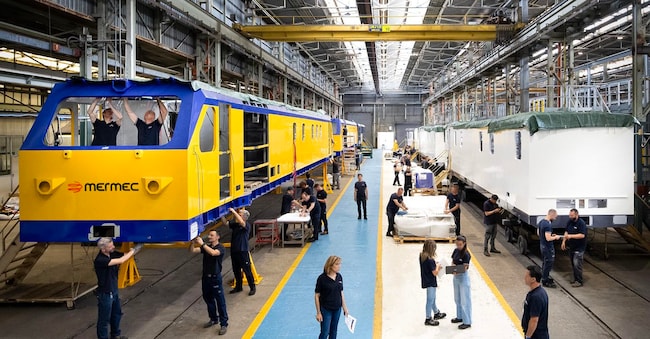
Mermec will be Siemens Mobility’s Italian hub. Following the acquisition, it is now time to get down to business, with the German group aiming to revitalise Ferrosud, export its diagnostic services and prevent breakdowns through digital technology. Michael Peter, global CEO, outlines the future of the acquired businesses: 430 million in revenue by 2025 and 1,700 employees. But the stakes go even further: from the modernisation of the Italian rail network to competition with China, and the future of European industry.
Why is Mermec so important to Siemens?
It provides us with expertise we were lacking: signalling systems for Italian railway lines, diagnostic trains – an area in which Mermec is a world leader – and a manufacturing base. We are strong in the metro sector, in Milan for example. We will now organise our new railway hub around Mermec. We are not buying into duplications, but rather growth opportunities.
On the subject of manufacturing: what could Ferrosud become in Matera?
It has a long industrial history and spare capacity. In the spring of 2027, we will bring one of our regional trains to Italia, showcase it to customers and gauge their interest. We want to explore this market, with a view to subsequently assembling those trains directly in Basilicata.
So can we expect new jobs? The trade unions are calling for guarantees.
Mermec is a growing company, and there is no overlap with our own activities. We want to continue creating opportunities and jobs. I have known the owner for five years; we have been discussing the takeover for two years, and the discussions have always centred on growth and employment.
Where do you see the greatest potential in Italia?
In terms of signalling. The ETCS programme, which enables trains to operate under a common European standard, covers 16,000 kilometres of the network in Italia, of which 4,000 kilometres are currently being fitted out. We want to secure a significant share of this market. It is a market growing by 6 per cent a year, compared with a global average of 4.5 per cent for rail transport. The technology makes it possible to run more trains on existing lines.

