
Appeals against the Melonellum are ready: from signatures to gender quotas, from the award to the ‘senator of the world’
A ruling from the Constitutional Court is expected in January or February. The opposition is hoping for the removal of the requirement to nominate a candidate for Prime Minister, but the forecast is for a few self-executing provisions on minor issues

Key points
- Appeals already prepared: to be lodged with the Courts of Appeal throughout Italia by the end of the month
- From the signature bonus to gender quotas: at least eight grounds for unconstitutionality
- The plan is for surgery on a few nodes
- Whether or not to hold primaries is a political, not a legal, matter
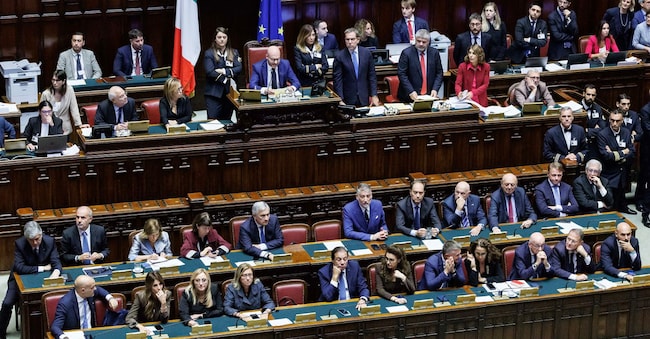
A ‘tailor-made’ electoral law, with an ‘abnormal’ majority bonus, ‘fake’ preferences due to the fixed-list system, and a lack of genuine gender parity that will be ‘a blow’ to female representation (‘Meloni, the first female prime minister, is blocking the way for other women’). The opposition’s bitterness is plain to see, and Elly Schlein and Giuseppe Conte, in their speeches in the Chamber, use almost the same words to condemn the ‘Stabilicum’ or ‘Melonellum’, whichever you prefer. But the law has now been passed, and we must inevitably come to terms with its effects straight away, starting with the obligation to nominate the coalition’s prime ministerial candidate – a requirement that has already intensified the rivalry between the PD secretary and the M5S president ahead of the primaries, which now seem inevitable. But when it comes to the timing of the polling stations, the Constitutional Court comes into play: now the eyes of the entire broad coalition are fixed precisely there, on the Palazzo della Consulta opposite the Quirinale.
Pre-prepared appeals: to be lodged with Courts of Appeal across Italia by the end of the month
The appeals lodged by the group of legal experts and politicians (including, amongst others, the Democratic Party members Dario Parrini and Andrea Giorgis) led by Roberto Zaccaria and Enrico Grosso will be submitted to all 29 divisions of the Court of Appeal across Italia once the law comes into force, i.e. after Sergio Mattarella has signed it – which is not expected to be long in coming – and 15 days after its publication in the Official Gazette: roughly by the end of the month. Assuming that at least one judge will refer the matter to the Constitutional Court shortly afterwards, the Constitutional Court judges are expected to issue a ruling promptly so as not to disrupt the election campaign ahead of the spring elections: by January, or by the first half of February at the latest. This also explains the PD’s intention to hold its primaries no earlier than February.
From the signature bonus to gender quotas: at least eight grounds for unconstitutionality
But what will the appeals focus on? Here is an outline of the main grounds for unconstitutionality currently being examined: ‘1. The mandatory prior designation of the future Prime Minister infringes on the freedom of political parties to choose how to stand for election (Article 49) and the prerogatives of the President of the Republic to confer the mandate (Article 92); 2. The disproportionate majority bonus violates Article 48 on free and equal suffrage: this cannot be the case if I vote for a party that loses by one point yet ends up in Parliament with a margin of over 20; 3. The gender disparity governing candidacies and preferences violates Article 51; 4. The requirement to collect an excessive number of signatures clearly violates Article 3 and is unreasonable in relation to the structure of the official entry threshold; 5. A single overseas constituency, the so-called ‘world constituency’, breaches Articles 3, 48 and 51; 6. The de facto prime ministerial system created by ordinary law is also a clear circumvention of Article 138 on constitutional revision; 7. The national bonus violates Article 57 on the Senate, which must be elected on a regional basis’. Finally, the ‘hidden national lists’ linked to the bonus are also under scrutiny, as they contravene the Court’s Judgment 1/2014 on voters’ right to cast an informed vote.
The plan is for surgery on a few nodes
It is unlikely, of course, that the constitutional judges will uphold all the points: many constitutional experts anticipate targeted interventions – with self-executing rulings – on minor aspects such as signatures and gender quotas, whilst the overall structure of the law is expected to remain intact. This is also because the rulings on the ‘Porcellum’ (2014) and the ‘Italicum’ (2017) upheld the majority bonus for parties exceeding 40 per cent and, to some extent, the designation of the candidate for Prime Minister (in the ‘Porcellum’, the wording was ‘coalition leader’).
Whether or not to hold primaries is a political, not a legal, matter
But the broader question is this: even if the Court were to reject the much-maligned nomination of the prime ministerial candidate, would the primaries then be politically avoidable? ‘Even if – and this is by no means certain – the Court were to rule in this way, it seems to be nothing more than an excuse to postpone decisions,’ emphasises constitutional expert and former PD MP Stefano Ceccanti. ‘ ‘Do the opposition parties think, in that case, that they can go before the electorate without saying who should lead an alternative government to Meloni’s? I don’t think anyone really wants to give the incumbent Prime Minister an advantage of this sort.’


