At the fair

Signs of recovery in Hong Kong

The war in the Middle East does not influence the market for now. The low price segment holds out and interest in the high end returns

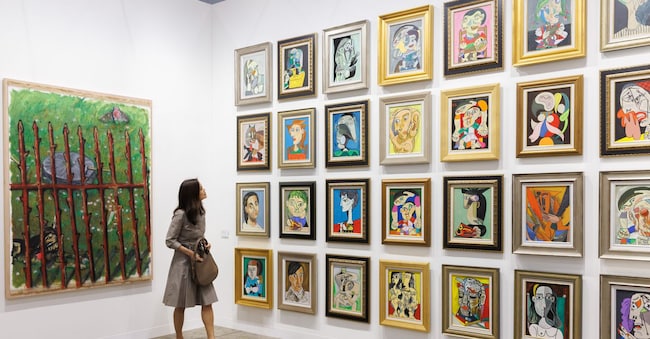
by Silvia Anna Barrilà

Tra gli stand di Art Basel Hong Kong

5' min read

Translated by AI
Versione italiana

5' min read

Translated by AI
Versione italiana

Viewed from China, the war in the Middle East seems far away. Although China is dependent on Iranian oil, in fact, there are still no significant consequences on people's habits and consumption, so that even in the corridors of the Art Basel Hong Kong fair, running until tomorrow, the effects have not yet been felt. On the contrary, there is an air of recovery compared to the slowdown of the last two years, in line with a trend that has become apparent globally already in the second half of 2025. It is true that Art Basel Hong Kong is a "slow" fair, like all fairs, in which collectors and buyers reflect, study, and have to get to know the gallery (the Italian gallerists who have been attending it for years are well aware of this), so the balance will be drawn at the end, but already in the first few hours there were positive signs. The operators have enjoyed conversations with a level audience and have also sold. "In the lower price bracket, in which we operate, the crisis is not felt," commented Simon Wang of Antenna Space in Shanghai, who just recently opened a permanent space in Hong Kong, driven by two reasons: the censorship encountered by some of his artists in Mainland China and the difficulties in imports.
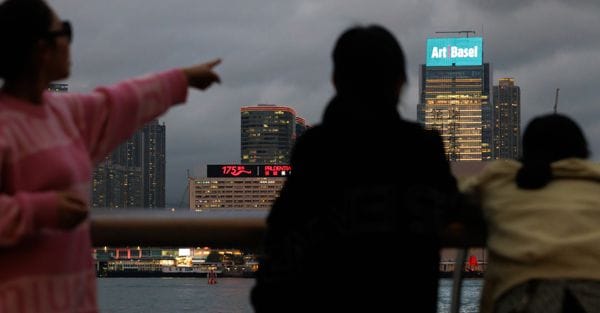
Art Basel Hong Kong. Courtesy Art Basel

The market recovery

Italy's Enrico Polato, founder of Capsule Shanghai, also opened a pop-up in Hong Kong during the fair, in the vibrant Wong Chuk Hang district in the south of the island, where the most interesting spaces are concentrated. 'I am amazed by the market response,' he commented, 'there is a good energy'. At the fair, he is present in the new Echoes section, created for fresh works by up to three artists, with a stand shared with Berlin gallery Klemm's with Leelee Chang, Elizabeth Jaeger and Yan Xinyue (stand prices $6-30,000).

Loading...

But even at the high end of the market there were surprises. "In the first hour of opening to VIPs, some 10 to 20 million were invoiced with four or five works alone," commented Vincenzo de Bellis, Chief Artistic Officer and Global Director of Fairs, "including a $4.5 million Calder sculpture from Pace, a $5 million Agnes Martin painting, a $2.8 million Picabia. We sense an upturn, but remain cautious. Certainly Hong Kong is the place where all of Asia converges. We also confirm our commitment to the Middle East, we will see how the situation develops.
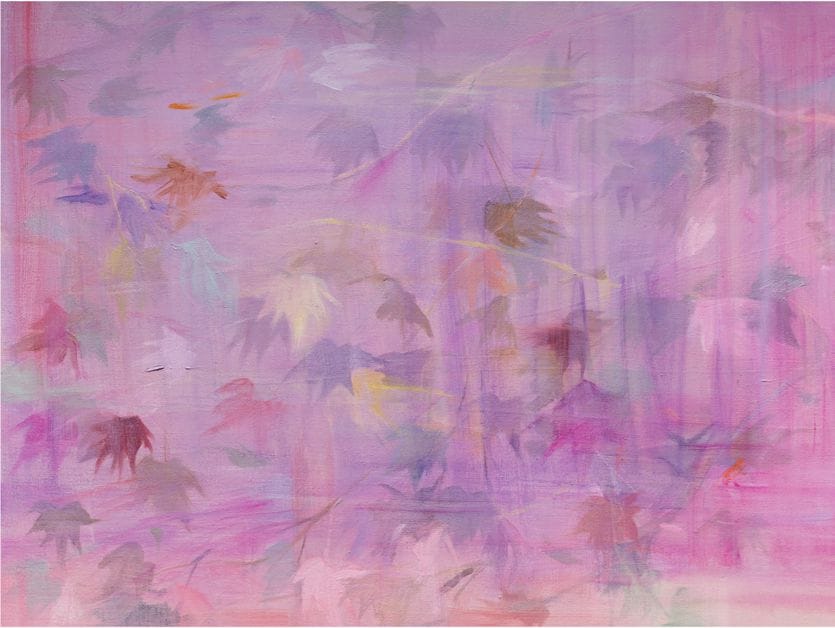
Yan Xinyue, «The answer is blowing in the wind #3», 2026, olio su tela, 106 x 142 cm. Courtesy Capsule Shanghai

Not only China

The visitors present for Art Week are not only Chinese, albeit in the majority. They come from Japan, Korea and Southeast Asia, which has grown a lot, with Singapore, Malaysia, Indonesia, Thailand. Many are building museums in the region, such as the collector Marcus Tan in Kuala Lumpur, or the Ayala Foundation in Manila. "I first noticed a slight reticence," commented Alicia Ong, a Singaporean art advisor with a background in finance. "Some Europeans skipped the fair and the uncertainty affected some buyers. However, the energy increased during the first two hours, supported by a young audience. Quality and rare works by leading names were reserved or sold. The mega galleries recorded good attendance. The widespread attitude is 'let's wait and see'". "On the first day of opening, the energy was felt," commented Kyoko Tamura, a Japanese collector, "people are still buying, just more slowly and with more caution. Prices for young artists seem a bit inflated, so serious collectors with bigger budgets are turning to blue-chip names for security and stability. They wonder if it is a lasting value or just a seasonal trend, which gallery the artist is supported by, who else is buying. For Japanese and Koreans, purchasing power is also somewhat influenced by their weak currencies."

A certain market activity was also noticeable just by looking at the logistics: "This year we noticed that the galleries brought in larger works," commented Lewis Cheng, founder of the art storage Eythos, "they are ready to take more risks, even introducing novelties. And then we get more requests for stand replacements: at five o'clock in the afternoon on the first day of the fair we were already full with bookings for changes for the next day'.
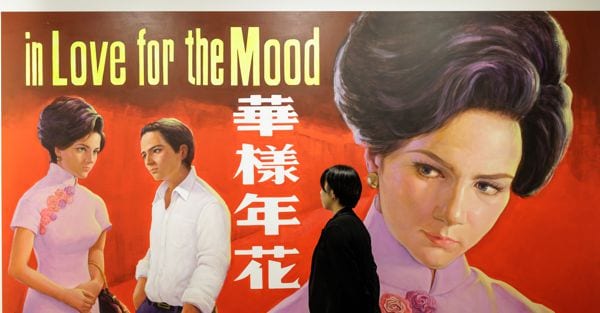
Ota Fine Arts, Art Basel Hong Kong 2026. Courtesy of Art Basel

Macroeconomic data

The market's recovery reflects the economy's growth. According to data from the Hong Kong Monetary Authority (HKMA), Hong Kong's economy showed clear signs of recovery in late 2025 and early 2026, with real GDP in the fourth quarter of 2025 growing by 3.8 per cent year-on-year; exports of goods increased by 15.5 per cent and exports of services by 4.8 per cent. "In the latter part of the year we had a very strong recovery in the financial markets, which is reflected in the performance of the art market," explained Adrian Zuercher, Co-Head Global Asset Allocation and Co-Head Global Investment Management APAC in Ubs Chief Investment office. "Hong Kong, for the first time, had the strongest IPO market, so many companies were listed, more than anywhere else in the world. Hong Kong is not only a gateway to China, but has also become a gateway for China to go global. In addition, Hong Kong loves real estate, and even here last year, prices started to rise again." Another particularly interesting trend is that of generational turnover and the transfer of wealth to wives (horizontally) before passing it on to sons (vertically), whereby in the next 10 to 15 years there is expected to be a growth in women's collecting and positive consequences for the art market as well.

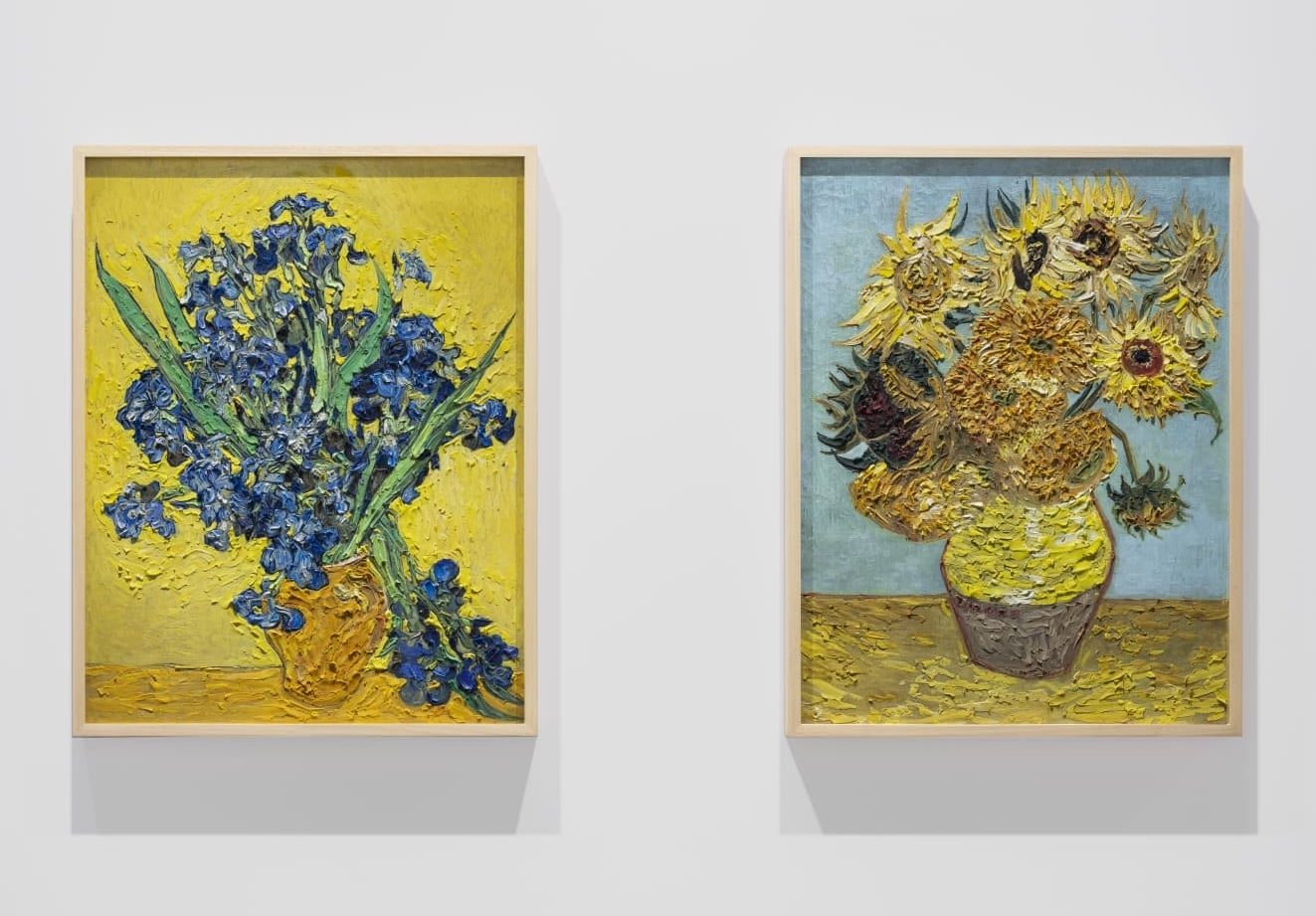
Stefano Arienti, «Vaso con iris (da Van Gogh)» e «Vaso con dodici girasoli (da Vincent Van Gogh)», 2026, plastilina su poster montato su pannello, 89 x 69 cm, fotografia di Andrea Rossetti. Courtesy Galleria Minini

Sections at the fair

But there is also the liveliness of the technology sector in Asia, which at the fair is reflected in another new section, called Zero 10, while the Insights section is confirmed for the quality of its proposals, with in-depth studies and rediscoveries. For example, Zhu Xinjian from Lucie Chang Fine Arts, an artist already well-known in China, a master of ink, whom the gallery owner is now repositioning in the contemporary context. "The technique is traditional," explains Chang, "but the message is very current, with portraits of modern women, the first nudes in colour back in the 1980s, erotic themes. Chinese collectors often associate the concept of contemporary with Western art, but there is also our contemporary, in which we must believe'. The art dealer will also bring the works to Venice during the Biennale for the first exhibition of the new Serica space, near the Arsenale (stand prices from about 1,700 to 250,000 euro).

Italian Art

Also present were several Italian gallerists and artists, both historicised, such as Morandi or Salvo, and young. For example, Marinella Senatore in the Kabinett section - curated cabinets dedicated to a single artist within the stands - by Mazzoleni, who received excellent feedback thanks to the institutional attention he is currently enjoying in China, at the Chengdu Biennial and soon at the UCCA in Beijing. Minini brought two works by Stefano Arienti from the series of Van Gogh made with plasticine - an ironic reference to the Japanese speculative bubble of the Impressionist and Post-Impressionist market in the 1980s - that aroused much curiosity, alongsideJacopo Benassi and Ivana Bašić, currently at the Taipei Biennial. Umberto Di Marino, on the other hand, dared with a rediscovery, Betty Bee, a Neapolitan artist pioneering a feminist body language, who had great success in the 1990s (the first review on an Italian artist in Artforum was on her, in 1994), but then disappeared from the radar due to her rejection of the system and the market. Outside of the fair, three young Italians, Marco Eusepi, Alessandro Giannì and Andrea Polichetti, are guests at the Moyo restaurant, thanks to the initiative of Francesco Lee, an Italian-Korean restaurateur, and Riccardo Chesti, director at Massimo De Carlo.

Copyright reserved ©
Loading...

Brand connect

Loading...

Newsletter

Notizie e approfondimenti sugli avvenimenti politici, economici e finanziari.

Iscriviti